There was a time when a flight was an event. Passengers put on their best clothes, flight attendants carved roasts from carts, and some coach cabins had a piano bar on board.
Those days are gone, but the memories are not. Drawing on reporting from AARP and Cheapism, plus the recollections of a former Pan American stewardess, here are twelve perks that were once standard in the air.
AARP’s August 2026 feature, written by Berit Thorkelson, covers the period between the Boeing 707’s introduction in 1958 and airline deregulation in 1978. The magazine says deregulation shifted airline competition from glamour to price, and the perks below faded along with it.
Airports Were Destinations With Tableside Steak Diane
In the 1950s and 1960s, people visited airports without flying. AARP reports that the upscale Golden Door at New York’s John F. Kennedy International Airport served Escargots Bourguignonne and Steak Diane Flambé, prepared tableside.
Dinner out and a look at the planes was a night on the town.
Free Observation Decks Drew The Crowds
Most commercial airports had observation decks that cost nothing to enter. Airline historian Shea Oakley told AARP, “Virtually all commercial airports had very popular free observation decks.”
Families watched the arrivals the way people now watch a sunset.
Friends And Family Could Walk You To The Gate
AARP says travelers walked to the gate, sometimes with friends and family, with no ID check or bag inspection. Cheapism’s March 2026 list, by Su Guillory, adds that before 9/11 there were no long security lines, and passengers could arrive minutes before departure.
A goodbye hug at the jet bridge was part of the trip.
Coach Had Room To Stretch Out
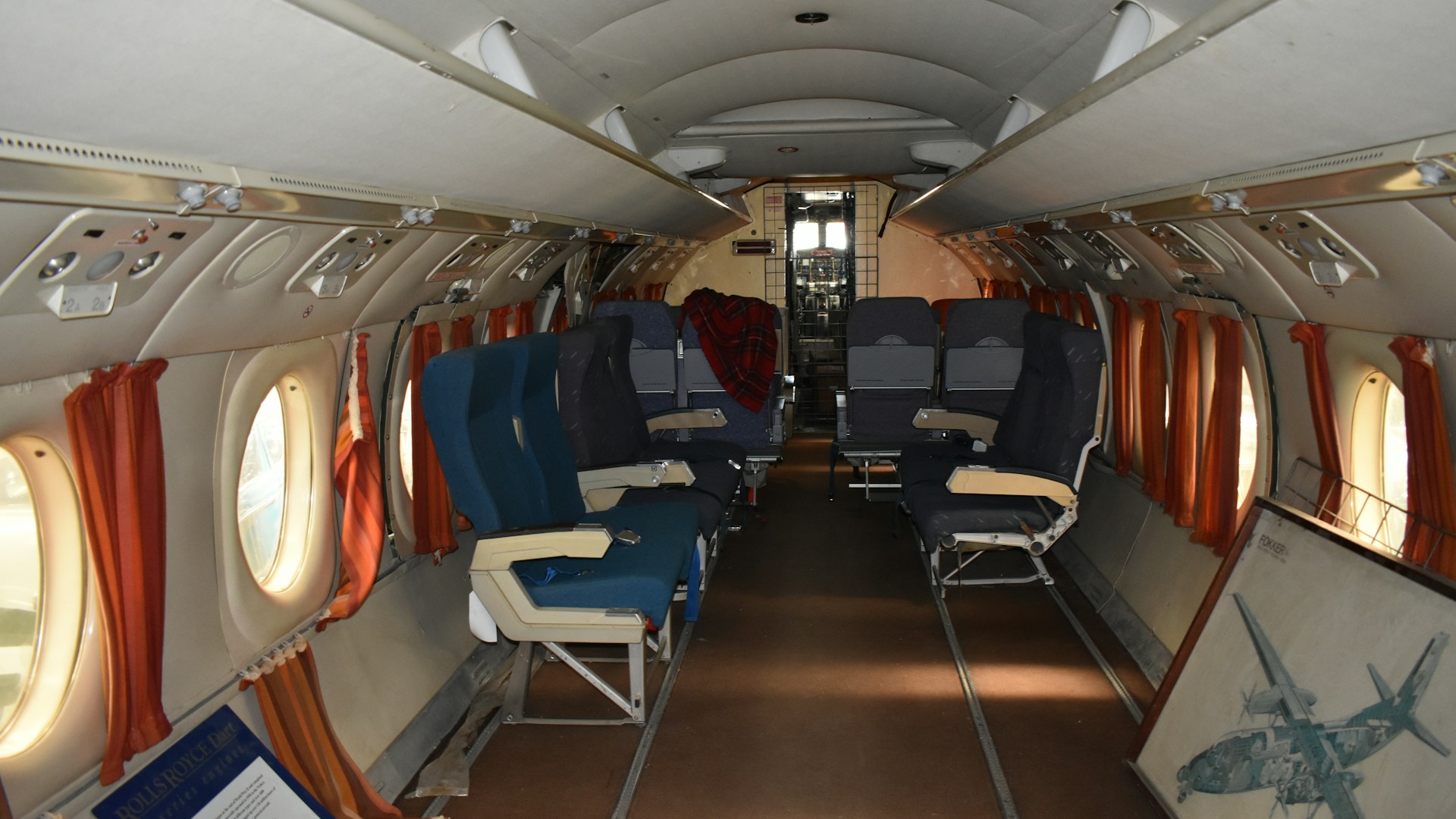
Oakley told AARP, “The planes were half empty,” and seat rests could be folded up so coach felt like first class. Maggie Hill, a flight attendant for nearly 50 years who began at Braniff International Airways, said seats were spaced so far apart that “you could stand up and literally do some ballroom dancing.”
Cheapism says seats in the 1950s had three to six inches more room than today, with a seat pitch of 35 inches at one time versus as little as 28 inches on some budget airlines.
Real Plates And Metal Utensils Were Standard
Even in coach, AARP says utensils were metal and plates were ceramic. Cheapism says Pan Am served meals on designer plates with real glassware and utensils, in economy as well as first class.
Gloria Sferra, a former Pan American stewardess who flew from 1962 to 1964, told KNKX in 2017 that first class had linen tablecloths, crystal and china with Pan Am’s emblem on the silver.
Multi-Course Meals Came Out Of The Galley
Sferra told KNKX, “all the meals were cooked from scratch.” AARP says Braniff coach meals included a salad, a roll, a choice of hot entrée, a cheese course and dessert.
First class went further, with cocktails, smoked almonds, canapés, chateaubriand or trout almondine, and baked Alaska flambéed seat-side by Hill.
The Wine Flowed Freely
AARP says wine flowed freely on Braniff, and the final cart offered after-dinner drinks, with dry ice in crème de menthe for a smoky centerpiece. Cheapism adds that drinks were once served free on short and long flights, while a small bottle of wine now costs extra.
It was hospitality with a flourish.
Flight Attendants Wore Designer Uniforms
Braniff flight attendants wore designer uniforms, according to AARP. Emilio Pucci designed one, and Halston designed a later one.
Attendants even wore plastic, open-faced helmets on the tarmac to protect their hair.
Passengers Dressed Up For The Occasion
AARP says passengers wore couture and furs on flights to Paris, men wore suits and ties, and women wore dresses and heels. Cheapism also lists dressing up among the lost traditions.
KNKX notes that passengers once dressed up to fly, a custom that faded with the cheaper tickets.
Movies, Music And Newspapers Were Part Of The Show
Piped-in boarding music set a relaxed tone, and flight attendants offered newspapers and magazines, AARP reports. Trans World Airlines, described as the pioneer of the in-flight movie, showed films on a bulkhead screen.
Headphones were free in first class and cost $1 in coach.
The 747 Had A Lounge Upstairs
The Boeing 747 had a first-class upper-deck lounge, and some airlines removed seats to create coach and first-class main-deck lounges, AARP says. Oakley called 1972 the golden era: “it was 1972, when you’re in coach and you’re sitting in a piano bar.”
Cheapism notes that Qatar and Emirates still have bars on board.
Free Checked Bags And Supersonic Speed Rounded Out The Era
Cheapism says checked bags were once included on every flight, long or short. The same list recalls the Concorde, which flew New York to London in under three hours with tickets that cost $12,000 to $20,000.
What To Do If You Miss The Golden Age
You cannot bring back 1972, but you can borrow a little of the style. Dress a notch nicer than the crowd, bring your own real cutlery for a picnic lunch, and thank the crew by name.
Check what your airline includes before you book, since free checked bags and meals vary. Premium cabins on some carriers still offer fuller meal service, and a few international airlines keep an on-board bar.
Above all, remember that the glamour had a price. Tickets cost far more in those days, which is why the empty seats and the piano bars are history rather than a plan.
More Stories You May Like
- Golden Corral Admits Closures Are Running Higher Than Normal as the Buffet Chain Shrinks From 362 Locations in 2023 Down to 348 Last Year
- Tipping Was Once Illegal In Several US States And Called Un American After The Civil War Until Every Anti Tipping Law Was Gone By 1926
- 5 Ways to Check Whether Rotisserie Chicken and Deli Shortcuts Really Cost More Than Cooking Dinner Yourself From Scratch at Home