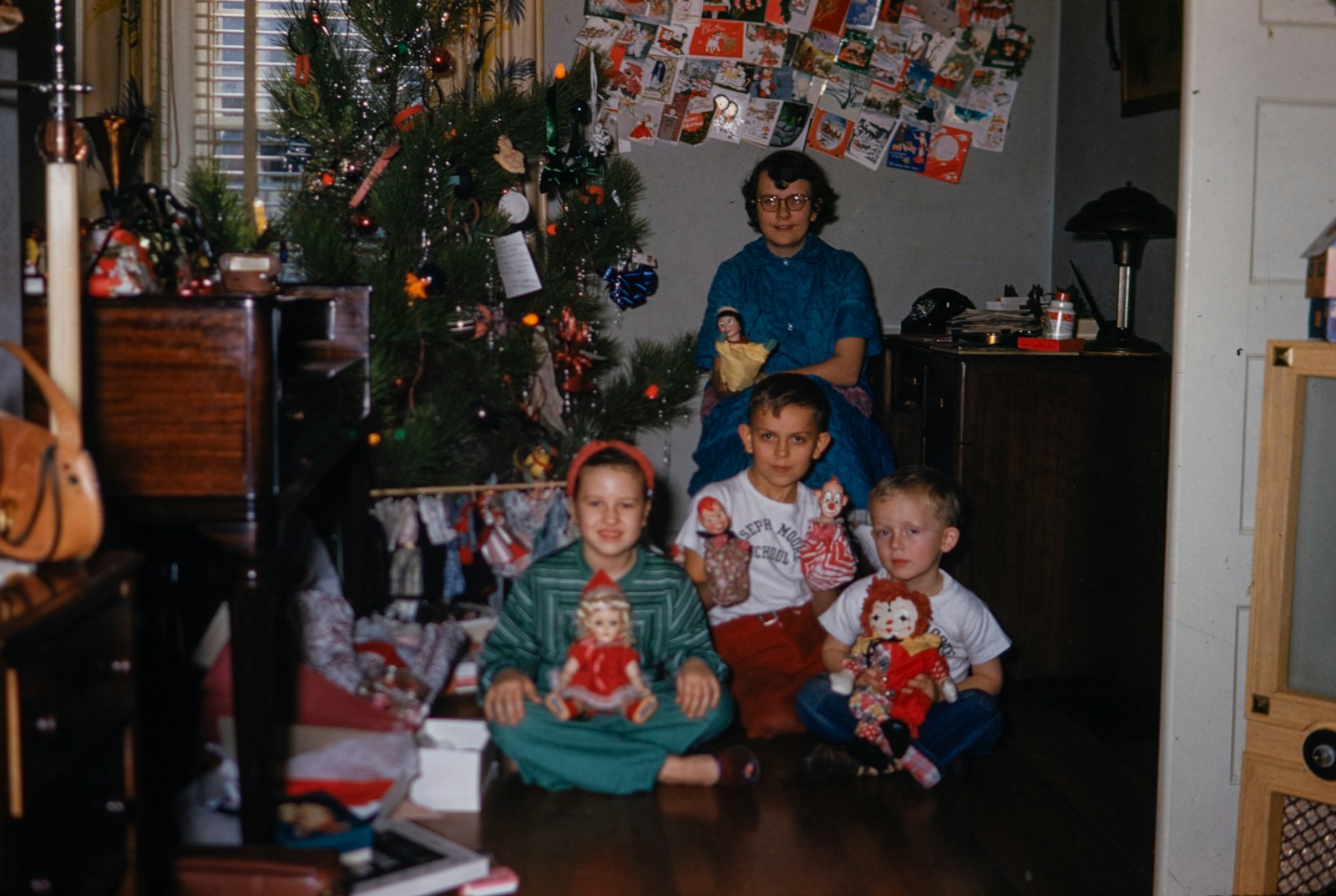
Big, colorful, slightly chaotic Christmas decorating is back in style, and it looks a lot like the living rooms many Gen X and Millennial adults grew up in. The same quilted stockings, figurine ornaments, and tinsel-heavy trees that once filled family photo albums are reappearing in contemporary homes, proving that a ’90s-inspired holiday can still feel fresh and intentional rather than dated.
What makes this revival work is not just nostalgia, but the way those older traditions answer modern cravings for warmth, personality, and ease. Instead of minimalist perfection, families are leaning into layered color, sentimental clutter, and cozy imperfection that feel emotionally grounding in a high-pressure season.
The Emotional Pull Behind ’90s Christmas Nostalgia
The return of ’90s Christmas style is driven first by feeling, not aesthetics. Millennial parents who grew up surrounded by hand-me-down ornaments and crowded mantels are now recreating that atmosphere for their own children, trading curated neutrals for the emotional comfort of familiar textures and colors. Psychologists note that nostalgia can regulate stress and help people feel more secure, which explains why revisiting childhood holiday rituals feels especially appealing in a busy, hyper-digital era, particularly for modern moms juggling work, caregiving, and social expectations during Nov Christmas.
That emotional pull is also a quiet form of rebellion against the pressure to stage a spotless, camera-ready home. Instead of chasing a single “aesthetic” tree, Millennial parents are embracing the layered, slightly mismatched look they remember from childhood, where every school craft and vacation souvenir had a place. This shift has been described as a move away from social media perfection and toward a more lived-in, family-first holiday environment, a trend that reflects a broader generational craving for warmth and authenticity among Millennial families.
What Defined ’90s Christmas Decor, Then and Now
To understand why these pieces still work, it helps to look at how they evolved. In the early part of the decade, holiday style often blended traditional motifs with contemporary twists, pairing classic reds and greens with country-style plaids, rustic ornaments, and cozy patterns. That mix of familiar and new gave homes a layered look that felt collected over time, a quality that still resonates today and is echoed in guides that trace The Evolution of Christmas Decor Year by Year, especially in the Early period when Traditional Meets Contemporary.
Designers now argue that the decade did, in fact, have a distinct holiday style, even if it was not always recognized as such at the time. Beyond the obvious tinsel and blow-mold lawn figures, the ’90s leaned into saturated color, sentimental keepsakes, and a sense of abundance that stands in contrast to today’s store-bought nostalgia. That combination of boldness and heart is what separates authentic retro decorating from generic “vintage-inspired” products, a point underscored in analyses that ask Did the decade Have a Distinct Christmas Decoration Style While highlighting what has been lost in today’s mass-produced recreations.
Color, Tinsel, and the Return of “Too Much”
One of the clearest signs of the ’90s comeback is the shift away from minimalist palettes toward unapologetically colorful Christmas Decor. Instead of limiting themselves to white, gold, and a single accent shade, families are once again filling trees with multicolored lights, primary-hued baubles, and clashing ribbons that feel joyful rather than restrained. This move back to Colorful Christmas Decor reflects a broader reaction against the muted, neutral schemes that have dominated the modern era, and it helps explain why richly saturated ornaments and garlands are enjoying a recent resurgence in popularity.
The same spirit applies to tinsel and lights, which are no longer treated as guilty pleasures. Reports describe how 1990s trees were “big and extra,” with strands of tinsel layered until branches nearly disappeared and multicolored bulbs blinking from every angle. That maximalist approach is returning as nostalgia climbs, encouraging people to embrace big, bold color and “so much tinsel” that the tree feels exuberant rather than restrained, a shift captured in coverage that compares the look to hair and make-up trends and notes how Like Christmas Thanks to nostalgia, the “so extra” look is being reconsidered as fun rather than excessive.
Sentimental Details That Still Feel Stylish
Beyond color, the details that once felt ordinary in ’90s homes are now central to the trend’s appeal. Quilted stockings, often handmade or passed down, are being rehung on mantels as a counterpoint to sleek, store-bought versions, bringing texture and history into otherwise modern rooms. Guides to retro decorating highlight these pieces as the “real deal,” noting that the slightly imperfect stitching and varied fabrics give them a charm that cannot be replicated by mass production, a sentiment echoed in advice that singles out Quilted Stockings as a key way to Nail Holiday Decor This Christmas according to RON AND other enthusiasts.
Ornaments are getting the same treatment. Figurine Ornaments shaped like angels, snowmen, cartoon characters, or tiny Santas, which were especially popular in the 1990s, are being pulled from storage and given pride of place on family trees. These pieces often carry stories, from the year they were purchased to the child who picked them out, and that narrative weight is part of what makes them feel current again. Rather than hiding them in favor of matching sets, families are leaning into their variety, a shift supported by decorating guides that spotlight Figurine Ornaments and Ornaments with specific memories attached as central to a truly nostalgic tree.
How Modern Families Are Updating Mom’s ’90s Look
What keeps this revival from feeling like pure time travel is the way families are editing and adapting it for contemporary homes. Many are starting with a full, fluffy artificial tree, often slightly oversized for the room, which instantly evokes the decade’s signature silhouette. From there, they layer on beaded garlands, metallic strands, and sentimental ornaments, but they may streamline the color palette or skip some of the more cluttered elements to keep the look cohesive. Step-by-step guides encourage decorators to Start With a Classic Artificial Tree, noting that Nothing says Christmas quite like that familiar shape, and then build from there with curated layers, as outlined in detailed throwback instructions from Dec Start With Classic Artificial Tree Nothing Christmas enthusiasts.
At the same time, designers are urging homeowners to commit fully to the playful side of the trend rather than watering it down. Embracing the tacky, as some stylists put it, means choosing bold baubles, novelty ornaments, and even tinsel garlands with confidence instead of trying to hide them behind muted tones. When done with intention, this approach can still feel balanced, especially when anchored by a few grounding elements like consistent ribbon or repeated motifs, a strategy reflected in advice that frames the revival as a way to enjoy color and personality even amid tinsel-fuelled anarchy and encourages people to start by Nov Embracing the bolder side of the look.
Why ’90s Christmas Decor Still Works in 2025 Homes
The enduring success of this style lies in how easily it blends with current design trends when handled thoughtfully. Retro guides emphasize that the goal is not to recreate a museum set, but to borrow the warmth, color, and sentiment of earlier decades while adapting them for modern layouts and lifestyles. That might mean pairing a plaid tree skirt with a streamlined sofa, or mixing heirloom ornaments with contemporary glass balls, an approach supported by advice that encourages people to revisit retro looks while editing and adapting for modern homes, as seen in resources that ask Why Go Retro This Christmas Before updating Christmas traditions.
Pop culture is reinforcing the trend as well. The enduring appeal of films like “Home Alone,” with its richly patterned wallpapers, layered textiles, and ornament-packed tree, has become a visual shorthand for cozy, characterful holiday interiors. Designers who study that set point out that the culminating effect is a comfortable, welcoming home brimming with holiday cheer, and they encourage homeowners to nod to the McCallisters’ look through saturated color, mixed patterns, and plenty of personal touches, a strategy detailed in breakdowns of how to capture the Dec aesthetic without overwhelming a space.
Ultimately, the reason Mom’s ’90s Christmas decor translates so well to today is that it was always about more than trends. The handmade stockings, crowded trees, and slightly over-the-top displays were, as some observers put it, “love in motion,” physical proof of time and care invested in family rituals. As modern parents look for ways to slow down and reconnect during a hectic season, that spirit is exactly what they are trying to recapture, a motivation reflected in reporting that explains Why nostalgia soothes the modern mom brain and frames these revived traditions as a way to bring back cozy color and connection during Nov Why According to experts.
How to Borrow the Look Without Recreating the Clutter
For anyone tempted to revisit that era, the most effective strategy is to focus on a few high-impact elements rather than trying to reassemble every detail from childhood. Start with one or two anchor pieces that feel authentically ’90s, such as a plaid tree skirt, a set of sentimental figurine ornaments, or a tinsel garland, and then build around them with more restrained choices. Retro decorating guides that chart The Evolution of Christmas Decor Year by Year suggest that even small nods to the Early Traditional Meets Contemporary style can shift a room’s mood toward cozy nostalgia without overwhelming a modern layout.
It also helps to think in terms of zones rather than entire rooms. A single maximalist tree, a mantel lined with quilted stockings, or a sideboard filled with family figurines can carry the nostalgic story while the rest of the space stays relatively calm.
- 7 Vintage Home Items From the ’60s That Are Collectors’ Dream Finds
- 7 Vintage Home Goods That Became Collectors’ Gold
- 7 Fast-Food Chains That Changed for the Worse
- 7 Frozen Dinners That Were Better Back in the Day

As a mom of three busy boys, I know how chaotic life can get — but I’ve learned that it’s possible to create a beautiful, cozy home even with kids running around. That’s why I started Cultivated Comfort — to share practical tips, simple systems, and a little encouragement for parents like me who want to make their home feel warm, inviting, and effortlessly stylish. Whether it’s managing toy chaos, streamlining everyday routines, or finding little moments of calm, I’m here to help you simplify your space and create a sense of comfort.
But home is just part of the story. I’m also passionate about seeing the world and creating beautiful meals to share with the people I love. Through Cultivated Comfort, I share my journey of balancing motherhood with building a home that feels rich and peaceful — and finding joy in exploring new places and flavors along the way.