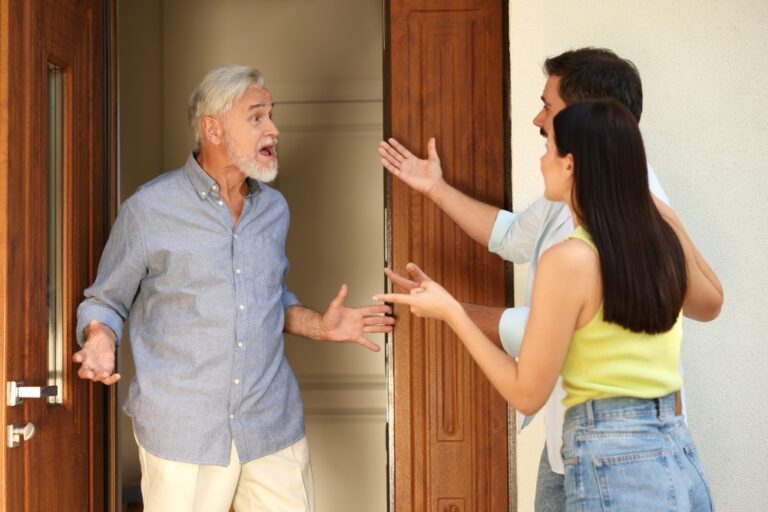
It starts the same way every time: a birthday banner goes up, the music gets a little louder, and suddenly your driveway becomes a “temporary” parking spot for someone you’ve never met. You’re not mad that your neighbors are social—honestly, good for them. You’re mad because you’re now trapped in your own home like it’s a low-budget escape room, and the clue to freedom is locating “Kyle in the gray SUV.”

Across many neighborhoods, this exact scenario is becoming a common source of low-grade suburban stress. The hosting family says it’s “only for special occasions,” but those special occasions have a funny way of happening a lot. And when you’re trying to leave—work, school pickup, a doctor appointment, even just a sanity-saving coffee run—“only for a few minutes” can feel like an eternity.
When “Special Occasion” Parking Becomes a Routine Problem
Most people can tolerate a one-off inconvenience. A wedding reception? Sure. A graduation party? Fine. But when “special occasion” turns into every holiday weekend, every sports game, every cousin’s visit from out of town, it stops feeling special and starts feeling like a pattern.
The frustration isn’t just about the blocked driveway; it’s about the assumption underneath it. Someone decided your ability to come and go is negotiable, and they didn’t ask first. That’s the part that makes otherwise calm, reasonable adults start fantasizing about traffic cones and a passive-aggressive sign that says “This driveway is not a suggestion.”
The Unwritten Neighborhood Rule: Don’t Block a Driveway
There are a few universal truths in residential life: return your trash bins, keep your dog from auditioning for a howling competition, and don’t block someone’s driveway. It’s one of those rules that doesn’t need a committee meeting. The driveway is the one piece of pavement that’s basically sacred because it’s tied to basic access—leaving, arriving, emergencies, deliveries, and everything in between.
That’s why this issue escalates so quickly, even when nobody’s trying to be a villain. The hosts may be focused on food, guests, and keeping the playlist going, while the neighbors next door are quietly boiling because they’ve been waiting 20 minutes to get out. Two people can be “nice” and still end up in a standoff caused by a minivan parked like it owns the place.
What’s Actually Going On at These Parties
In many cases, it’s not the family themselves who’s doing the blocking—it’s the guests. Party guests arrive in a little bubble of “I’ll just be quick,” and they pick the closest open spot without thinking through what it might block. And if they see other cars lined up in questionable places, it signals that anything goes.
Hosts often underestimate how much guidance their guests need. If they don’t actively direct parking, someone will inevitably use the driveway apron as their personal drop zone. It’s rarely malicious; it’s just the natural outcome of too many cars and not enough planning.
The Real Costs of Being Blocked In
The obvious cost is time—missed appointments, late arrivals, and that creeping anxiety when you’re watching the minutes tick by. But there’s also a safety angle that makes this more than a petty annoyance. If you needed to leave quickly, or if an emergency vehicle needed access, a blocked driveway isn’t just inconvenient—it’s dangerous.
There’s also the emotional cost, which sounds dramatic until you’ve lived it. Being trapped by someone else’s choices feels strangely violating, like your home boundaries don’t count. And once it happens a few times, you start anticipating it, which is a great way to turn a quiet Saturday into a stress forecast.
What Neighbors Are Saying (and What They Wish They’d Said)
In neighborhood message boards and casual sidewalk chats, people describe the same cycle: they try to be patient, then they hint, then they snap, then they feel bad about snapping. Many wish they’d addressed it early, when it was still one annoying incident instead of a recurring tradition. It’s easier to set a boundary when it’s framed as “Hey, just so you know…” rather than “This has been happening for six months.”
Others say the most frustrating response is the breezy dismissal: “It’s only for special occasions.” That phrase sounds harmless, but it often lands like: “Your inconvenience is part of our celebration package.” No one wants to be the cranky neighbor, but no one wants to be the neighborhood doormat either.
How to Handle It Without Starting a Feud
The simplest move is a direct, calm conversation with the hosts—not in the moment when you’re blocked in and fuming, but on a normal day when everyone’s blood pressure is reasonable. You can keep it light while still being firm: “Hey, when you have parties, could you make sure guests don’t block my driveway? I’ve been stuck a couple times and I need to be able to get out.”
If they’re decent people, that should be enough, because it gives them a clear action item. Ask them to designate a parking area, text guests ahead of time, or put a cone by the driveway edge during gatherings. It’s not overkill; it’s basic event logistics, just with less catering and more Toyota Camrys.
If you want to be extra practical, offer a solution that doesn’t make them do mental gymnastics. “Could you have guests park on your side only?” or “Could you keep the curb in front of my driveway clear?” is easier to follow than a vague “Please be mindful.” Clear beats polite-but-murky every time.
When Polite Doesn’t Work: Escalation That Still Stays Reasonable
If you’ve spoken to them and it keeps happening, it’s fair to get more structured. A small, straightforward sign near your driveway can help, especially for guests who don’t know the neighborhood: “Please don’t block driveway.” It’s not a declaration of war; it’s a reminder aimed at the person who just arrived and is looking for the closest spot.
In many places, blocking a driveway is a ticketable offense, and repeated incidents can be reported through non-emergency channels. People hesitate because it feels “too intense,” but the reality is that you’re asking for access to your own property. If you do go that route, it’s usually best to treat it as a last resort and to document the pattern so it’s clear this isn’t a one-time spat.
A Little Planning Could Fix This Entire Thing
The funny part is how solvable the problem is. Hosts can include a quick parking note on invitations, have one person direct arrivals, or encourage carpooling. Even telling guests, “Don’t block any driveways, and please leave the neighbor’s exit clear,” would prevent most of the chaos.
And for the neighbor who’s been blocked in? You’re not being unreasonable for wanting your driveway to function like a driveway. You can be friendly and still have boundaries, and you don’t have to accept “special occasions” as a free pass for everyday courtesy to disappear. If anything, special occasions are exactly when people should be a little more thoughtful—because nothing kills a party vibe faster than an awkward knock on the door asking whose car is holding someone hostage.
More from Cultivated Comfort:
- 7 Vintage Home Items From the ’60s That Are Collectors’ Dream Finds
- 7 Vintage Home Goods That Became Collectors’ Gold
- 7 Fast-Food Chains That Changed for the Worse
- 7 Frozen Dinners That Were Better Back in the Day

As a mom of three busy boys, I know how chaotic life can get — but I’ve learned that it’s possible to create a beautiful, cozy home even with kids running around. That’s why I started Cultivated Comfort — to share practical tips, simple systems, and a little encouragement for parents like me who want to make their home feel warm, inviting, and effortlessly stylish. Whether it’s managing toy chaos, streamlining everyday routines, or finding little moments of calm, I’m here to help you simplify your space and create a sense of comfort.
But home is just part of the story. I’m also passionate about seeing the world and creating beautiful meals to share with the people I love. Through Cultivated Comfort, I share my journey of balancing motherhood with building a home that feels rich and peaceful — and finding joy in exploring new places and flavors along the way.