Rush hour has its own soundtrack: doors chiming, shoes squeaking, someone’s headphones leaking tinny bass, and the constant shuffle of bodies trying to fit where bodies don’t really fit. On this particular evening, the train rolled in already crowded, and it filled up even more the moment the doors opened. People did that practiced city dance—sidestepping, swiveling shoulders, clutching bags tighter—trying to find a place to stand without breathing directly into a stranger’s ear.
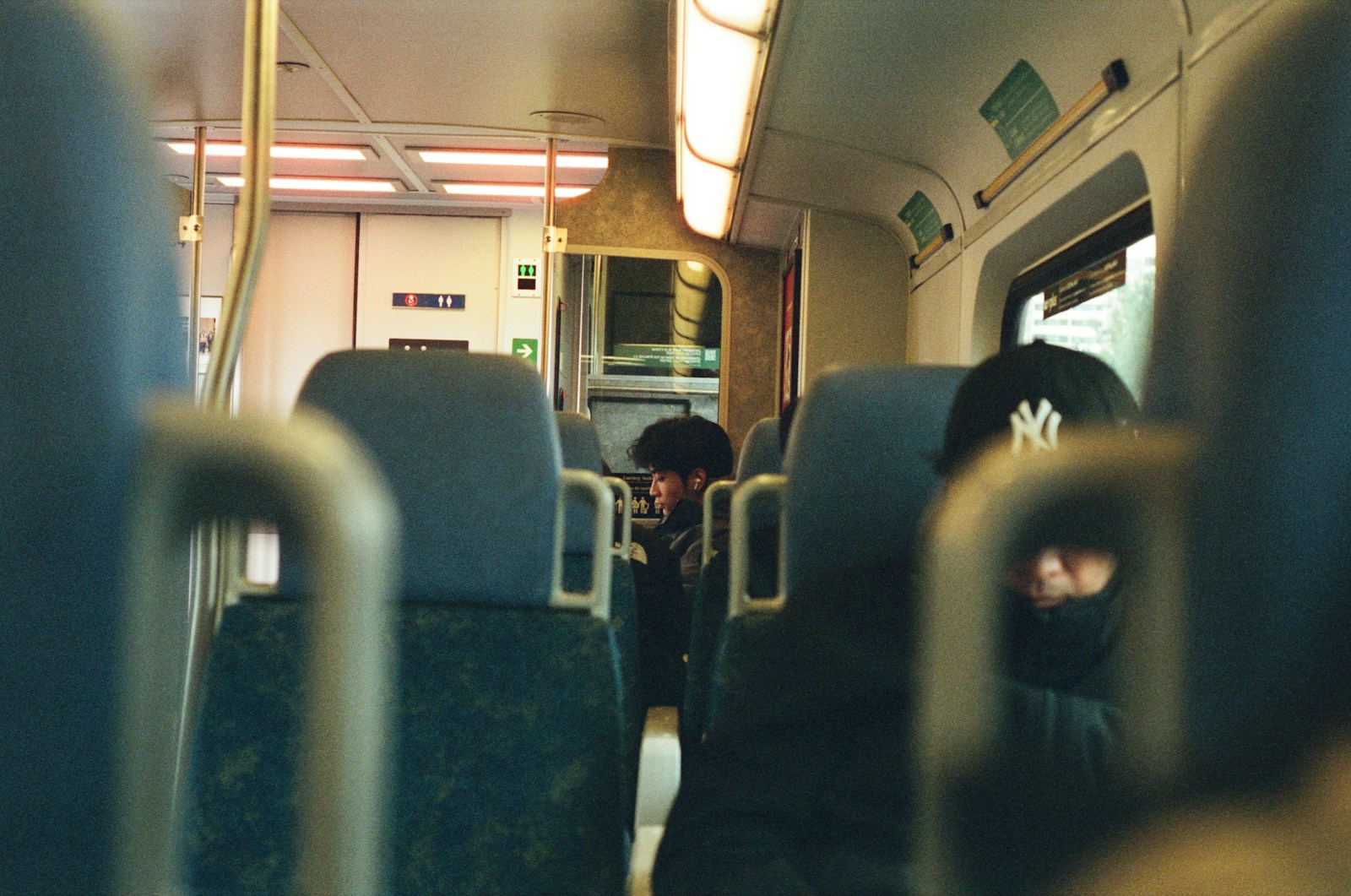
And then there it was, like a little oasis in a sea of backpacks: one empty seat. Not two, not a whole row—just one lonely spot. Except it wasn’t really empty, because the woman sitting beside it had placed her bag squarely on the cushion, angled like it owned real estate.
“I’m saving it,” she said, as the train kept filling
At first, people simply looked. You know the look: quick glance, mental math, “Is that seat actually available?” Then the glance becomes a stare, and the stare turns into that universal commuter expression that says, “You cannot be serious right now.”
A couple more passengers boarded at the next stop, and the standing crowd pressed inward like bread dough. Someone finally gestured toward the seat—polite, restrained—and asked if it was open. The woman didn’t move the bag. She just said, calmly and firmly, “I’m saving it.”
The unspoken rules of public transit (and why this hits a nerve)
Public transit runs on unofficial agreements. People don’t blast music (ideally), they don’t eat a three-course meal (questionable), and they try not to take up more space than they need. It’s not written on the wall, but it’s kind of the deal we all sign by tapping our fare card.
That’s why “saving a seat” during peak rush hour pokes at something deep in the commuter brain. It’s not just about one seat—it’s about fairness in a cramped situation where everyone’s tired, everyone’s late, and everyone would love to sit down for eight minutes without gripping a pole like it’s a ship’s mast.
The crowd reaction: quiet tension with a side of side-eye
No one shouted. No one made a scene. But the mood shifted in that subtle way you can practically measure in degrees. Conversations got quieter, and the air filled with a different kind of noise—sighs, little scoffs, and the unmistakable sound of people thinking, “Are we really doing this?”
A man standing nearby adjusted his stance to make room for a woman with a stroller, then glanced at the bag-seat again. Another passenger mouthed something to their friend and raised an eyebrow. It was like the whole car had become a group chat, except nobody had the courage—or energy—to type the message out loud.
Why people save seats (even when it makes zero sense)
To be fair, seat-saving isn’t always malicious. Sometimes someone’s partner is in the restroom, or a friend is coming from another car, or they’re holding a spot for an older relative who walks slowly. In quieter hours, it can feel harmless, even considerate.
But during rush hour, “saving it” can land like “I’m prioritizing my person over the dozen people currently standing shoulder-to-shoulder.” The math changes. The stakes feel higher, even if the seat is just a seat and not, like, the last lifeboat on the Titanic.
The central question: Is a seat something you can “reserve” on a public train?
In most city transit systems, the practical answer is no. Seats aren’t assigned, and the expectation is first-come, first-served—especially when trains are packed. Some transit agencies explicitly discourage blocking seats with bags, and many commuters treat it as a basic courtesy rule: your bag can sit when people don’t need the space.
Of course, enforcement is another story. Train staff aren’t usually walking through cars mediating seat disputes, and fellow passengers often avoid confrontation because nobody wants to risk turning a long day into an awkward altercation. So the “rules” become whatever the crowd will tolerate, and that tolerance can vary wildly by city, culture, and the general vibe of the day.
Small moments, bigger pressures
It’s easy to laugh it off—“Imagine having the confidence to save a seat with a tote bag”—but these moments also reflect how tense commuting has gotten. People are dealing with delayed trains, rising costs, unpredictable schedules, and the low-level stress of being crammed into a metal tube with strangers. When space is tight, every inch feels personal.
And sometimes that’s why a bag on a seat feels like a spark near dry grass. It’s not that everyone desperately needs that exact cushion. It’s that the gesture reads as, “My convenience matters more than the group,” and public spaces don’t handle that message very well.
What people actually do in these situations (from polite to pointed)
Most commuters start with the gentlest option: the nod and the “Is anyone sitting here?” If the person says they’re saving it, the next step is usually a pause—just long enough to signal, “I heard you, but I’m not sure that’s how this works.” Then comes the follow-up: “For who?” or “They’re not here right now?”
Some people go more direct: “Could you please move your bag so someone can sit?” Others use the social pressure approach, looking around as if polling the car for backup. The boldest simply start to sit—slowly, giving the bag-owner a chance to move it without losing face—because nothing motivates like the imminent prospect of your backpack being gently squished.
What happened next on this train
After a couple more stops, the crush of standing passengers got worse, not better. A tired-looking rider in a work uniform asked again if the seat was available. The woman repeated, “I’m saving it,” as if the seat had her name embroidered on it.
Then, finally, someone said what everyone else was thinking—calmly, not aggressively—something like, “It’s rush hour. You can’t save seats.” The woman hesitated, glanced at the crowd, and with the kind of reluctant motion you make when you know you’re outnumbered, she lifted the bag onto her lap.
The quiet lesson: courtesy works best when it’s mutual
No applause erupted. No one gave a victory speech. A person sat down, the train lurched forward, and the car returned to its usual weary rhythm. But the moment stuck, because it was such a clear snapshot of how we share space—badly, awkwardly, and sometimes surprisingly well.
If you’re the one with the bag, the simplest rule is: if people are standing, your bag shouldn’t be. If you’re the one standing, it’s okay to ask—politely and clearly—for the seat to be freed up. Most of the time, the whole thing can be solved in ten seconds with a little less “saving it” and a little more “sure, go ahead.”
More from Cultivated Comfort:
- 7 Vintage Home Items From the ’60s That Are Collectors’ Dream Finds
- 7 Vintage Home Goods That Became Collectors’ Gold
- 7 Fast-Food Chains That Changed for the Worse
- 7 Frozen Dinners That Were Better Back in the Day

As a mom of three busy boys, I know how chaotic life can get — but I’ve learned that it’s possible to create a beautiful, cozy home even with kids running around. That’s why I started Cultivated Comfort — to share practical tips, simple systems, and a little encouragement for parents like me who want to make their home feel warm, inviting, and effortlessly stylish. Whether it’s managing toy chaos, streamlining everyday routines, or finding little moments of calm, I’m here to help you simplify your space and create a sense of comfort.
But home is just part of the story. I’m also passionate about seeing the world and creating beautiful meals to share with the people I love. Through Cultivated Comfort, I share my journey of balancing motherhood with building a home that feels rich and peaceful — and finding joy in exploring new places and flavors along the way.