It starts the same way every time: you’re doing a normal, responsible adult task—loading the dishwasher—when a voice from behind you says, “No, not like that.” The kids are within earshot, the forks are halfway in, and suddenly you’re getting a live demo on “proper rack geometry” like it’s a TED Talk. Your wife insists she’s not criticizing you, she’s “just teaching the right way.” You’re left wondering if you’re a partner or an unpaid intern.
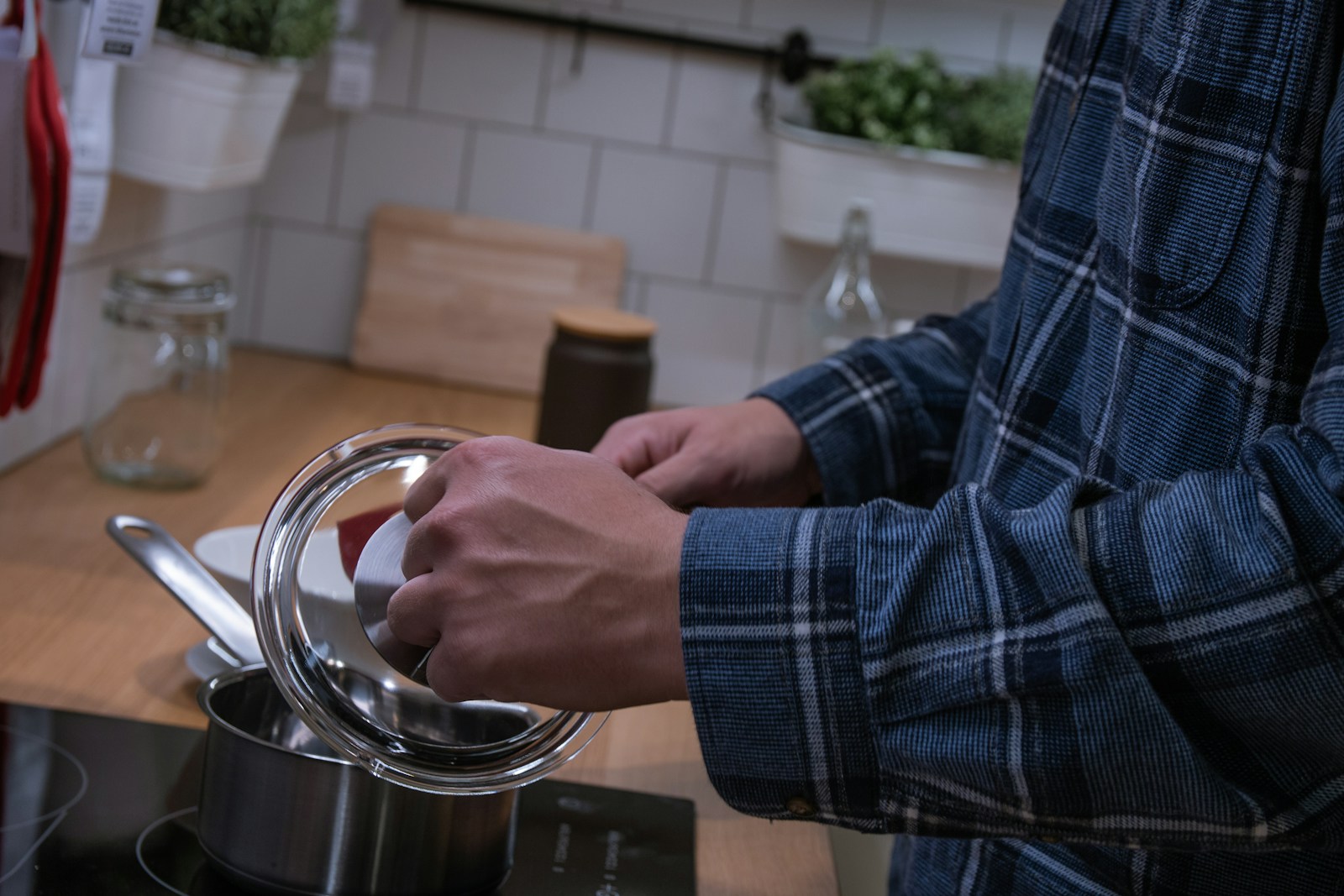
This small domestic moment is weirdly universal, and it’s not really about plates. It’s about being corrected publicly, the little sting of feeling incompetent, and how kids absorb the vibe more than the lesson. The question isn’t whether there’s a best way to load a dishwasher—there probably is. The question is what happens to a relationship when one person becomes the household “quality control department.”
Why the Dishwasher Became the Battlefield
The dishwasher is the perfect stage for conflict because it’s concrete and repeatable. There are rules (real or invented), stakes (clean dishes, no re-wash), and a quick “right vs. wrong” payoff. Add in the fact that most people learned dish-loading from their own family, and now you’ve got two competing traditions fighting for rack space.
For a lot of couples, this isn’t about one person being bossy and the other being careless. It’s about different definitions of “done.” One person sees a chore as complete when it’s handled; the other sees it as complete when it’s handled efficiently, quietly, and in a way that prevents future problems.
“I’m Just Teaching” — What She Might Mean
When your wife says she’s “just teaching the right way,” she might genuinely believe she’s being helpful. Some people experience disorder as stress, and a “wrongly” loaded dishwasher feels like a tiny alarm going off in their head. Correcting it isn’t about you—it’s about turning the alarm off.
There’s also the parenting angle: she might think she’s modeling competence for the kids. She wants them to learn good habits early, and she sees the dishwasher as a low-stakes classroom. The problem is that the lesson the kids may actually absorb isn’t “cups go on the top rack,” it’s “Mom corrects Dad, and Dad is kind of wrong a lot.”
What It Feels Like on Your Side
Being corrected in front of your kids can hit harder than being corrected in private. It can feel like your authority takes a tiny dent, like you’ve been demoted from “equal parent” to “well-meaning helper.” Even if she’s not intending to shame you, the audience changes the emotional temperature.
And then there’s the practical frustration: you were trying to contribute. If every contribution gets edited, it teaches your brain a really unromantic lesson—why bother? Over time, that’s how couples drift into the dreaded dynamic where one person does everything and resents it, and the other person stops trying and resents that.
Kids Are Watching the Tone, Not the Tines
Kids are weirdly skilled at picking up social hierarchies. If they regularly see one parent correcting the other, they may start mirroring it—correcting you, questioning you, or treating you like the “junior” parent. It’s not malicious; it’s just pattern recognition.
On the flip side, kids also learn repair. If they see you two handle the moment with respect—“Hey, can we talk about this without coaching in front of the kids?”—they learn that conflict isn’t scary. It’s solvable, and it doesn’t require anyone to lose face.
The Hidden Issue: Standards vs. Control
Some households have a “standard” problem, and others have a “control” problem, and they can look identical from the outside. A standard problem is, “Hey, when the bowls block the sprayer arm, the dishes come out dirty—can we do it differently?” A control problem is, “There is only one acceptable arrangement, and I will reorganize it every time, even if it works.”
If the dishwasher loads come out clean and the machine isn’t breaking, the argument may not be about function. It may be about comfort and predictability. That’s not automatically bad, but it’s worth naming—because you can negotiate standards, while control tends to quietly expand into everything.
A More Peaceful Script (That Doesn’t Start a Fight)
If you want to address it without turning dinner into a summit meeting, timing matters. Do it when nobody’s already annoyed and the kids aren’t hovering like tiny sports commentators. You’re aiming for calm, not a courtroom.
You could say something like: “I know you want the dishwasher loaded well, and I’m not against learning. But when you correct me in front of the kids, I feel undermined. Can we keep feedback private, or agree on a system so it doesn’t feel like I’m getting graded?”
This works because it doesn’t accuse her of being a villain; it describes impact. It also offers options: private feedback, a shared agreement, or a division of labor that removes the repeated friction point.
Two Practical Fixes Couples Actually Use
One option is the “owner” model: one person owns the dishwasher, from loading to unloading, and the other person stays out of it. If she truly cares about exact placement, she can own it and get it exactly right. If you want to own it, you get autonomy—meaning no mid-load rearranging unless there’s an actual functional problem.
Another option is the “house rules” model, but keep it short. Agree on three or four principles that genuinely matter, like “nothing blocks the sprayer,” “sharp knives point down,” and “plastic on the top rack.” Everything else becomes personal style, not a moral issue.
What to Do in the Moment (When It’s Happening Again)
If she starts correcting you in front of the kids, you don’t need to snap or perform wounded dignity. Try a light, steady boundary: “Hey—can we talk about dishwasher strategy later? I’ve got it.” Then keep loading.
If she insists, a calm redirect can help: “If it needs to be loaded a specific way, you’re welcome to take this one. Otherwise, I’m going to finish.” It’s not a threat; it’s a clear choice. And it gently reminds everyone, including the kids, that adults can negotiate roles without dunking on each other.
When It’s Not Really About the Dishwasher
If this happens with laundry, lunches, bedtime routines, and how to stack the recycling, the dishwasher may just be the most visible example of a bigger pattern. Sometimes one partner is carrying a lot of invisible mental load and has started micromanaging because it feels safer than trusting. Sometimes the other partner is trying, but doesn’t have the same information, so the “fixing” never stops.
That’s when it helps to zoom out and ask: “What are you worried will happen if it’s not done your way?” and “What would help you feel supported without correcting me?” Those questions can turn a running argument into an actual conversation.
And yes, it’s possible that your wife really does load the dishwasher like a NASA engineer and you’re out here doing abstract art with plates. But even then, the win isn’t perfect dish alignment. The win is both of you feeling like you’re on the same team—without the kids learning that love comes with a running commentary.
More from Cultivated Comfort:
- 7 Vintage Home Items From the ’60s That Are Collectors’ Dream Finds
- 7 Vintage Home Goods That Became Collectors’ Gold
- 7 Fast-Food Chains That Changed for the Worse
- 7 Frozen Dinners That Were Better Back in the Day

As a mom of three busy boys, I know how chaotic life can get — but I’ve learned that it’s possible to create a beautiful, cozy home even with kids running around. That’s why I started Cultivated Comfort — to share practical tips, simple systems, and a little encouragement for parents like me who want to make their home feel warm, inviting, and effortlessly stylish. Whether it’s managing toy chaos, streamlining everyday routines, or finding little moments of calm, I’m here to help you simplify your space and create a sense of comfort.
But home is just part of the story. I’m also passionate about seeing the world and creating beautiful meals to share with the people I love. Through Cultivated Comfort, I share my journey of balancing motherhood with building a home that feels rich and peaceful — and finding joy in exploring new places and flavors along the way.