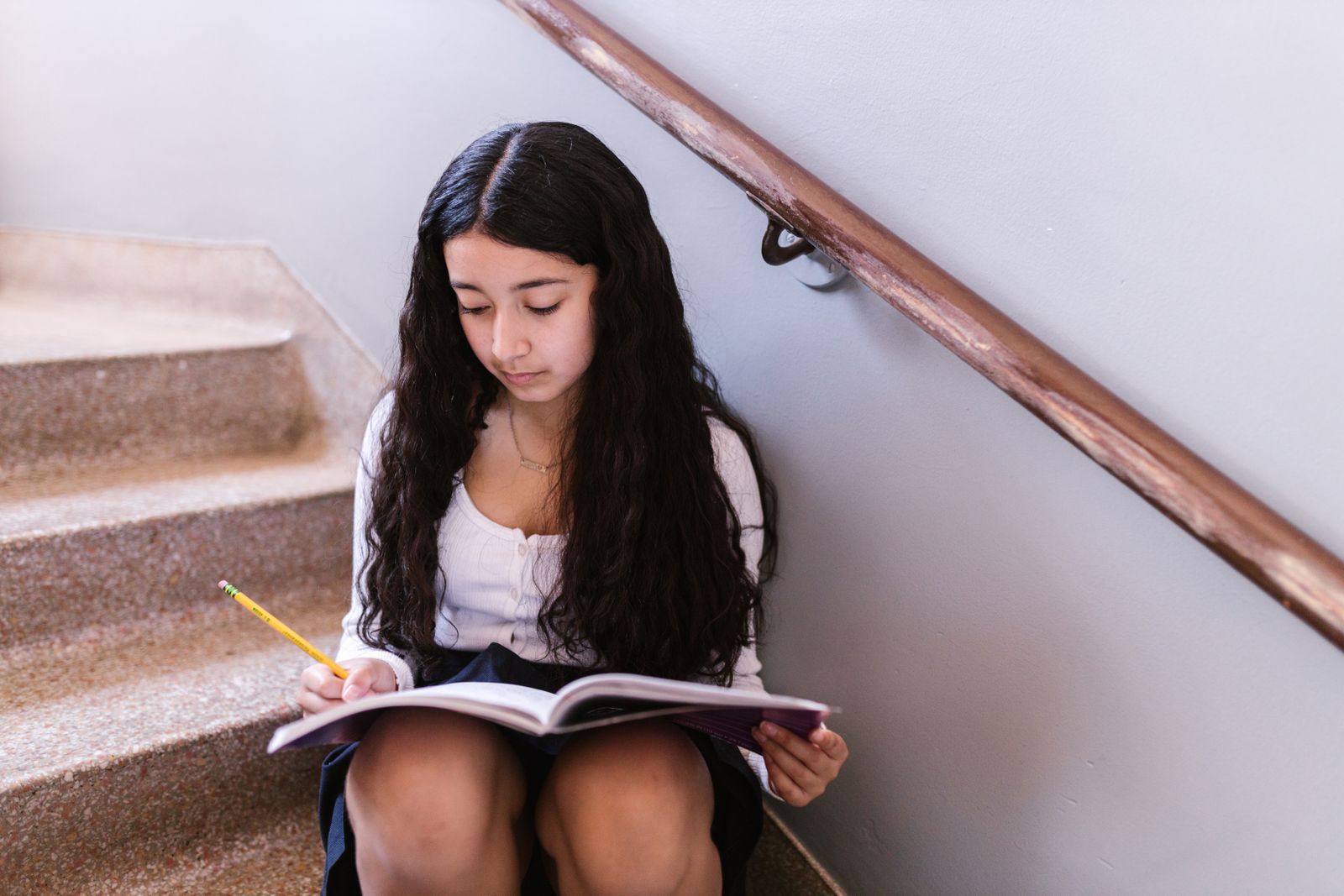
In the halls of an ordinary middle school, a young girl named Mia was dealing with an extraordinary amount of pressure. As an 8th grader, she was at an age where the world outside was beginning to stretch its arms toward her, hinting at a future filled with potential and promise. Yet, instead of feeling hopeful, Mia felt suffocated by the weight of her mother’s expectations and reactions.

When it came to academics, Mia wasn’t floundering. In fact, she was doing better than she had in previous years. However, her one weak spot was Spanish, where she held a shaky C+. With finals looming on the horizon, Mia had been pouring her heart into studying, hoping it would be enough to pull her grade up. But her anxiety didn’t stem from the test itself; it was rooted in the fear of her mother’s reaction if she didn’t perform well.
Mia had learned from experience that her mother was quick to react. Any sign of a slip-up could lead to severe consequences—losing her phone, her computer, and other privileges. To her mom, a bad grade seemed to signify a catastrophic failure, as if it spelled doom for Mia’s entire future. “You won’t get into college with grades like that,” her mother often reminded her, a phrase that echoed in Mia’s mind, amplifying her stress. “I’m still in middle school,” Mia would remind herself silently, but her mom’s pessimism felt insurmountable.
It wasn’t just the grades that weighed down Mia’s spirit. The conversations with her mother often spiraled into arguments where Mia felt unheard, dismissed, and wronged. Whenever an argument arose, Mia took the role of the peacemaker. She would apologize and try to explain her perspective calmly, but her mother never seemed to accept these apologies. Instead, she would leave the house, seeking “space,” which only left Mia feeling more guilty and confused, wondering where she had gone wrong.
In her attempts to share her struggles, Mia found herself met with skepticism. Whenever she tried to explain why she had a missing assignment or a temporary dip in her grades, her mother labeled her explanations as “lies” or “excuses.” It was as if no matter how hard she tried, nothing she said held any validity in her mother’s eyes. This lack of trust only deepened the divide between them, making the already fragile bond feel even more strained.
Despite her challenges, Mia held onto ambition and dreamt about her future. Ever since she was little, she fancied herself as a potential YouTuber. She was funny, engaging, and had the charisma that drew people in—traits she believed could serve her well on a platform like YouTube. However, her mom quickly shut down these dreams, insisting she focus on “realistic” paths. “You can’t just make videos and think that’s a career,” Mia’s mother would say, leaving her feeling stifled before she even had a chance to explore that avenue.
Even the things that brought Mia joy were criticized. Her mom would often question her choice to watch YouTube videos instead of educational content, claiming that normal teens should be engrossed in informative programming like the History Channel. “Don’t all teens watch YouTube?” Mia thought bitterly, realizing that her interests were being dismissed as “not normal.”
As the days passed, small frustrations began to pile up. Simple requests, like wanting to do chores after finishing her homework, were met with explosions of anger from her mom. “I can’t even ask to change my schedule without being in trouble,” Mia lamented silently. It was exhausting to feel like every little thing she did was scrutinized, every minor complaint blown out of proportion. All Mia wanted was for her mother to recognize her efforts and growth.
Ultimately, Mia was left feeling like she was fighting an uphill battle, trying to prove her worth and potential in a situation that felt increasingly oppressive. The fear that her mother’s harsh reactions would dictate her future left her feeling trapped and anxious. No matter how hard she studied or how well she performed, it seemed that her mother’s outlook overshadowed her own aspirations.
As she prepared for the Spanish final, Mia didn’t just grapple with the content she was studying; she was also wrestling with the weight of her mother’s expectations. All she wanted was to talk to someone who understood—the struggles of a young girl whose dreams felt like they were being dimmed by the shadow of a parent’s harsh criticism.
More from Cultivated Comfort:
- 7 Vintage Home Items From the ’60s That Are Collectors’ Dream Finds
- 7 Vintage Home Goods That Became Collectors’ Gold
- 7 Fast-Food Chains That Changed for the Worse
- 7 Frozen Dinners That Were Better Back in the Day