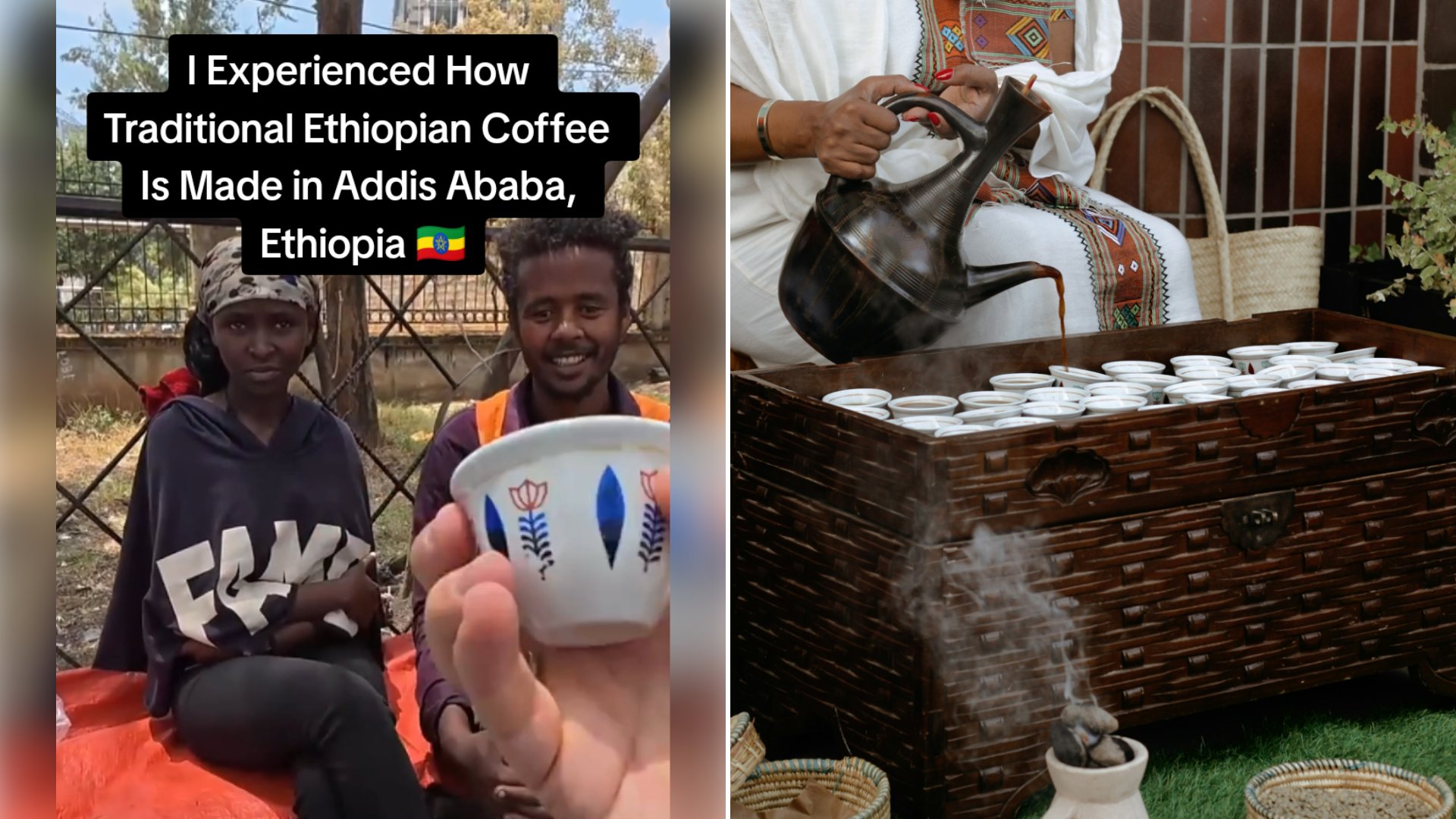
The video from @travel_with_dav, who goes by Travel With Dav, starts in the middle of a negotiation. “How much is the coffee?” he asks a man sitting by a makeshift stand on a tree lined sidewalk in Addis Ababa, Ethiopia. The answer is 25. “Good price, because everywhere is 25,” the creator says, and he gets a laugh when he calls the price honest. His caption reads “I Experienced How Traditional Ethiopian Coffee Is Made in Addis Ababa,” and on screen the clip is labeled “POV: Learning About Ethiopian Coffee Traditions.”
The stand is simple. The frames show a low seat covered with an orange cloth, a charcoal burner on the ground, kettles, a small grinder and a row of cups on a table beside a metal fence, with city buildings behind the trees. A young woman does the brewing while the man talks with the creator.
The conversation turns into a language lesson. The creator tries to call the woman over and struggles with the word, and the man corrects him: you cannot say it that way, you say “nay,” and in Amharic, he explains, “nay means come.” The creator repeats it several times, “Nay. Come,” and then greets the woman with a salaam.
Dav says he wants to see how she makes the coffee. As she warms the pot over the coals, the man tells him the name of the vessel: jabana. The frames show a black clay pot with a long neck and a small handle, sitting on a ring of charcoal. “It’s a traditional material,” the man says, and the creator repeats the name to make sure he has it. The small cups get their own lesson. The man tells him the cup is called “syni,” and Dav repeats it back before holding a patterned cup up to the camera.
The man gives his name and the creator gives his own. When sugar comes up, Dav says that cups usually arrive sweetened but he does not like sugar in coffee, and the answer is simply “no problem.” Toward the end the man points out that the cup being prepared is made of wood, “so no plastic, nothing,” and the clip closes on the creator asking once more for the name of the pot and being told again: jabana.
According to UNESCO, the Kafa Zone in southwestern Ethiopia is the birthplace of wild Arabica coffee, with close to 5,000 wild varieties of the plant, across a biosphere reserve of 760,144 hectares. UNESCO also reports that Ethiopia is preparing a nomination file to have its traditional coffee ceremony inscribed on the Representative List of the Intangible Cultural Heritage of Humanity. At a February 2025 workshop in Jimma, with more than 120 participants, a local culture official described the ceremony as “not merely about drinking coffee; it is a deeply rooted tradition,” and UNESCO says it fosters dialogue, hospitality and social cohesion. The demonstration there covered roasting and grinding the beans, brewing in a jebena, the clay pot, and serving with traditional accompaniments. UNESCO’s article does not say the ceremony has yet been inscribed.
The spelling of the pot differs between the video and UNESCO: the creator’s captions write “jabana,” while UNESCO uses “jebena.” Both describe the same clay vessel the frames show on the charcoal.
For travelers planning a similar stop, the video offers a short checklist. Ask the price before sitting, since the creator opens with that. Ask the brewer what the pot and cups are called, because naming things is what moved the conversation from a transaction to a chat. Learn one word, such as “nay,” and use it. If you do not take sugar, say so before the cup is prepared, as Dav did.
More from Cultivated Comfort
- Husband of Nearly 40 Years Opens With a Joke About Doing Everything His Wife Says, Then Names the Real Secret as a 30 to 45 Minute Cup of Coffee Together Every Single Morning
- Diner Trying Balkan Food for the First Time Finds One Man Running the Whole Plano Restaurant as Owner, Cook and Waiter, Then Leaves With Pralines and a $39.28 Receipt
- 11 Destinations Travelers Say Didn’t Live Up to the Hype