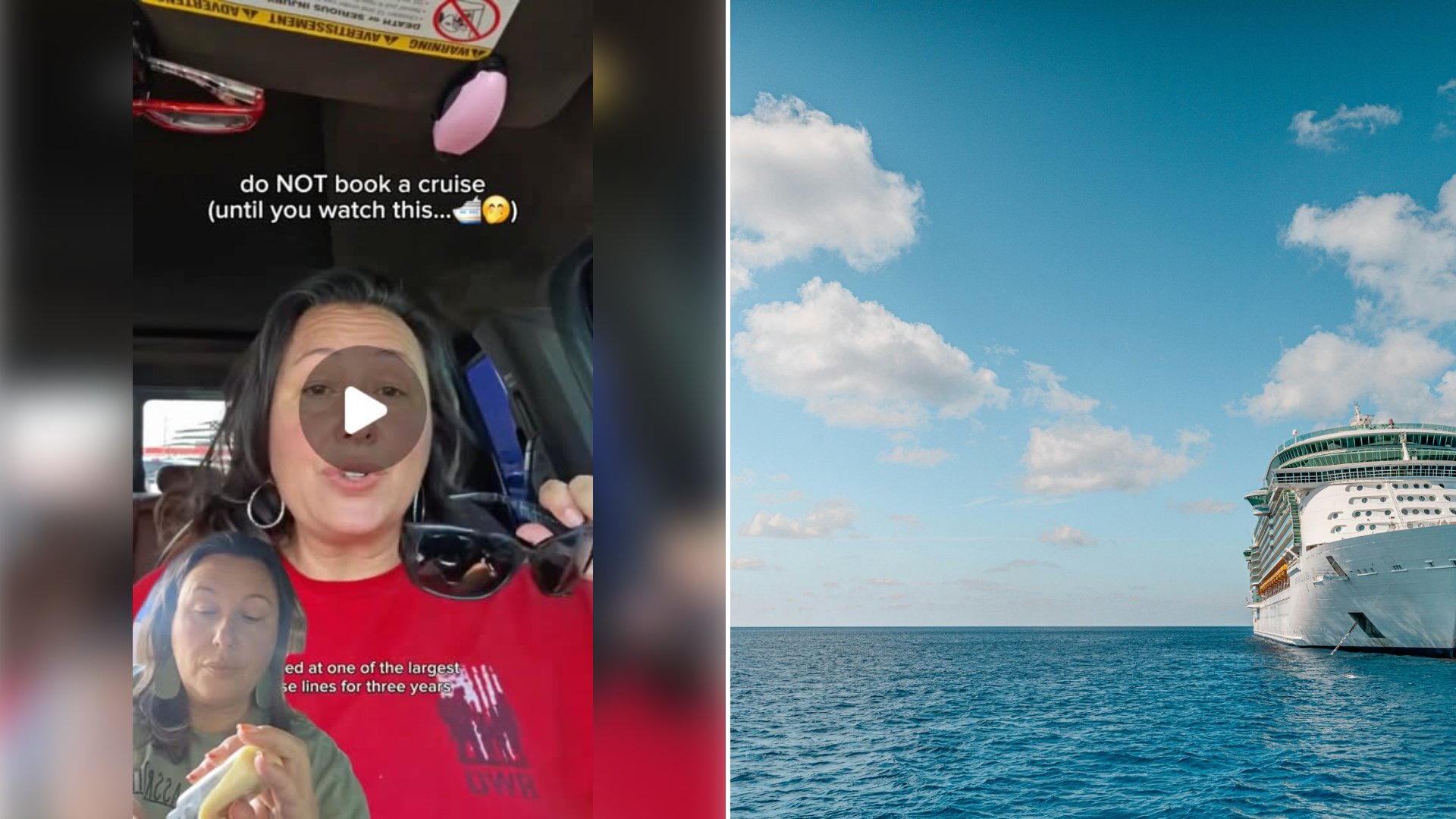
Travel creator @lillys.travel.tips opens her video with a warning that cruise lines probably won’t love what she’s about to share: a specific booking app trick she says lets anyone find heavily discounted, last minute cruise deals that rarely show up through a cruise line’s own site.
The video walks through the mechanics of the hack step by step, framing it as insider knowledge she’s not supposed to be handing out for free. That ‘they don’t want you to know this’ framing has become one of the most reliable hooks in travel content, and it works here because last minute cruise pricing really is one of the more opaque corners of the travel industry.
Last minute cruise discounts are real, and they exist for a straightforward reason: cruise lines would rather fill an empty cabin at a steep discount than sail with it empty, since an unsold cabin generates zero onboard spending once the ship departs. Discount cruise booking apps and sites built specifically around unsold inventory have grown over the past several years precisely because this pricing gap is wide and predictable enough to build a business model around.
Travel industry analysts have noted that last minute cruise fares can run dramatically lower than the price quoted months in advance for the same cabin, especially on repositioning cruises and sailings during shoulder season when demand is softer. The tradeoff is flexibility: travelers willing to book on short notice and skip choosing a specific cabin location often get the deepest discounts, while anyone needing a guaranteed category or cabin number pays closer to standard rates.
Cruise lines themselves have mixed feelings about this kind of content going viral. Deep discounting helps fill ships, which matters for onboard revenue, but it can also train travelers to wait for a markdown instead of booking early at full price, which is part of why insider-hack framing like this video uses tends to generate exactly the kind of pushback-bait energy that keeps it circulating.
For budget-conscious travelers, last minute cruise deals remain one of the more reliable ways to access a genuinely nice trip, private balcony, multiple dining venues, stops at several ports, for a fraction of the advertised rate, provided they can be flexible about timing and are comfortable booking close to departure.
Travel budgeting experts generally recommend keeping a short list of a few acceptable departure windows and destinations rather than fixating on one specific sailing, since the deepest discounts tend to show up on whichever itinerary a cruise line is most eager to fill, not necessarily the one a traveler had originally pictured.
Whether or not cruise lines are actually bothered by videos like this one, the appeal to viewers is obvious: a specific, actionable trick that promises real savings on a trip that normally carries a steep price tag, which is exactly the kind of content that gets saved and shared rather than just watched once and forgotten.