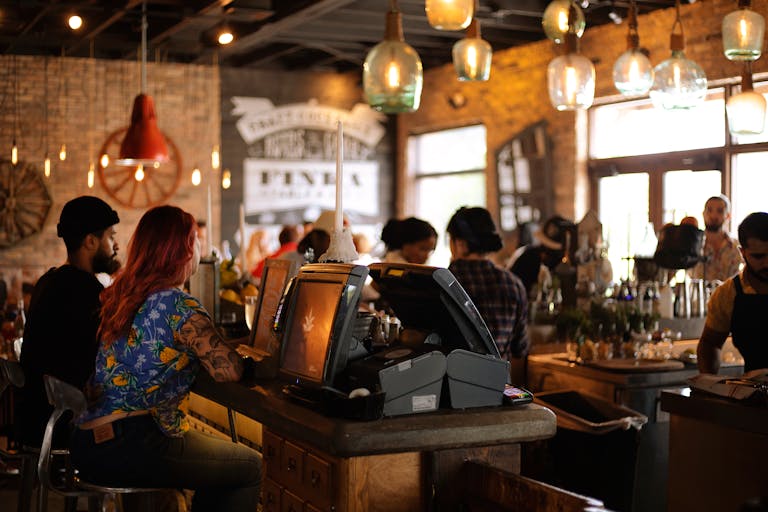
You are standing at a little shop counter in a country far from home, and the card reader flashes a question you did not expect: would you like to pay in your home currency or in the local one? It looks like a friendly courtesy. Seeing the total in dollars feels comforting. You know what a dollar is, after all, and the other numbers look like puzzle pieces.

That small, tempting question is one of the quietest ways travelers lose money. The right answer, almost every time, is to choose the local currency.
What Is Really Going On
Many card terminals and ATMs abroad offer to convert your purchase into your home currency right there on the spot. It is often called dynamic currency conversion, and it is presented as a service to you. But when the merchant or the machine does the converting, the exchange rate is typically less favorable than the rate your own card company would apply if you simply paid in the local currency. In other words, the convenience of seeing a familiar number comes at a price.
It is worth saying plainly that this is general travel guidance and not a precise calculation. Rates and fees differ from one terminal, bank and card to the next, so there is no single figure that applies everywhere. But the pattern is widely known among frequent travelers: when you are asked, decline the conversion and pay in the local currency.
Your card company will handle the conversion on its own, and that is usually the better deal. Some cards charge a fee for foreign purchases and some do not, so it is worth finding out which kind you carry before you leave.
Where You Will See The Question
This question can pop up in several places. Restaurants often bring the card reader to your table, and the screen may show both options. Hotels and shops may ask at the register. Cash machines can also offer to show the withdrawal in your home currency before dispensing money. In every case, the choice is yours, and the screen is simply giving you two buttons.
Be careful with wording on the screen. Some terminals phrase the home currency choice as the “guaranteed” or “recommended” option. Others put it first or make the button larger. A calm pause and a careful read will serve you better than a fast tap.
How To Choose Well
- Look for the local currency option on the screen and select it. If the screen only shows amounts, the local currency is usually the one you do not recognize from home.
- If a clerk asks whether you would like to pay in your home currency, a simple “local currency, please” is enough. You do not owe anyone an explanation.
- At a cash machine, if you are offered a choice before the withdrawal, decline the home currency conversion and let your own bank do the converting.
- If the terminal has already processed the payment in your home currency, ask politely whether it can be cancelled and run again in the local currency. Some businesses will do it, and some will not, but it costs nothing to ask.
Do A Little Homework Before You Fly
A phone call or a few minutes on your card company’s website can save you headaches. Ask whether your card charges extra for purchases made abroad. Ask whether the card works overseas, and let the bank know your travel dates so a legitimate purchase is not mistaken for fraud. Having more than one card in separate places is also a sensible habit, in case one is lost, stolen or declined.
It also helps to know roughly what a few common things should cost in the local currency. You do not need to be a math whiz. A rough sense of the exchange rate, checked on a currency app or on your bank’s page, lets you see at a glance whether a total is reasonable. When a screen shows a home currency price that feels a little steep, trust that instinct and look again.
Keep Your Receipts
Hold on to your receipts or snap a photo of them. When your statement arrives, compare the charges to what you remember spending. If something looks off, your card company is the place to start. Having the receipt makes that conversation faster and easier.
Why It Matters More Than It Seems
No one single purchase is going to ruin your vacation. A coffee here and a souvenir there seem trivial. But a trip is made of dozens of little payments, and a habit that costs a bit extra each time can add up to a real sum by the time you fly home. That is money that could have bought another nice dinner or a better seat on the train.
The best part is that this fix is free. You do not need a special card, a coupon or an app. You only need to notice the question, take a breath and tap the right button.
So the next time a card terminal on the other side of the world asks which currency you prefer, remember that the helpful-looking choice is not always the cheapest one. Choose the local currency, keep your receipts and enjoy the trip. Your wallet will thank you when the statement shows up.
More Stories You May Like
- Airbnb Is Limiting Checkout Chores for Guests Starting November Twentieth and Hosts and Guests Are Already Arguing About It
- Costco Shopper in Irvine Finds the Rice She Bought Was Infested with Bugs and Shows What She Found Inside the Bag
- Woman Describes Her Worst Restaurant Experience Yet and Says She Will Not Be Going Back to the Place After What Happened