Travel creator Marina Barakzai has a message for anyone who has ever sat quietly through a flight wishing things were easier. According to her, airlines are required to give you 11 free services on your next flight, but they will not offer a single one unless you say the right words out loud. These are not credit card pitches or gimmicks, she says. They are services and rights that come with the ticket you already bought, and almost nobody uses them.
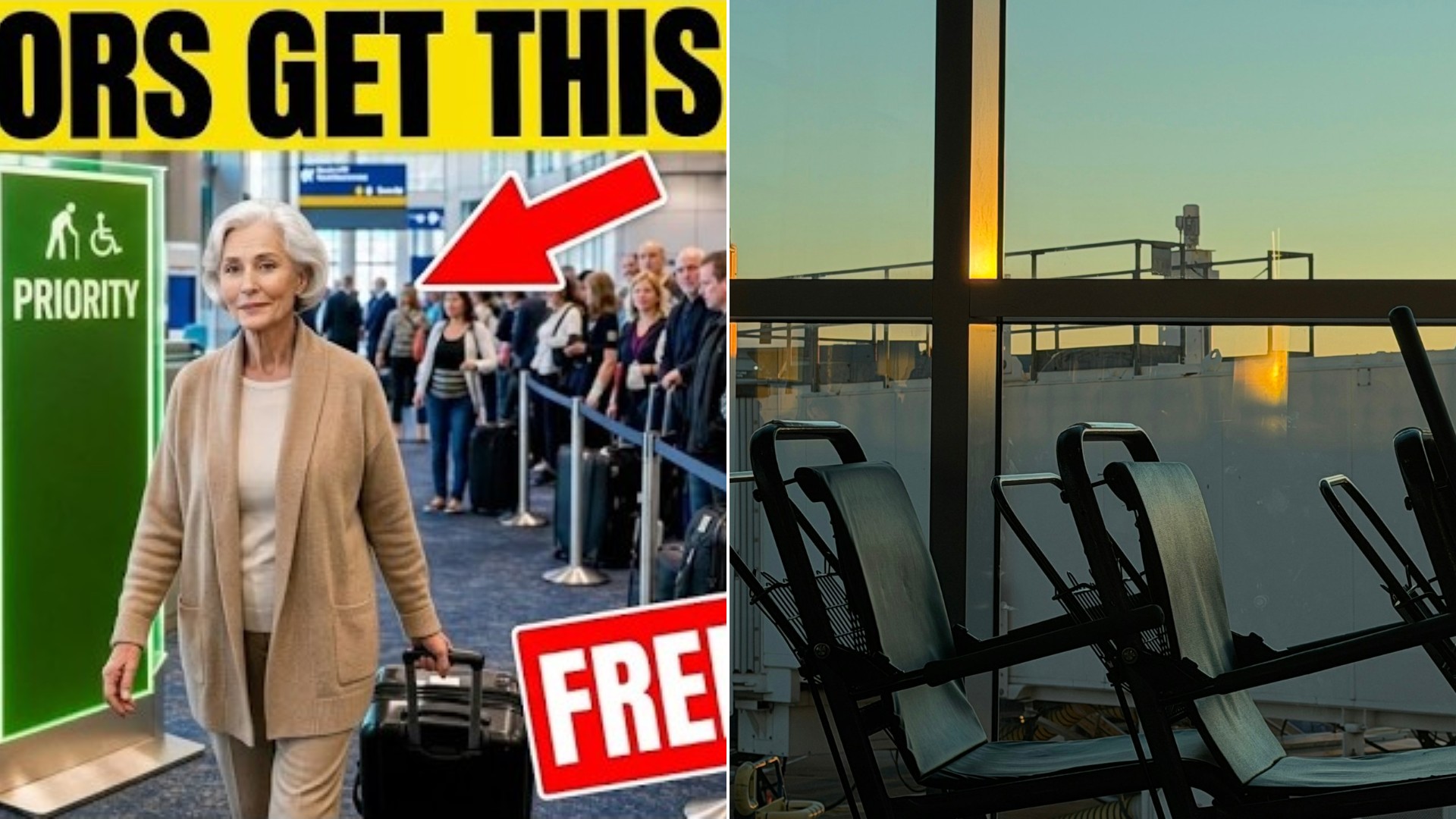
Her explanation is simple. Airlines are not hiding any of this, she says, but every service they announce costs them money, so they stay quiet and wait to see who asks. Most people never do. We were raised not to make a fuss, Barakzai says, and the airline business has benefited from that politeness for a very long time. Here are all 11 perks, counted down, with the exact words she suggests for each one.
11. The Escort Pass
That goodbye at the curb does not have to be the end. Barakzai says many airlines will issue a gate pass at the staffed check-in counter for someone who is helping a traveler get to the plane, usually at the agent’s discretion, so a polite ask matters. The pass goes through security like a boarding pass, and your family member can sit with you at the gate until boarding starts. Go to the counter, not the kiosk, bring your helper’s government photo ID and say, “I’d like to request an escort pass so my daughter can walk me to the gate.”
10. The Free Gate Check
When the gate agent announces the overhead bins are full, Barakzai calls that an opportunity, not an inconvenience. Your bag is tagged, handed over and waiting at baggage claim, with no fee and no hoisting it over your head. She gate checks on purpose now and walks down the jet bridge with only a small personal bag. Volunteer early, make sure the tag shows your final destination, and keep medications and valuables in your personal item.
9. The Special Meal
On most long international flights, she says, airlines offer special meals at no extra charge, including low sodium, diabetic, gluten-free and heart-friendly options. You do not need a prescription, only a request ahead of time. The bonus is that special meals are usually served before the regular cart arrives. Order through the manage my booking section at least 24 to 48 hours before departure and ask, “Which options are available on my flight?”
8. Pre-Boarding
Barakzai says she used to assume pre-boarding required paperwork or a doctor’s note. It does not. Under federal rules for air travel, if you need extra time or help getting onto the plane, you tell the gate agent and you board before the crowd, and your travel companion boards with you. You do not have to share a diagnosis. Speak to the agent before boarding begins and say, “I need a little extra time to board. I’d like to pre-board, please.”
7. Help From Door To Gate
Airlines are required to provide wheelchair and guided assistance for passengers who need it, from the curb through security to the gate and onto the plane, and again at your connection. She says it is free, and a tip is a kind gesture, never a requirement. You do not have to be unable to walk. If distance is the problem, say so, and some airlines will arrange help for just the long stretches. Request it when you book, confirm 48 hours out and ask again before you leave the plane.
6. The Senior Fare
Comparison websites ignore your age, Barakzai says, and special fares for older travelers on some airlines do not always appear in normal search results. On United’s website, she says, a passenger type menu lets you choose 65 and over, and any senior fares on that route will show up. On other airlines the codes may only be visible to a reservations agent. Do not ask if there is a senior discount. Ask, “Is there a senior fare filed on this route that is not appearing online?”
5. Lounge Access You May Already Own
Lots of travelers over 60 carry a credit card with airport lounge access or a discount on day passes and never use it, she says. Lounges offer quiet seats, free snacks, Wi-Fi and a clean restroom, which beats a pricey sandwich on a metal chair. Some airlines sell day passes outright. Check your card’s travel benefits tonight and ask the desk, “I have a long layover. Do you offer day passes?”
4. A Seat Change After Boarding
Once the cabin door shuts, Barakzai says, the cabin belongs to the crew, and flights almost always have a no-show or two. A calm request after boarding is complete, with a real reason like a bad knee, works more often than you would think. It is never guaranteed, and she says passengers who argue do not get moved while those who ask kindly sometimes do. Say, “I’m having some trouble with my knees in this seat. If anything opens up with more legroom or aisle access, I’d really appreciate it.”
3. The Delay Care Package
If a delay is the airline’s own doing, such as a crew problem, maintenance or scheduling, Barakzai says most big US carriers have made written commitments, which can include meal vouchers and a hotel overnight. Those commitments are listed on a public Department of Transportation dashboard. She adds that since late 2024, federal rules call for automatic cash refunds when a flight is canceled or significantly changed and you decline the rebooking. Keep your receipts and say, “This was a controllable delay. I’d like the meal voucher and hotel your airline committed to on the DOT dashboard.”
2. The Seat The Law Sets Aside
Certain seating accommodations are protected by federal rules, she says. If you cannot lower yourself over a fixed armrest, the airline must seat you on the aisle with a movable armrest. If you have a leg that cannot bend, you can ask for extra legroom, and a companion who needs to help you should sit next to you at no extra charge. Call the accessibility desk, not general reservations, at least 48 hours before the flight and say, “I need to speak with the accessibility desk about a seating accommodation.”
1. The Federal Referee In Every Airport
Her number one is the complaint resolution official, or CRO. Every US airline is required to have one available at every airport it serves for every hour it operates, Barakzai says, and the person is trained and authorized to settle disability and assistance disputes on the spot, in person or by phone. Use it when an assistance right is denied, not for ordinary fare disputes. Stay calm and say, “I’d like to speak with your complaint resolution official, please.” Most gate agents hear that request only a handful of times in their career, she says.
Barakzai also offers a few bonus tips. Travelers 75 or older can ask for modified TSA screening, which in many cases means keeping shoes and a light jacket on, and TSA Cares at 1-855-787-2227 can arrange support if you call at least 72 hours before you fly. Her bottom line is the same as everything above: the help is real, and you only get it if you ask.
More Stories You May Like
- Flight Attendant Helps a Passenger Who Cannot Find Her Seat Only to Discover She Was Searching for Seat G18, Which Was Actually the Gate the Plane Was At
- She Told Her Mom They Were Heading to Florida but Waited Until the Airport to Reveal They Were Actually Going to Paris
- Man Says the Best Tacos in Ireland and Maybe All of Europe Came from a Place He Did Not Expect