Picture the scene at the gate. You have made it through security, your boarding pass is scanned, and the agent looks you up and down and tells you to go change or miss your flight. That is exactly what a woman in workout shorts and a cropped top was told recently, according to Off the Record Travel, a channel run by a flight attendant who goes by Maya and says she has spent 25 years working in the air.
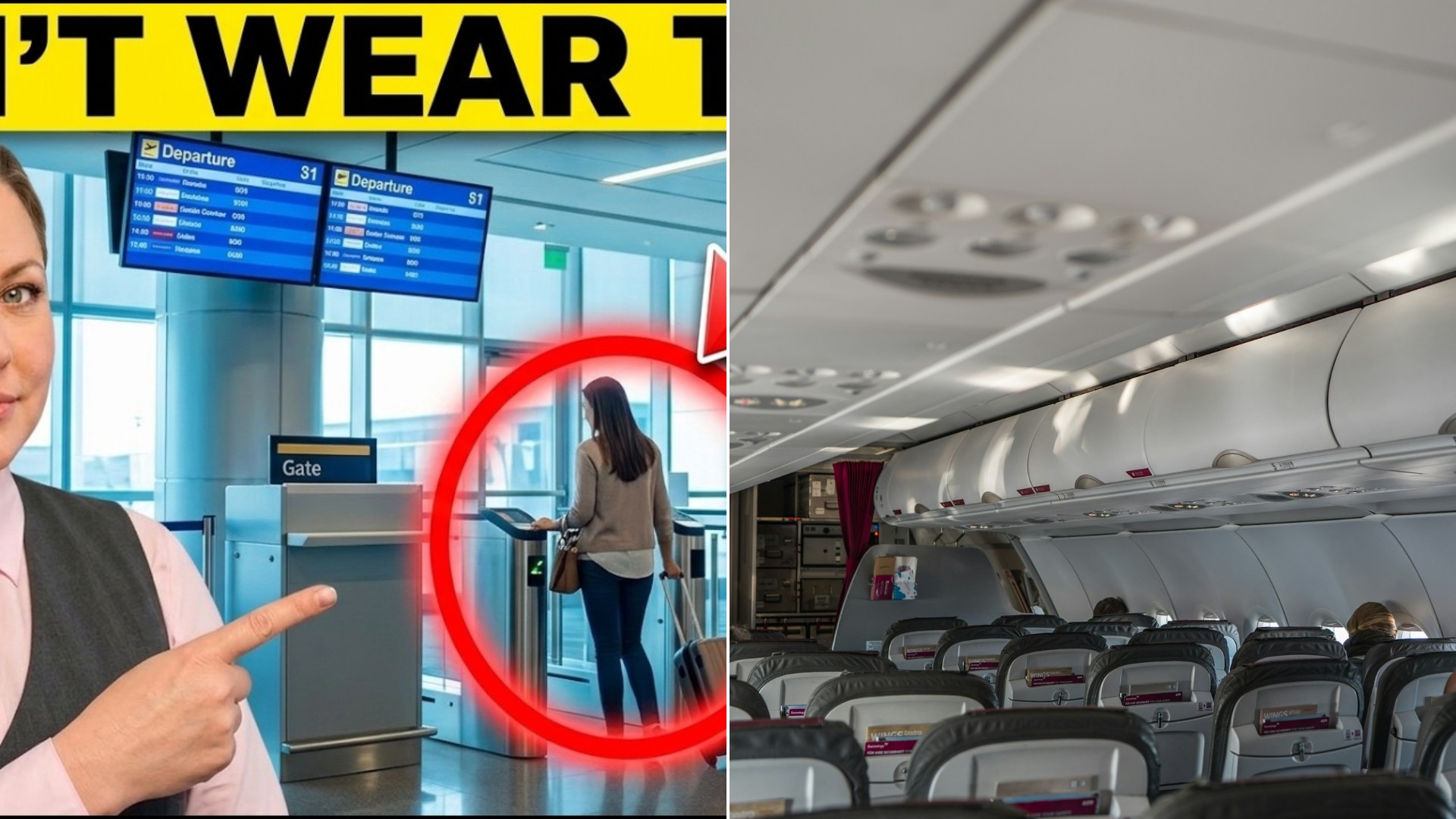
Maya says there are 12 clothing mistakes that can leave you frozen, bloated or miserable for eight hours in the air, and that some of them can get you stopped and denied right at the boarding gate. She says gate agents actively enforce several of these under airline policy, and she walks through every one of them.
Her first warning is about swimwear, sleepwear and overly casual attire. Airlines expect standard coverage before a passenger is allowed down the jet bridge. In the case she describes, the traveler in the cropped top was told to put on long trousers or risk missing her departure. Maya says other airline staff later admitted they had never heard of that rule, which shows the biggest problem with dress codes: they are completely subjective. There is no universal passenger dress code, and everything depends on which gate agent scans your boarding pass and how that person reads your outfit.
Why Your T-Shirt Slogan Can Ground You
The second rule is about offensive or provocative slogans on shirts. Maya points to a United passenger who was recently ordered off a plane after the crew flagged the text on his T-shirt. He had to change before he was allowed to fly, and United later confirmed that he complied by changing his shirt.
She says the danger for travelers is that United’s official policy lets gate staff and flight attendants deny boarding to anyone wearing clothing deemed indecent, vulgar or offensive, yet the contract never defines those words. American Airlines, she says, states in its conditions of carriage that passengers must dress appropriately and bans offensive attire. Delta uses almost identical legal language, reserving the right to refuse carriage if a passenger’s clothing creates an unreasonable risk of offending or irritating other travelers.
Do Not Argue, And Why Your Luggage May Fly To Paris
Here is the hard truth Maya wants you to hear. Once a gate agent or purser makes a call under the contract of carriage, arguing only escalates the situation into a security refusal. If you are asked to cover up, she says, do it immediately without debate. You can file a customer care complaint after you land, but arguing at boarding guarantees your luggage flies to Paris while you stay stranded in the terminal.
Even if your shorts, mini skirt or cropped tank pass the gate agent, Maya says to think twice before putting bare skin on an airplane seat. She calls it a hygiene nightmare, and says flight crews know exactly what happens on those seats between flights: people sneeze, spill sodas, drop greasy snacks, and parents change dirty diapers right on seats and tray tables. Aircraft turns between domestic flights can be as short as 35 minutes, and she says deep fabric shampooing of seat cushions happens only during heavy maintenance checks months apart. Her advice is pants or breathable ankle-length trousers that put a layer of fabric between you and the cabin furniture.
The Comfort Mistakes That Ruin Long Flights
Stiff, heavyweight denim is next on her list. She says cabin pressure at cruising altitude is equal to about 6,000 to 8,000 feet above sea level, which expands trapped gas in your stomach and intestines by 20 to 30%. A rigid waistband that felt fine at security can then dig into your gut, and thick seams pressing on your thighs and behind your knees can restrict circulation during a six-hour flight in economy. Maya says that raises the risk of swollen ankles and blood clots.
Temperature is another trap. Maya says the cabin can feel like a greenhouse while boarding, then chill down to about 62 degrees shortly after takeoff. Cheap, non-breathable polyester or heavy fleece leaves you sweating on the tarmac and shivering in damp fabric afterward. Her crew tip is natural layers such as fine merino wool, bamboo blends or technical moisture-wicking fabrics, plus travel pants with a wide, flat elastic waistband and a discreet zippered pocket to keep your passport, cards and boarding pass from slipping between the seat cushions.
The classic pullover hoodie also gets a thumbs down. Wedged into an 18-inch economy seat, taking one off means throwing both elbows out, blinding yourself for a few seconds, knocking off your glasses and probably yanking your neighbor’s headphones out. Maya says to wear a full-zip cardigan, fleece or zip-up hoodie so you can adjust in two seconds with no wrestling.
Smells, Shoes And Other Gate Problems
Maya says excessive perfume, cologne or scented oils can also get you pulled aside. Under airline tariffs, she says, customer service supervisors have authority to refuse boarding to passengers whose odor creates a severe nuisance or medical disruption. With about 300 passengers sharing one enclosed cabin, she says heavy fragrance can trigger asthma attacks, migraines or hives in neighbors who cannot change seats. She says she once had to give emergency help to an asthmatic senior passenger because a traveler two rows ahead sprayed cologne. Save the signature scent for the hotel.
Footwear matters too. Flip-flops, pool slides and open-toe sandals are among the worst choices, Maya says, because in an emergency evacuation you have 90 seconds to get down an inflatable slide and foam sandals fly off the second your feet touch it. She adds that rolling suitcases run over exposed toes in crowded terminals, cabin floor drafts can drop to 58 degrees, and several airlines require secure footwear. American Airlines bans walking barefoot, she says, and United, JetBlue and Southwest say adults and children over five must wear secure footwear unless medically exempt. Her pick is comfortable slip-on walking sneakers with socks.
Jumpsuits, Maxi Skirts, White Sweaters And More
A one-piece jumpsuit is a poor match for a lavatory that measures roughly three feet by three feet. Maya says you have to unzip from neck to hip and peel the garment down to your knees, while loose legs and sleeves dangle on a floor that is almost never just sink water. Floor-dragging maxi skirts and ultra-wide palazzo pants soak up the same grime, and long hems can get caught in escalator comb plates and moving walkways. She suggests tapered trousers, ankle-length joggers or tailored travel pants.
Light-colored outer layers like white, cream and beige sweaters look elegant in an airport selfie, but Maya says one burst of turbulence during meal service can send hot coffee or red wine onto your chest. She recommends charcoal, navy, burgundy or forest green on top. Her last two mistakes are big plastic hair claw clips, which she says push into the base of your skull against the headrest and cause tension headaches, and wearing contact lenses. She says cabin air humidity averages only 10 to 12%, which can turn soft lenses into stiff, irritating discs, so she wears glasses and keeps preservative-free eye drops in her personal bag.
Maya’s bottom line is that dressing for air travel is not about looking sloppy. It is about dressing smartly so you breeze past gate agents, protect your health and arrive refreshed.
More Stories You May Like
- She Met Her Husband 39 Years Ago, Fell In Love With His Mom, And Her Dream Of An In Law House On Their Property Finally Came True
- Airbnb Host Reacts to the New Checkout Rules and Says What Guests Are Really Going to Face When the Changes Take Effect
- Guest Spends a Night at the Ritz Carlton Paris and Finds It Old Looking Expensive and Short on Customer Service