Thanksgiving is the biggest meal of the year, and the turkey is the star. It is also the one dish where a shortcut can turn a joyful table into a miserable weekend.
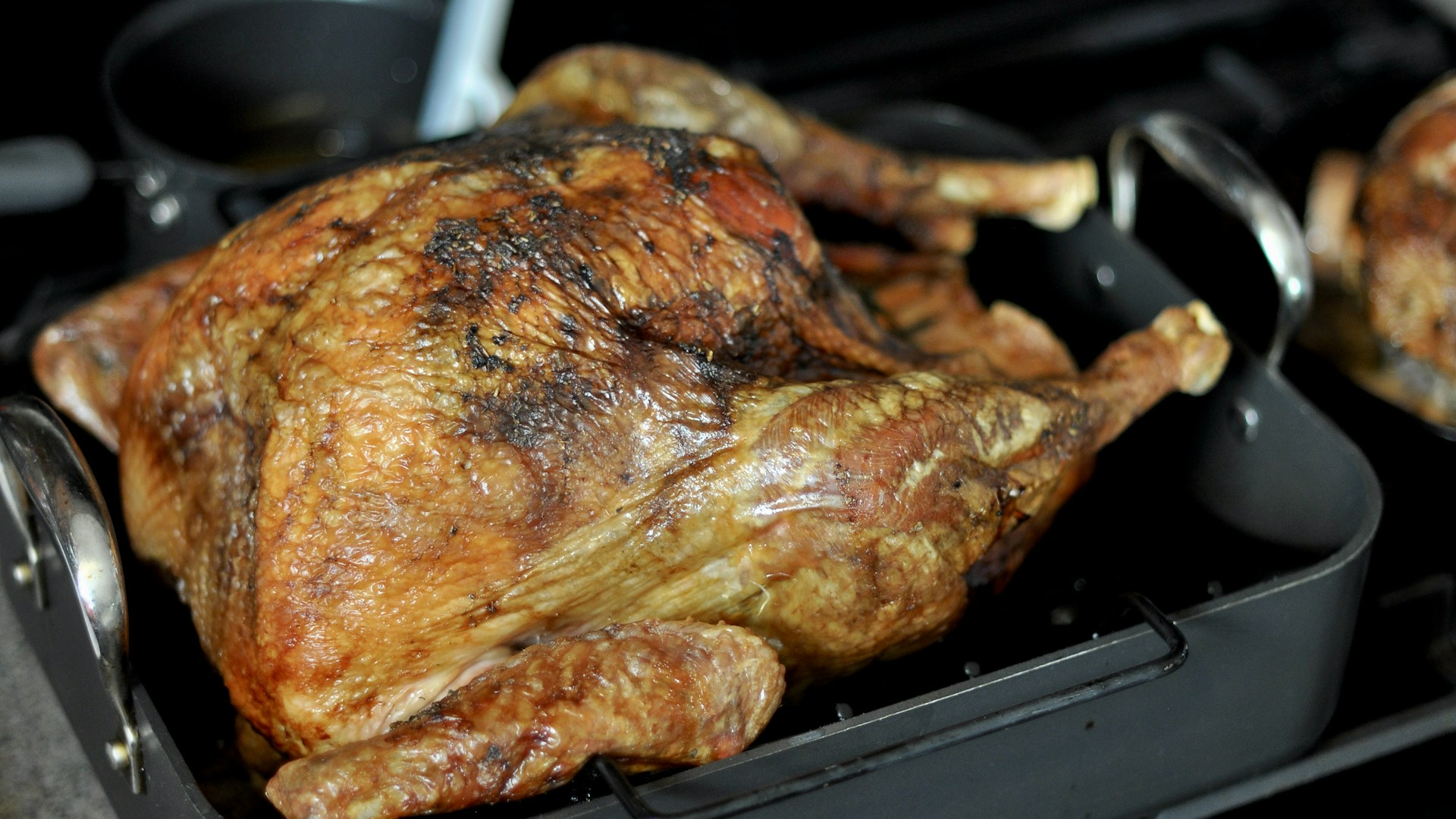
The U.S. Department of Agriculture put out a press release on November 12, 2024, titled Keep Food Safety in Mind this Thanksgiving. It lays out the steps that matter most.
Here are seven things you should never skip when cooking your Thanksgiving turkey, all from USDA’s guidance.
None of them takes special skill. They just take a little planning, and the earlier you start, the easier the day will be.
1. Never Skip A Safe Thaw
A frozen bird needs time. USDA says that in the refrigerator, at 40°F or below, you should allow about 24 hours for every 4 to 5 pounds.
If you are short on time, USDA says cold water works at about 30 minutes per pound, and you must change the water every 30 minutes. A turkey thawed in cold water should be cooked immediately.
Do the math early. A big bird can take days in the refrigerator, so count backward from Thursday and give yourself a cushion.
2. Never Skip The Food Thermometer
Color and juices are not a reliable test. USDA says to cook the turkey to a minimum internal temperature of 165°F, checked with a food thermometer.
The agency says to check in three spots: the thickest part of the breast, the innermost part of the thigh and the innermost part of the wing. It also says not to rely on a pop-up indicator alone.
Many of us grew up trusting the little plastic button. USDA’s message is to use a real thermometer every time, and to check all three spots, not just one.
3. Never Skip Checking The Stuffing
Stuffing soaks up turkey juices, so it needs the same care. USDA says stuffing must also reach 165°F in its center.
If it falls short, keep it cooking. A few more minutes in the oven are worth it.
Taking the temperature of the stuffing is a simple habit, and it protects everyone at the table.
4. Never Skip Cleaning And Sanitizing The Kitchen
Here is a surprising number. USDA says about 30% of consumers in its study did not properly clean and sanitize their kitchen surfaces.
The agency also says washing a raw turkey is risky. If you do, clean the surrounding surfaces with soap and water, then sanitize.
Think about the counters, the cutting boards, the sink and the faucet handles. Raw turkey touches more than you remember during a busy morning.
5. Never Skip The Cold Chain At The Store
Food safety starts in the grocery aisle. USDA says to buy turkey and other perishables last, and to use insulated bags with cold sources if the trip home takes more than 1 hour.
It adds that you should check the turkey packaging for tears or leaks, bag raw meat separately in your cart and put perishables in the refrigerator as soon as you get home. The agency calls the range between 40°F and 140°F the Danger Zone.
Buying the turkey last means it spends less time warming up in your cart or trunk. A cooler bag with ice packs is a small cost for peace of mind.
6. Never Skip The Two-Hour Rule
Once the feast is on the table, the clock is running. USDA’s two-hour rule says to discard perishable food that has been left at room temperature for more than 2 hours.
Keep hot foods at or above 140°F and cold foods below 40°F, for example by placing them over ice.
A slow cooker or warming tray can help hot dishes stay at the right temperature. For cold dishes, a bowl set inside a larger bowl of ice works well on a buffet.
7. Never Skip Packing Up The Leftovers Quickly
When everyone is full and sleepy, it is tempting to leave the platter out for later. USDA says to refrigerate leftovers within 2 hours of serving.
The agency suggests carving the turkey into smaller pieces and storing it in small, shallow containers so it cools faster.
Big bones and deep pans hold heat. Cutting the meat up and spreading it out lets the cold air do its job and gets the food into the refrigerator in time.
If you get stuck, help is a phone call away. USDA lists its Meat and Poultry Hotline at 1-888-674-6854, open 10 a.m. to 6 p.m. Eastern time Monday through Friday, and from 8 a.m. to 2 p.m. Eastern time on Thanksgiving Day.
It also helps to assign jobs. One person can watch the clock and the thermometer while another handles the leftovers, and the cook gets to enjoy the meal too.
Families who plan these steps ahead of time tend to have a smoother day, with less scrambling at the last minute. A written timeline taped to the refrigerator keeps everyone on track.
Remember that the oven is only part of the story. Each of these steps, from the cart to the refrigerator, protects the people you love most.
Print this list and tape it inside a cabinet. A calm kitchen and a thermometer will carry you through the day.
More Stories You May Like
- 7 Money Mistakes Couples Make When They Avoid Talking About Finances Before Retirement and the Conversation to Have Before a Crisis Hits
- Thanksgiving Leftovers Can Make Guests Sick If They Sit Out Past Two Hours or Stay in the Fridge Past 3 to 4 Days and USDA Says So
- 6 Ways to Stop Warehouse Club Bulk Buying From Costing You More When the Giant Pack Spoils Before You Can Finish It or Freeze It