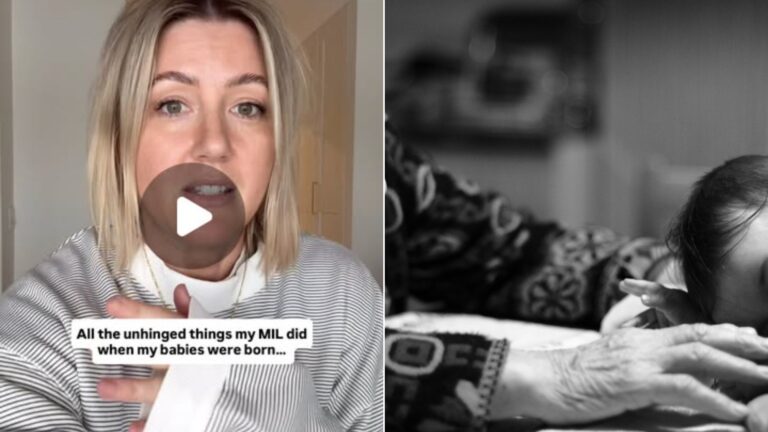
Millions of people watched a woman walk back to her seat at a San Francisco ballpark with a baby strapped to her chest and her arms full of food. Then the internet decided it knew everything about her marriage.

The woman is Erika, and she says the version strangers argued about was not the version that happened. In a long post on her Substack, “I’m the Mom in That Viral Giants Clip. Let Me Tell You About My Husband,” she walked through the whole night, and by her own telling, it is a sweeter story than the one that spread.
“Mom Of The Year” Became A Weapon Against Her Husband Overnight
According to Erika, the moment that went around the web came from a Giants broadcast. The cameras caught her returning to her seat with her daughter, Anastasia, in an Ergobaby carrier and her hands full of food.
She says the announcers supplied their own dialogue, joked about her husband, Ramses, and dubbed her “mom of the year.” Her family laughed at first. Friends and relatives called and texted right away, and she says anyone who knows them knows how silly it is to suggest Ramses never helps with the kids.
Then the clip traveled. Erika says viewers took the made-up narration as proof of an unequal marriage. Commenters called Ramses names, TikTok commentary videos explained why she should leave him, and some strangers sent her messages telling her the same.
“My name is Erika. Our baby is Anastasia. My husband is Ramses,” she wrote. “Before you decide what our marriage looks like, I would like you to hear from the woman you’re defending.”
The Brisket Sandwiches, The Loaded Fries And The Offer Nobody Heard
Here is her account of what really happened. Around the fifth inning, she got up to use the restroom. Ramses offered to take the baby, but she wanted to keep her close.
San Francisco night games get chilly, she explains, and the family calls Anastasia their little “hot pocket” because her body heat keeps a parent warm in the carrier. Since she was already up, she changed the baby’s diaper too.
On the way, she texted Ramses a photo of the menu at the Field Club. He answered that he would have whatever had the shortest line. She came back with brisket sandwiches and loaded fries.
Ramses moved her jacket to clear her seat, greeted his smiling daughter and asked whether she wanted to eat first. In the video, Erika says, you can see her head turn to him as she speaks. She told him to go ahead. She had eaten before they left, and she knew he had not had a full meal all day.
“There Was No Argument About Ketchup,” She Says
The part that stung most, she says, came next. Ramses offered to take the containers off her lap. She said she was fine, since holding them kept the food off the dirty stadium floor and she was saving the nachos they planned to share later.
Then, before taking a single bite himself, he offered to hand feed her and share his sandwich. She told him to enjoy it. “Then he ate, as I had told him to,” she wrote.
When she turned to talk to the woman sitting beside her, Erika says she was telling her about their daughter, and she was not complaining about her husband. “There was no argument about ketchup,” she wrote, and nobody accused anybody of forgetting anything.
Her summary of the whole mix-up is simple. “We could hear each other,” she wrote. “The announcers and audience couldn’t.”
A Layoff, A New Mortgage And The Husband Who Stepped Up
Erika says the clip also missed the bigger picture of how the two share their load. Ramses puts their son to bed while she puts Anastasia down. They both change diapers, go to medical appointments, read and play with the kids.
She says there were many times she needed time to herself and he took care of the children. They have been part of each other’s lives for nine years and are now raising two kids under two.
Then came the money story. Six weeks before her daughter was born, Erika says, her employer of 13 years laid off her entire division. Ramses had just put the down payment on a bigger home, so he suddenly faced the mortgage and a remodel on his own.
Her employer-provided medical coverage was set to lapse before the birth. She says Ramses made it possible for her to keep seeing the doctors she was comfortable with.
After complications following the birth left her dealing with postpartum depression, stress and anxiety, she says he told her to focus on feeling better. Since then, she writes, he has worked to let her stay home with the kids while he handles the bills and oversees the work on their new house, “especially in San Francisco.”
That Night, “I Chose To Take Care Of Him”
Erika says ballgames are a family tradition. They took the kids to Giants Opening Day, and each year they travel to at least one away game with the 49er Faithful. Other fans, she says, have cheered them on as a great team.
The night of the clip, she says, it was her turn to give. “Our marriage has room for either of us to need help,” she wrote. “That evening, I chose to take care of him.” She had planned the game as a quiet evening for Ramses to enjoy baseball and ballpark food, and she says one camera moment is only a slice of all the times he has done something for her.
She also wants fathers included in the conversation about support. “We talk about mothers’ mental health and the importance of supporting women,” she wrote. “I also think fathers deserve that same care and consideration.”
Her Message To The Broadcasters And The Strangers
Erika is gracious toward the announcers. She says her husband has spent years listening to them and was excited to get home and send them an email thanking them for including the family. “I believe you meant no harm,” she wrote.
But she adds that the jokes helped turn “a moment of love and support into something strangers used to ridicule my husband and judge our marriage.” In her words, a few moments of amusement became days of real pain for her family.
To the strangers who insulted Ramses, she asks for a moment of reflection. She says her children may one day search for this memory and find people calling their dad a deadbeat. She says both she and her husband received messages ranging from mildly annoying to deeply disturbing, and some people went looking for their names and phone numbers.
Ramses, she says, has handled the attention with remarkable composure and can even joke about it. Erika has found it harder, and she says he was the one who comforted her when she cried over the comments. He did not want her to write the post. She felt compelled to speak for herself because so many people were speaking for her.
Media outlets across the country asked the couple to tell their story. They have not wanted to give interviews.
What To Do Before You Judge The Next Viral Moment
Erika’s post ends with a plea that works well beyond one ballgame. “If our viral moment contributes anything to the ongoing cultural conversation about how we judge what we see online,” she wrote, “I hope it reminds us to be more comfortable” owning up to the fact that we saw a few seconds of someone’s life.
Her idea of the benefit of the doubt is more than a polite phrase. She calls it “a life philosophy that asks us to be curious before we are certain.” A few habits make that easier in everyday life.
- Remember that a short clip shows hands and faces, not conversations. Audio, history and context rarely make it into a viral moment.
- Be wary of narration. When someone else supplies the dialogue, the words may say more about the joke than about the people on screen.
- Wait before you share, comment or send a message. A few minutes can be the difference between a laugh and real harm to a stranger.
- If the person in the clip speaks up, listen. As Erika put it, supporting her also means listening when she tells you about her own life.
Her final line is the one worth keeping. Thank you for calling me “mom of the year,” she wrote, but she can only be that “with the dad sitting next to me.”