Hand a stranger a few extra dollars after a haircut in Chicago and nobody blinks. Try the same thing in Tokyo and you may leave the shop with a puzzled look and your money handed right back.
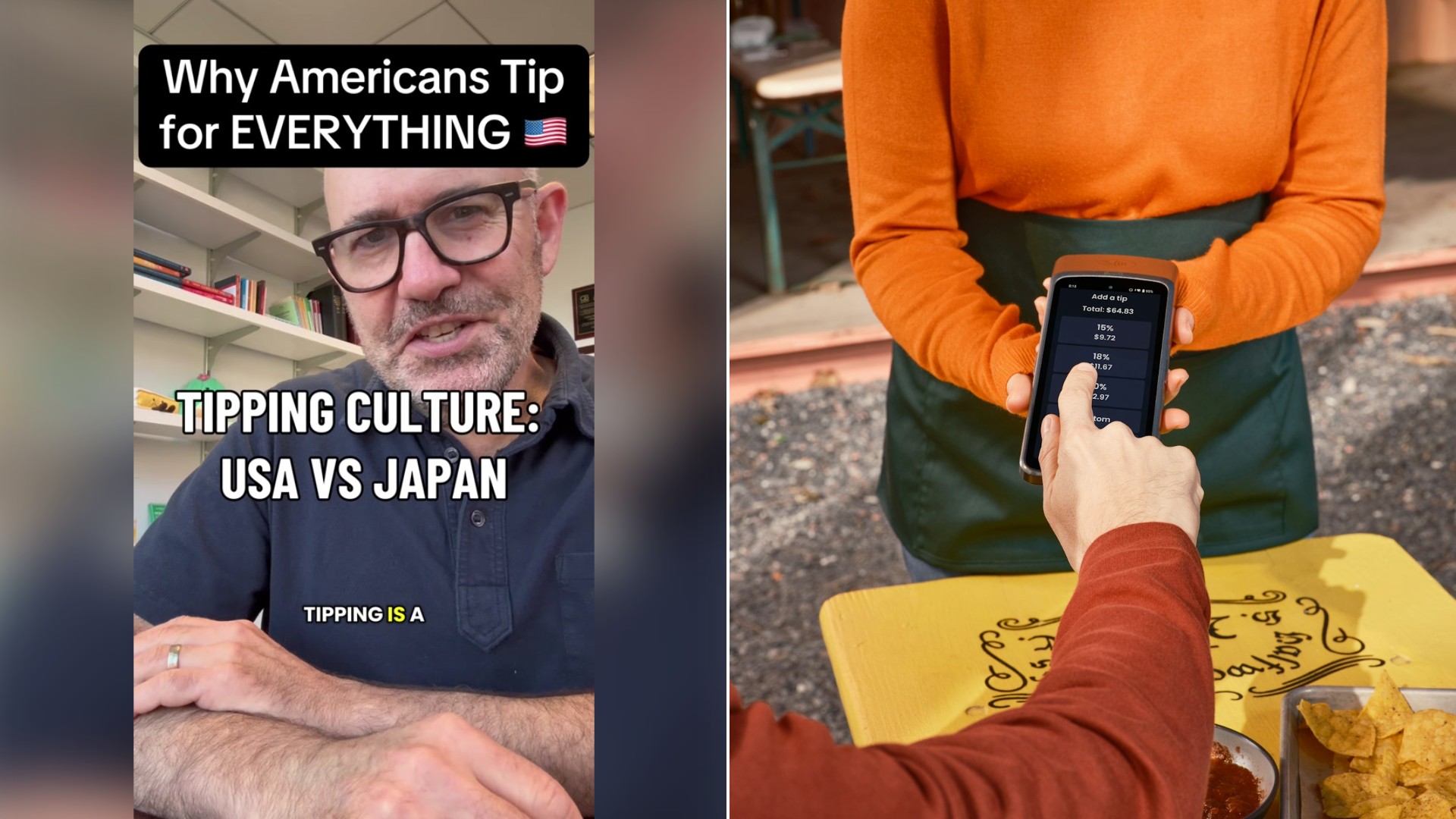
Tipping is one of the strangest rituals we share, and researchers have gone looking for the reasons. A cross-country study published in the Journal of Consumer Research examined tipping customs across 33 service professions, and the gap between the United States and Japan was one of its most striking findings.
The study is the subject of a popular TikTok from @andymolinsky, who walks through why tipping feels almost mandatory in America and unusual in Japan.
Americans Tipped In 31 Of 33 Jobs, More Than Any Other Country In The Study
The researchers checked whether 33 kinds of service workers were typically tipped, from waiters and taxi drivers to hairdressers. The United States came out on top, with Americans tipping in 31 of those 33 jobs.
Japan sat at the opposite end. According to the video, it was such an outlier that it did not even fit the researchers’ model.
@andymolinsky
Think about what that means in practice. In one country, nearly every person who serves you expects a little extra. In the other, almost nobody does.
“A Tip Does More Than Pay For Service,” And That Is The Problem In Japan
The explanation the researchers discussed centers on a Japanese concept called on. It refers to the feelings of gratitude and indebtedness that come with receiving a benefit or a favor.
A tip, the video explains, creates a small moment of gratitude and obligation between two people. That sense of owing someone something is exactly what Japanese culture tends to avoid.
So in Japan, excellent service is simply part of the job. Doing the work well is the job, and not turning it into a favor also avoids creating that feeling of obligation on either side.
Why Do Americans Tip So Much? A Follow Up Study Points To Anxiety
The researchers did a follow up study, and the result is a surprise. Countries whose populations scored higher on neuroticism, one of the big five personality factors that reflects more anxiety, tipped in more professions.
The video says this supports an old idea from anthropology: that tipping evolved partly to ease the envy of the people serving us. When someone waits on you, a tip is a way of saying, I see you, please do not resent me.
It is one theory among several, and the video itself treats it as a fascinating insight into the practice, not the final word. Psychology is part of the story, but it is not all of it.
The Reasons We Tip Are Not All The Same
The caption adds another layer. Research on tipping motivations suggests that people tip for different reasons depending on the service.
Sometimes it is to reward good work. Sometimes it is to help the worker. And sometimes it is simply because tipping feels like something you are supposed to do.
That last reason is the one that has changed the most in recent years. A custom that began as a voluntary thank-you can slowly become a social expectation, and when that happens the act feels very different even though the dollars look the same.
Digital Tip Screens Are Changing The Rules
The video points to a modern twist: the computer screens that ask you to tip for everything. A cashier turns the tablet around, and you are asked to tip for something you might never have tipped on before.
That is happening across the world, according to the video, and it may even out some of the cultural differences over time. The same act of leaving extra money can communicate real appreciation in one setting and feel socially awkward in another.
Anyone who has stood at a counter with a line behind them knows the feeling. The screen turns a private choice into a quick public one.
Wages, Laws And History Matter Too
The caption is careful to say that psychology is only one piece. Tipping practices are also shaped by wages, labor laws, business models and historical traditions.
In the United States, for example, many restaurant servers are paid a lower base wage with the expectation that tips make up the rest, which is a big reason guests are encouraged to leave 15% to 20% at a sit-down meal. In countries where service workers receive a full wage and a service charge is built into prices, a tip is much less needed.
That is why the same behavior can look generous in one country and unnecessary in another. The rules are written by pay structures long before they are written by personality.
What This Means The Next Time You Pay
You do not need a psychology degree to use any of this. A few simple ideas can make tipping feel less stressful.
- Ask yourself why you are tipping: to reward good work, to help the worker, or because it is expected. Knowing the reason helps you pick an amount.
- Remember that customs differ by country, so check local norms before you travel.
- If a screen surprises you with a tip request, you can take a moment, choose a custom amount, or skip it.
- Notice where tipping makes you feel appreciated and where it makes you feel awkward. Both reactions are normal.
The video ends with a question worth answering at your own table. What is considered normal where you live? Do you tip at restaurants, coffee shops, hair salons, or anywhere else, and has a screen ever made you tip when you did not plan to?