Thanksgiving turkeys fail in one of two ways: pale, rubbery skin or dry breast meat while the legs are still finishing. Cook @cookitwithtim has a plan that goes after both problems, and it starts with a pair of kitchen scissors.
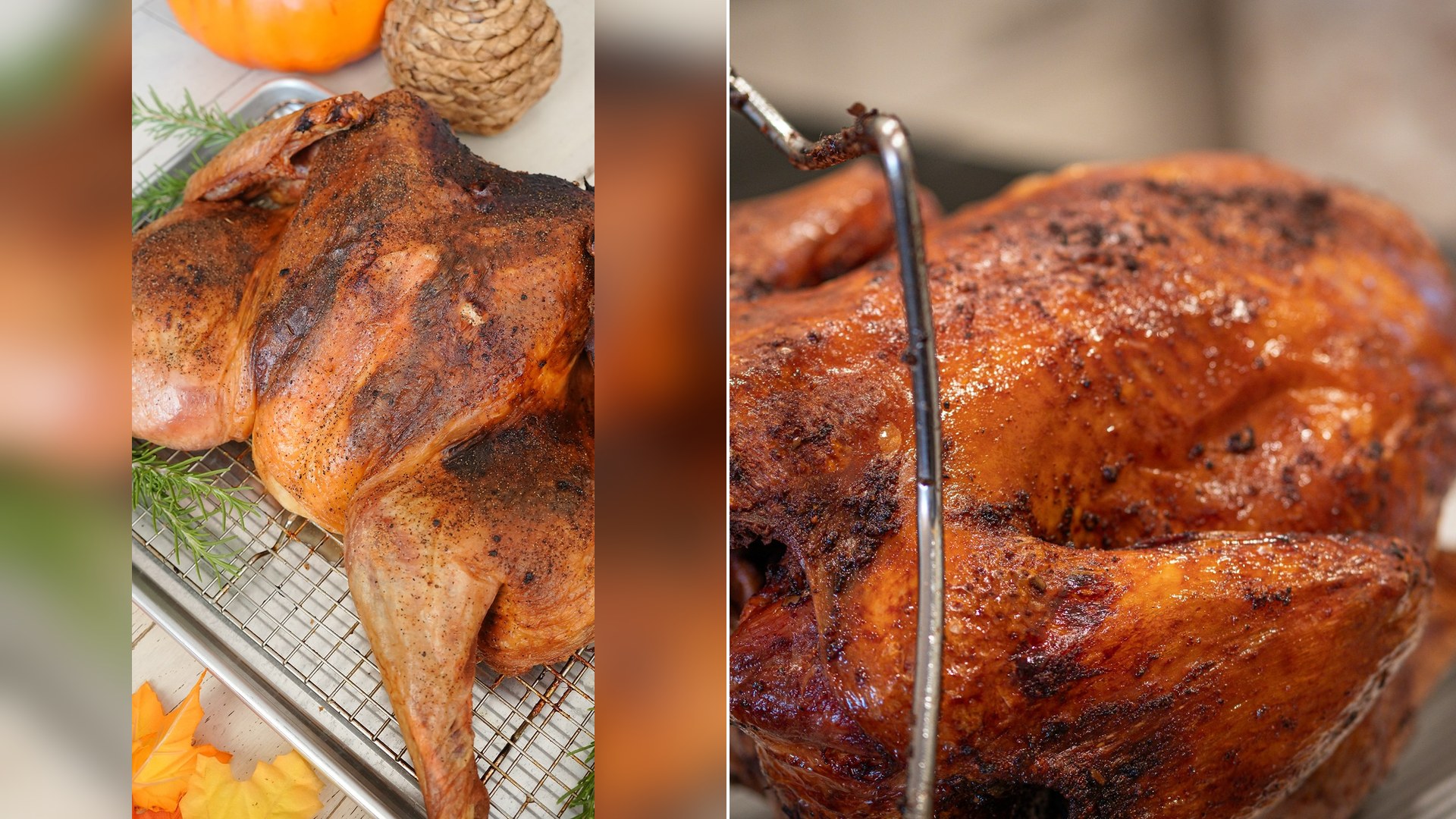
The recipe is a spatchcocked turkey with a 24 hour dry brine and a Cajun herb butter. His promise is crispy, golden-brown skin, incredibly juicy meat and a bird that cooks faster than a traditional one.
View this post on Instagram
Why Cut Out The Spine? The Bird Lays Flat And Cooks Faster
He starts with a whole turkey, spine side up. Spatchcocking means removing the spine so the bird can lie flat, and he explains the payoff plainly: it cooks more evenly and a lot faster.
All you need is a good pair of scissors. He cuts right along the spine, and there is a little bone you may need to work around.
Then comes the funny part. He flips the turkey over and presses it flat on the work surface, joking that the bird is going to the chiropractor so that it will lay flat.
His caption adds two more benefits of the method: easier carving and less time in the oven.
Salt And Baking Powder Are The Secret To Crispy Skin
Next he uses his fingers to run under the skin and make pockets, because the butter is going in there.
For the dry brine, he adds salt and baking powder and mixes them. “The main goal of this,” he says, “is to dry out the skin so that we get crispy, delicious golden-brown skin.”
The dry brine also draws flavor into the meat, which is why it is more than a skin trick. Then comes paprika, which he says gives the turkey a beautiful color. He coats the entire bird, then does the other side.
The turkey then goes into the fridge for 24 hours. His caption says the 24 hour dry brine takes the turkey to another level.
A Cajun Herb Butter Loaded With Garlic, Rosemary And Sage
While the bird rests, he makes the compound butter. He chops fresh sage and rosemary, then combines them with minced garlic and Cajun seasoning.
That butter is what goes under the skin, into the pockets he made earlier. The idea is that the butter bastes the meat from the inside while the skin above it stays crisp.
He sums it up as a butter that goes with that crispy skin, and in his caption he calls it a turkey your family will remember.
Why Flat Turkeys Win The Holiday Table
A whole turkey is an awkward shape. The legs sit up high and the breast sits in the middle, so the parts finish at different times, and that is why so many cooks end up choosing between dry white meat and undercooked dark meat.
Laying the bird flat puts everything at a similar height under the heat. That is the reasoning behind his claim that spatchcocking cooks more evenly, and it is why he says it also saves time in the oven.
It frees up oven space as well. A flat bird on a sheet pan leaves room to plan the rest of the meal, which is a real gift when the stuffing, rolls and casseroles are all waiting for their turn.
And there is the carving. Without the spine in the way and with the breast laid out in the open, a flat turkey is easier to slice and plate, so the cook spends less time wrestling the bird in front of hungry relatives.
Turning The Recipe Into Your Holiday Game Plan
The beauty of this method is the timeline. Because the dry brine rests for 24 hours, most of the work happens the day before, which leaves Thanksgiving morning calmer.
Planning backward helps. If your turkey is frozen, the USDA advises thawing in the refrigerator, allowing roughly 24 hours for every 4 to 5 pounds. A large bird can need several days, so check your calendar now.
Use a sturdy pair of kitchen shears. Poultry shears are made for this job, and a sharp pair makes cutting through the spine far easier than it looks.
Pat the turkey dry before you season it. Dry skin is the whole point of the brine, so wiping off surface moisture gives the salt and baking powder a head start.
Wash your hands, tools and cutting board well after handling raw poultry, and keep the bird covered and on a tray in the fridge so juices do not drip onto other food.
When it comes time to cook, rely on a thermometer rather than the clock. The USDA says a turkey is safe at 165 degrees Fahrenheit, measured in the innermost part of the thigh and wing and the thickest part of the breast.
After roasting, let the turkey rest before carving. Because a spatchcocked bird is flat, carving is simple: slice the breast, separate the legs and thighs, and serve.
The full recipe, with measurements and step-by-step cooking instructions, is available from the creator at cookitwithtim.com, and he hopes it makes your holidays a lot easier and juicy.
For anyone who has stared at a dried-out bird in past years, a flatter turkey, a salty overnight rest and a pocket of herb butter might be exactly the change your table needs.
More Stories You May Like
- 7 Things You Should Never Skip When Cooking A Thanksgiving Turkey
- This Mash Up Of Mashed Potatoes And Stuffing Starts With Stale Bread And Turkey Stock, Bakes Up With A Cheesy Top, And Ends As A Thanksgiving Freaking Classic
- Hungry Traveler Buys A $30 Airport Burrito, Gets Sneezed On By A Child, Then The Parents Yell At Her And Refuse To Say Sorry Because He Is Just A Kid