It is Thanksgiving morning, the family is coming, and you just realized you never bought a turkey. The only birds left at the grocery store are frozen solid. Most cooks would call that a disaster.
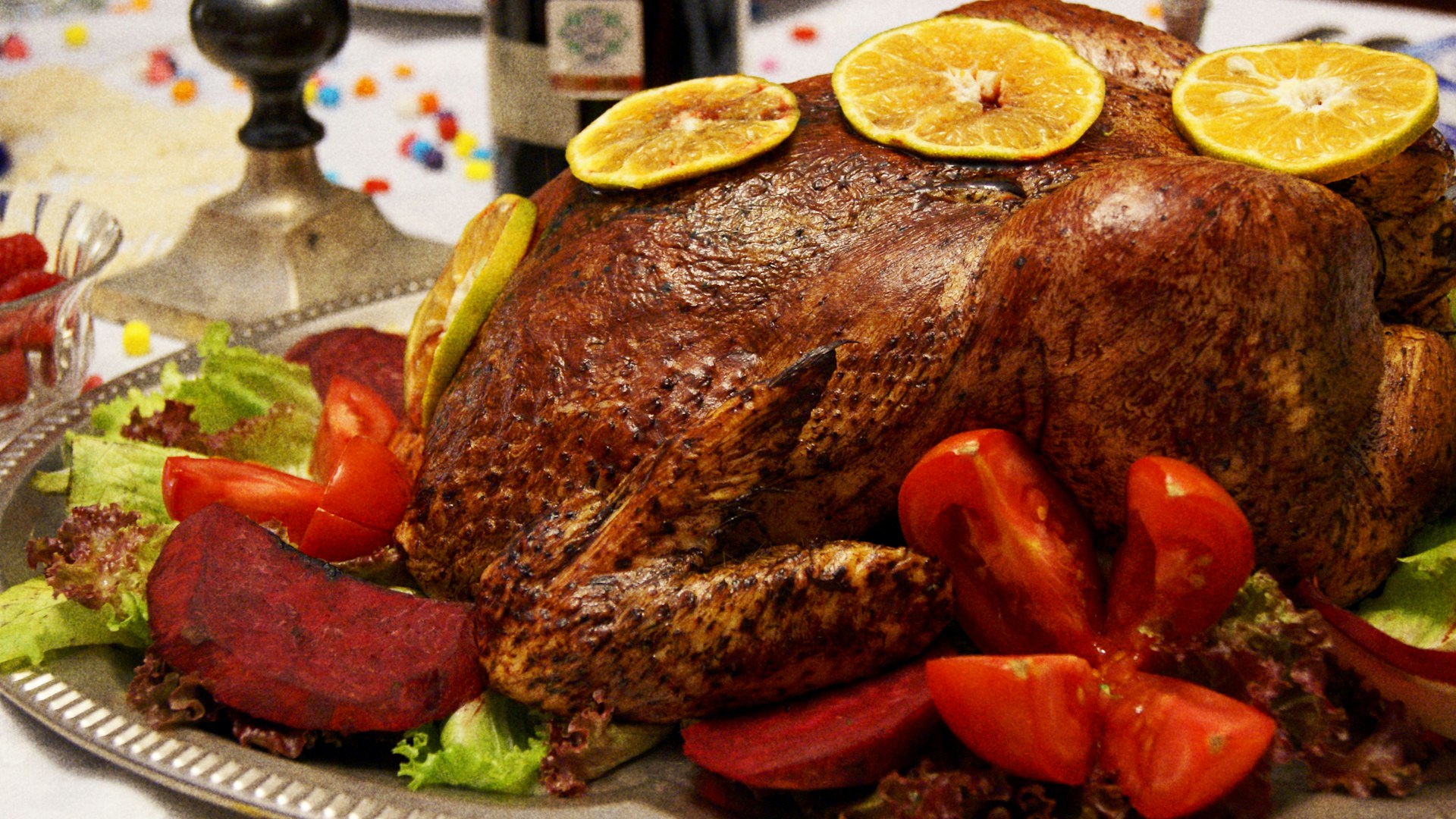
Chef and restaurateur Andrew Gruel says it is not. He admits he would not normally suggest it, but he put a frozen bird straight into a 325 degree oven and filmed the whole thing to prove it can be done.
Buy The Smaller Bird, Or Two Of Them, Because Big Frozen Turkeys Take Forever
His first rule is to grab one of the smaller birds. The larger frozen turkeys, he says, are going to take a lot longer. If you have more people coming, buy two small turkeys instead of one giant one.
His test bird weighed about 14 pounds, which he calls the average size most families buy.
The Roasting Pan Trick That Catches Every Drop As The Bird Thaws In The Oven
Next you need a roasting pan, because the turkey is going to bleed out as it defrosts. Something has to catch all that liquid. If you do not own an aluminum or steel roasting pan, he says, buy one of the disposable ones and set the turkey right in it.
He also cuts around the packaging in the sink, not on the counter. That keeps frozen raw juices from splashing across the kitchen.
The oven is set to 325 degrees on bake. There is no seasoning and nothing else at this stage. He says all you are doing is throwing the frozen bird in and letting it thaw and slowly roast.
“One Of The Biggest Problems With Turkey” May Actually Work In Your Favor Here
Here is where Gruel gets scientific. When you cook a turkey whole, he says, the breast usually overcooks before the legs are done. You end up with a dry breast and good legs, or overcooked legs and an undercooked breast, or some mix of the two.
With a frozen bird, the breast faces the heat of the oven but is busy thawing, while the legs are already cooking. In a strange way, he says, that lets the breast and legs cook at about the same pace.
He is careful not to oversell it. He says he is not promising the world’s greatest bird, only showing that it works.
After About An Hour, Pull The Pan And Pour Off All That Liquid
About an hour and five minutes in, he pulls the pan out of the oven. The bird is sitting in a pool of juice. He wants some of that excess moisture gone, without letting the oven lose too much heat.
He lifts the turkey and pours the liquid into another pan. Because the bird has begun to cook, he says, there is no need to worry about raw juices at this point.
The turkey is still partly frozen, so the cavity cannot be opened yet. He slides a rack underneath it, which keeps the bird up out of the liquid, and puts it back in the oven for a couple more hours.
Two And A Half Hours In, Get The Giblets Out And Brush The Bird With Avocado Oil
At about two and a half hours the cavity finally opens. That is when you pull out the bag with the giblets, the neck and everything else packed inside the carcass. Check twice to make sure you got it all, he says, including a second spot where more pieces hide.
The temperature at that point is still cold in places, but the bird is no longer rock hard. Gruel wipes his hands, sanitizes, and moves on to oil.
He rubs the skin with a little avocado oil to keep it golden brown. His reasoning is about smoke points. Butter has milk solids that burn at a fairly low temperature, he says, so it should not go on until the end. Avocado oil, he says, handles about 390 degrees, which is plenty for an oven running at 325.
About Six And A Half To Seven Hours Later, The Skin Comes Out “Beautifully Crispy”
The turkey goes back in for the long haul. At the end he brushes on a little butter, checks the temperature and declares it good to go. The total time from frozen was about six and a half to seven hours.
He is honest about the result. Parts of the bird cooked faster, he says, and the legs dried out a little where the meat pulled back. But he calls that fine, since it is only the legs.
The payoff is the skin. It turned out so crispy that he holds the bird up to the camera so you can hear it. A sprinkle of chives finishes it off, and he calls the finished turkey crazy good.
Plan Your Day Around The Clock, Not The Calendar
The biggest lesson is timing. If you start a frozen 14 pound bird around 9 in the morning, Gruel says, you are not eating good turkey until three or four in the afternoon. He jokes that his own family usually sits down around eight or nine at night, which gives a cook plenty of room.
The US Department of Agriculture agrees with the basic idea. It says it is safe to cook a turkey from the frozen state, though it takes at least 50 percent longer than a thawed bird. It also says the turkey should reach 165 degrees Fahrenheit, measured in the thickest part of the breast, the innermost part of the thigh and the innermost part of the wing.
That makes a good thermometer your most important tool. Gruel’s hours are a guide, but every oven and every bird is a little different, so the thermometer has the final word.
- Buy the smallest bird that will feed your table, or two small ones.
- Use a roasting pan with a rack to keep the turkey out of the liquid.
- Start the oven at 325 degrees and add no seasoning until the bird has thawed enough to open.
- Remove the giblets and neck at about the two and a half hour mark.
- Save the butter for the end and use a higher heat oil, such as avocado oil, earlier.
- Rely on a thermometer, not the clock, to decide when it is done.
It is not the way anyone dreams of cooking the holiday bird. But when the store shelf holds nothing but frozen turkeys, Gruel’s method turns a morning panic into dinner with a skin worth bragging about.
More Stories You May Like
- Bride Plans Her Wedding For 18 Months, Buys The Cake Stand, Engraved Utensils And Custom Flowers, Then Walks Into The Reception To Find No Cake Because Of A Mix Up With Paperwork
- Groom Sees His Dream Rolex Was Sold, Not Knowing His Soon To Be Wife Is The One Who Bought It
- Costco Shopper Walks Up To The Thanksgiving Turkeys And Finds One Stack Labeled Tom And Another Labeled Hen, Then Asks Why Anyone Would Choose Their Turkey’s Gender