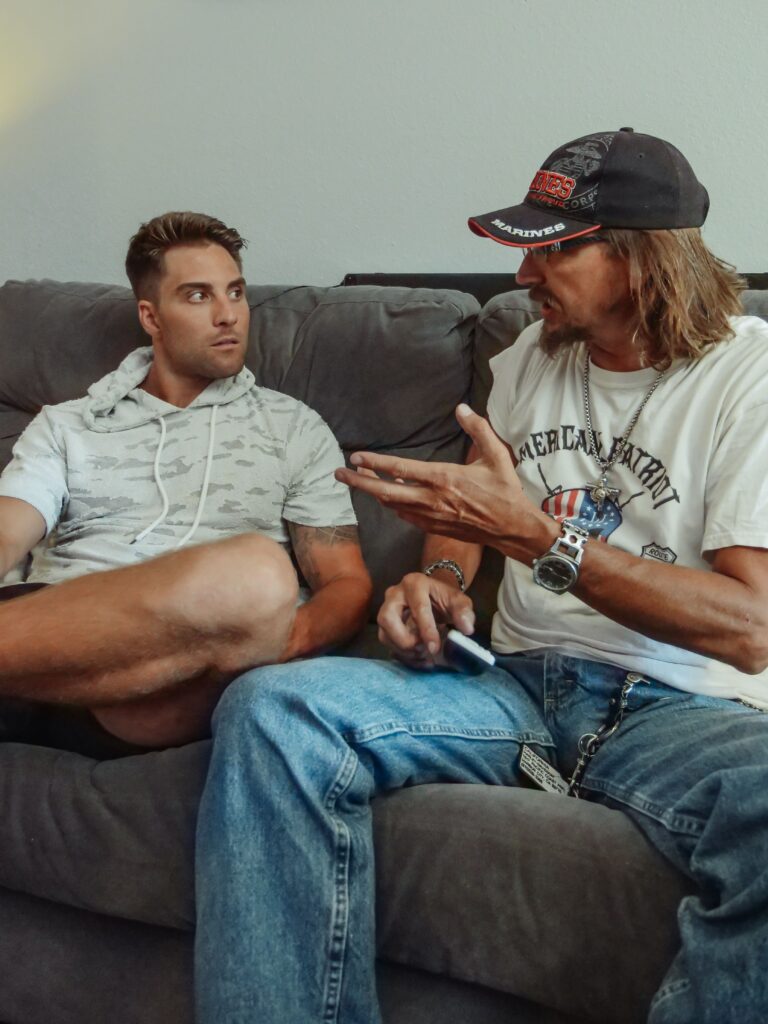
Ever heard the phrase “Back in my day…” and felt a twinge of annoyance? You’re not alone. Many younger people find certain popular phrases from the boomer generation to be particularly grating. Let’s explore five such phrases, why they can be so irritating, and how we can communicate more effectively.

1. “Back in My Day…”: The Nostalgia Trap
When someone starts a sentence with “Back in my day…”, it can come across as dismissive of the challenges faced by younger generations. It’s as if the speaker is saying that everything was better in the past, which not only ignores the progress we’ve made but also belittles the struggles of today.
However, context is key. If used to illustrate how times have changed without passing judgement, this phrase can serve as a lens into history. So instead of saying, “Back in my day, we didn’t have smartphones to distract us,” try saying, “It’s amazing how technology like smartphones has changed the way we live since I was your age.”
2. “You Have it So Easy These Days”: Discounting Current Challenges
This phrase can be particularly irksome because it overlooks the unique challenges faced by younger generations, such as navigating the digital world, dealing with online bullying, or managing the stress of a rapidly changing job market.
Empathy goes a long way in bridging the generation gap. Instead of saying, “You have it so easy these days,” try acknowledging the challenges that come with modern conveniences, like, “While there are many conveniences today, I understand there are also new challenges I didn’t have to face.”
3. “When I Was Your Age…”: The Comparison Conundrum
“When I was your age…” can sound like a competitive comparison rather than a shared experience. It’s as if the speaker is trying to one-up the listener’s own experiences, which can feel dismissive and alienating.
Sharing personal experiences can be a great way to connect, but it’s important to keep the focus on empathy, not competition. Instead of saying, “When I was your age, I was already working two jobs,” try, “I had to work two jobs at your age, so I understand how hard it can be.”
4. “That’s Not How We Did Things”: Resisting Change
The phrase “That’s not how we did things” can come off as rigid and intolerant to change, suggesting that the way things were done in the past is inherently superior to how they’re done today.
Adaptability is key to understanding between generations. Instead of resisting change, we can acknowledge that different methods can be effective in different times. Thus, instead of saying, “That’s not how we did things,” you could say, “It’s interesting to see how methods have evolved since my time.”
5. “You’re Just Too Sensitive”: Dismissing Feelings
The phrase “You’re just too sensitive” is often seen as undermining and invalidating, as it dismisses the other person’s feelings and perspectives. This can be particularly harmful when discussing personal or sensitive topics.
Acknowledging others’ feelings and perspectives is crucial for effective communication. Instead of dismissing someone as being “too sensitive,” try saying, “I can see that you’re really passionate about this,” or “I may not fully understand your perspective, but I respect your feelings.”

As a mom of three busy boys, I know how chaotic life can get — but I’ve learned that it’s possible to create a beautiful, cozy home even with kids running around. That’s why I started Cultivated Comfort — to share practical tips, simple systems, and a little encouragement for parents like me who want to make their home feel warm, inviting, and effortlessly stylish. Whether it’s managing toy chaos, streamlining everyday routines, or finding little moments of calm, I’m here to help you simplify your space and create a sense of comfort.
But home is just part of the story. I’m also passionate about seeing the world and creating beautiful meals to share with the people I love. Through Cultivated Comfort, I share my journey of balancing motherhood with building a home that feels rich and peaceful — and finding joy in exploring new places and flavors along the way.