Shrinkflation is not just a grocery store problem. Makeup counters, drugstore shelves and beauty aisles have their own versions of the same story, and one shopper says she caught it happening with a product she has bought before. She did the math, compared the containers side by side and decided it was time to walk away.
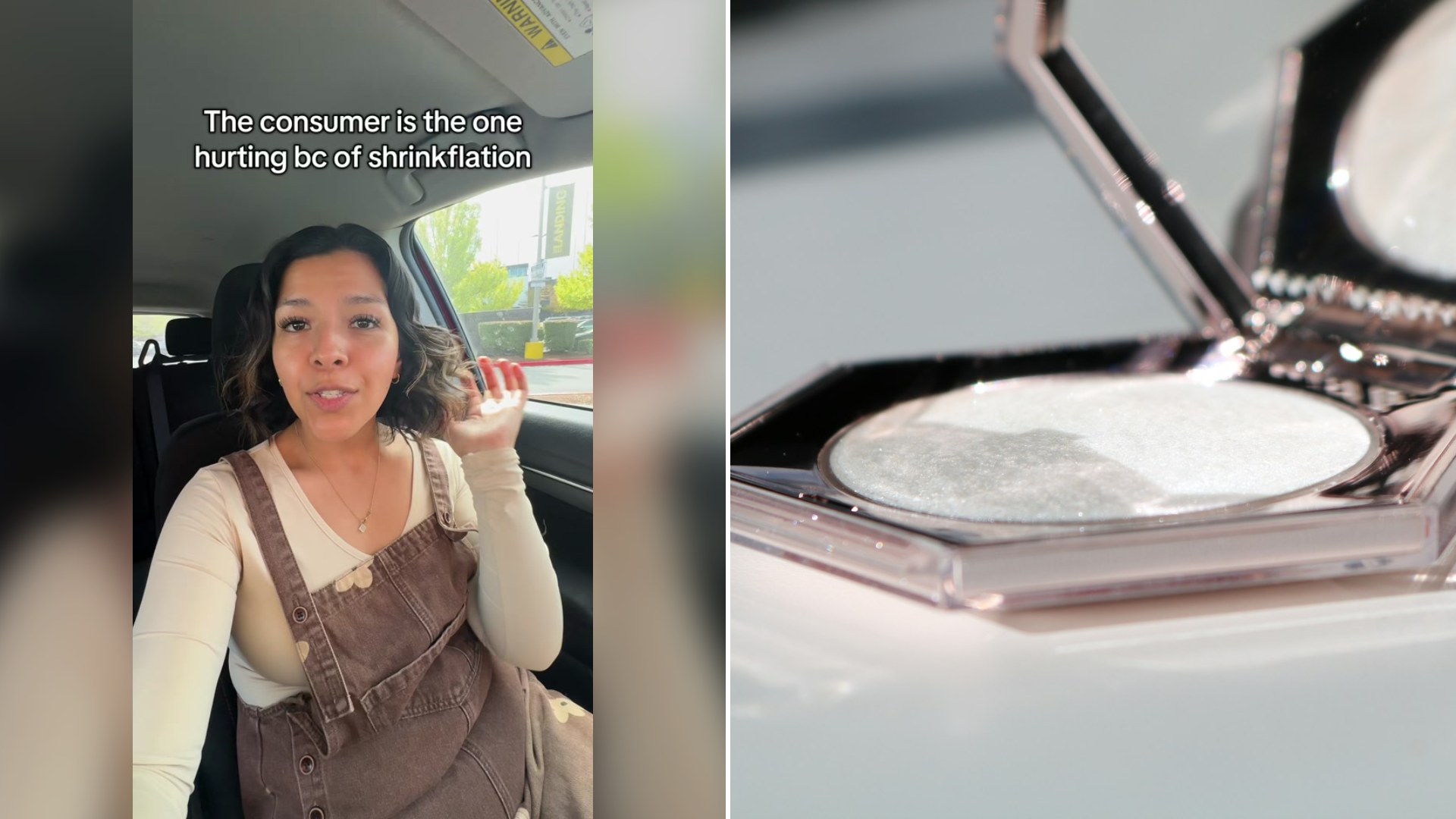
Creator @silviadelacruz shared her thoughts while standing in the aisle at Ulta Beauty. She explained that she had recently made a post about her Fenty Beauty setting powder, noting that it had changed in formula and is practically half the size. This time she came back with the numbers.
@silviadelacruz
The numbers she laid out
Holding up the two containers, she said the older one weighed 28 grams and the newer one weighs 15 grams. The last time she bought the powder was in May of 2024, and it cost $36. When she bought it again about a week before posting, the price was $39. In short, she said, she is paying three dollars more for a product that is nearly half the size.
It is worth doing the math, because the difference is bigger than it first appears. At $36 for 28 grams, the old powder worked out to about $1.29 a gram. At $39 for 15 grams, the new one works out to about $2.60 a gram. That is roughly double the cost per gram, even though the sticker price only went up by a few dollars.
What her followers pointed out
She was open about the fact that her earlier post sparked some conversation, and she shared a few of the points people made on Instagram, calling them very valid. According to those commenters, the new powder is now talc free, which she described as great. Someone else said that having a large amount of powder could mean you do not finish it before it passes its expiration date, which is not good for you. A third person said that if customers do not need to repurchase as often, the company’s sales might suffer, so a smaller size brings shoppers back sooner.
She called that last point valid. But in this economy, she said, she wants to get the most bang for her buck. So she planned to return the powder and head over to Sephora to check out a different setting powder she has had her eye on. Then she said it was time to go shopping.
She also acknowledged that a large company is not likely to notice one customer taking her business elsewhere, but she said she has to look out for herself. That is a fair way to put it, and a reminder that every shopper has the right to decide what a product is worth.
Why beauty products shrink
There are a few reasons a beauty product might change size, and some of them are perfectly reasonable. Companies update formulas, change ingredients or reformulate to meet new standards, and sometimes a new size is part of that shift. Cosmetics also have limited shelf lives. Many products carry a small symbol that looks like an open jar, followed by a number such as 12M or 24M, which tells you how many months the product is typically good for after opening. A powder you only use a little at a time may not be finished before that window ends.
On the other hand, shoppers are right to notice when the price stays the same or goes up while the container gets smaller. Shipping, packaging and ingredient costs have all risen for companies in recent years, and a smaller container is one way to deal with it. Whether or not it is the right choice is up to each customer.
How to compare beauty products fairly
If you want to be sure you are getting a good value on cosmetics, a few simple habits can help.
- Read the net weight or volume. It is usually printed on the back or bottom of the package, often in grams or ounces. Check it each time you repurchase, since sizes can change quietly.
- Calculate the cost per unit. Divide the price by the amount to see what you are really paying. Doing the math for two products makes it easy to compare.
- Think about how long it lasts. A larger, cheaper container is not a bargain if you cannot use it all before it expires. A smaller size may be a better fit for a powder you use sparingly.
- Look at the full ingredient list. If a formula has changed, the ingredients can tell you what is different, and whether the change matters for your skin.
- Know the return policy. Many retailers allow returns on unopened or lightly tested beauty items. She mentioned returning hers, which is a good reminder to keep your receipt.
- Try alternatives. Drugstore and department store brands often make setting powders at a range of prices. Sampling a few can turn up a new favorite.
Making a powder last longer
If you decide to keep using a product you love, you can stretch it with a few easy tricks. Use a small, fluffy brush and tap off the extra before applying, so you take only what you need. Apply powder only where you need it, such as the center of the face, rather than all over. Keep the lid closed tightly and store the compact away from heat and moisture, which can change the texture. And if the powder breaks, press it back into the pan with a bit of rubbing alcohol on a tissue and let it dry fully.
A shopper’s right to say no
What stands out in her story is how calm and practical her decision was. She did not call for a boycott, and she was willing to hear a range of explanations. She simply compared the old and new products, did the math and decided the value was not there anymore. That is exactly what smart shopping looks like.
Next time you reach for your favorite product, take a moment to check the label. A few seconds of attention can tell you whether the price still matches what is in the package, and whether your hard earned dollars are going as far as they used to.