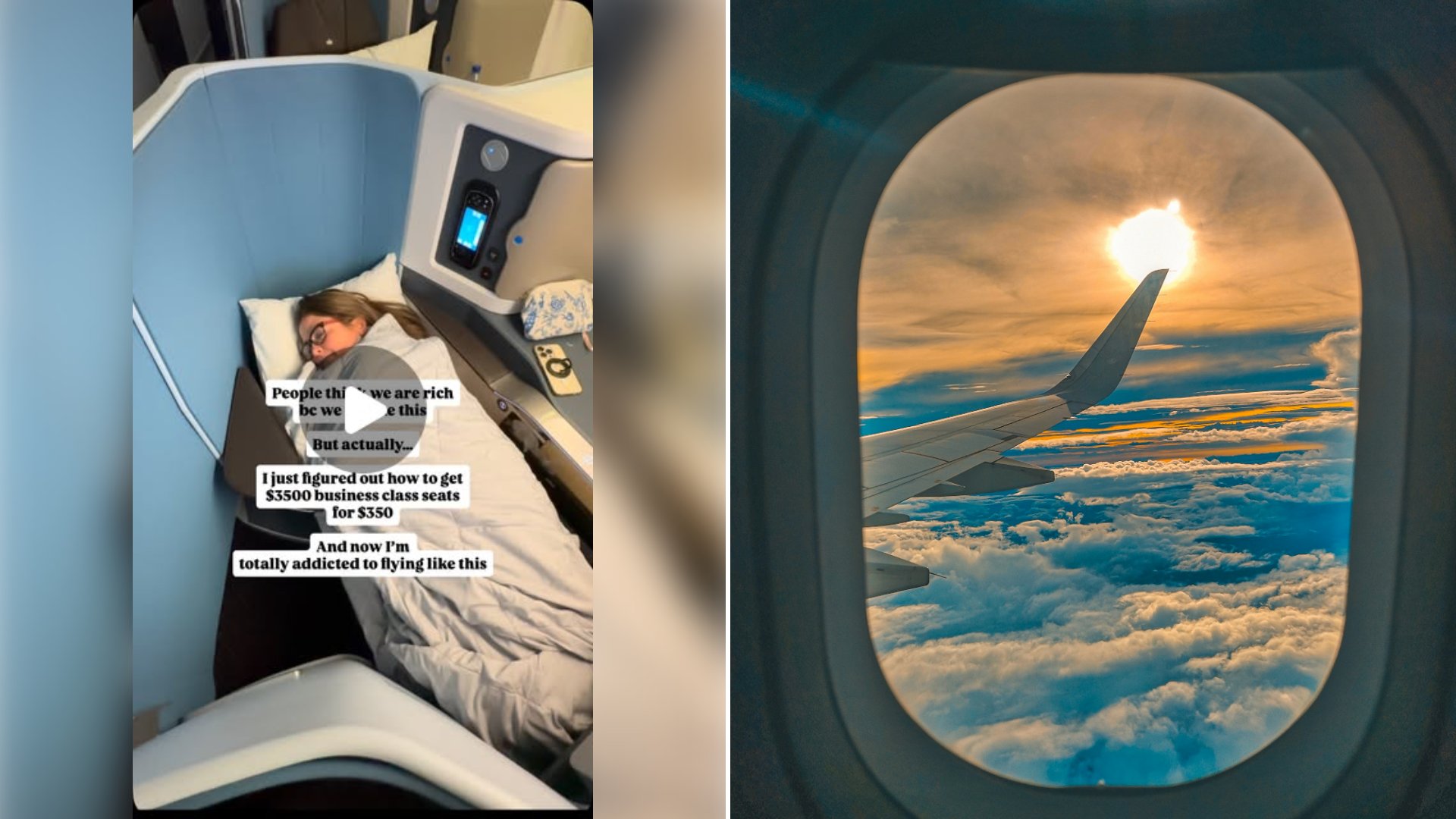
Travel creator @fancytravelpointers opens her latest Instagram reel by addressing an assumption she says she gets constantly: that she must be wealthy to fly business class as often as she does. Instead, she explains, the real answer is that she learned how to use airline and credit card points strategically, turning a seat that would normally cost around 3,500 dollars into one she booked for roughly 350 dollars.
Rather than keeping her method a secret, she walks viewers through the basic logic behind points based business class bookings, framing it less as a rare stroke of luck and more as a repeatable skill that any points conscious traveler can pick up.
The gap between what an airline charges in cash for business class and what the same seat costs in points is one of the best known secrets in the points and miles community, and it is exactly why creators like this one can describe such dramatic savings. A long haul business class ticket that retails for several thousand dollars in cash often costs a comparatively modest number of miles, because airlines price their award charts around seat availability and partnership agreements rather than matching the cash fare one for one.
Value per point is the metric serious travelers use to judge whether a redemption like this is actually a good deal, and it varies a lot depending on how the points are spent. Cashing points in for a domestic economy seat or a gift card typically returns close to one cent of value per point, while redeeming the same points for an international business or first class seat can return several times that, which is where the biggest wins tend to show up.
Building up enough points to make a redemption like this possible usually comes down to a mix of everyday credit card spending on a rewards card, welcome bonuses earned by opening a new card, and transferring those points into an airline’s own loyalty program at the right time. The transfer step matters because airline programs frequently run limited time bonuses that temporarily boost the value of a transfer, and travelers who watch for those windows can stretch their points even further.
None of this requires a six figure income or a job that comes with constant business travel, which is the core point this video is making. It requires patience, a willingness to research award charts and transfer partners, and enough lead time to book before the best award seats on a given flight disappear, since airlines typically release only a limited number of seats at their lowest point price.
For anyone watching this reel and wondering if a 3,500 dollar seat really can turn into 350 dollars, the short answer is yes, but it takes the groundwork this creator is trying to demystify rather than any special access most travelers do not have.
More from Cultivated Comfort
- Pilot’s Wife Says Southwest Messaged Her After a Welcome Home Video and Asked if She and Her Daughter Wanted to Surprise Him on His First Trip After Training
- Woman Surprises Her Husband for His 32nd Birthday With a Blindfolded Arrival at a Venice Hotel Where Flowers, Balloons and a Balcony Over the Rooftops Were Waiting
- The 4 Most Overrated Fall Foliage Towns, According to People Who Actually Live There