A nursing mom, Jordan Lally, who posts on Instagram as @jlalzdointhings, filmed a tense exchange at a Delta check in counter that many mothers will find painfully familiar. The agent insisted her breast pump bag could only ride along as an extra carry on if she were flying with an infant. Lally pointed out the obvious problem. If her baby were with her, she would not need to pump.
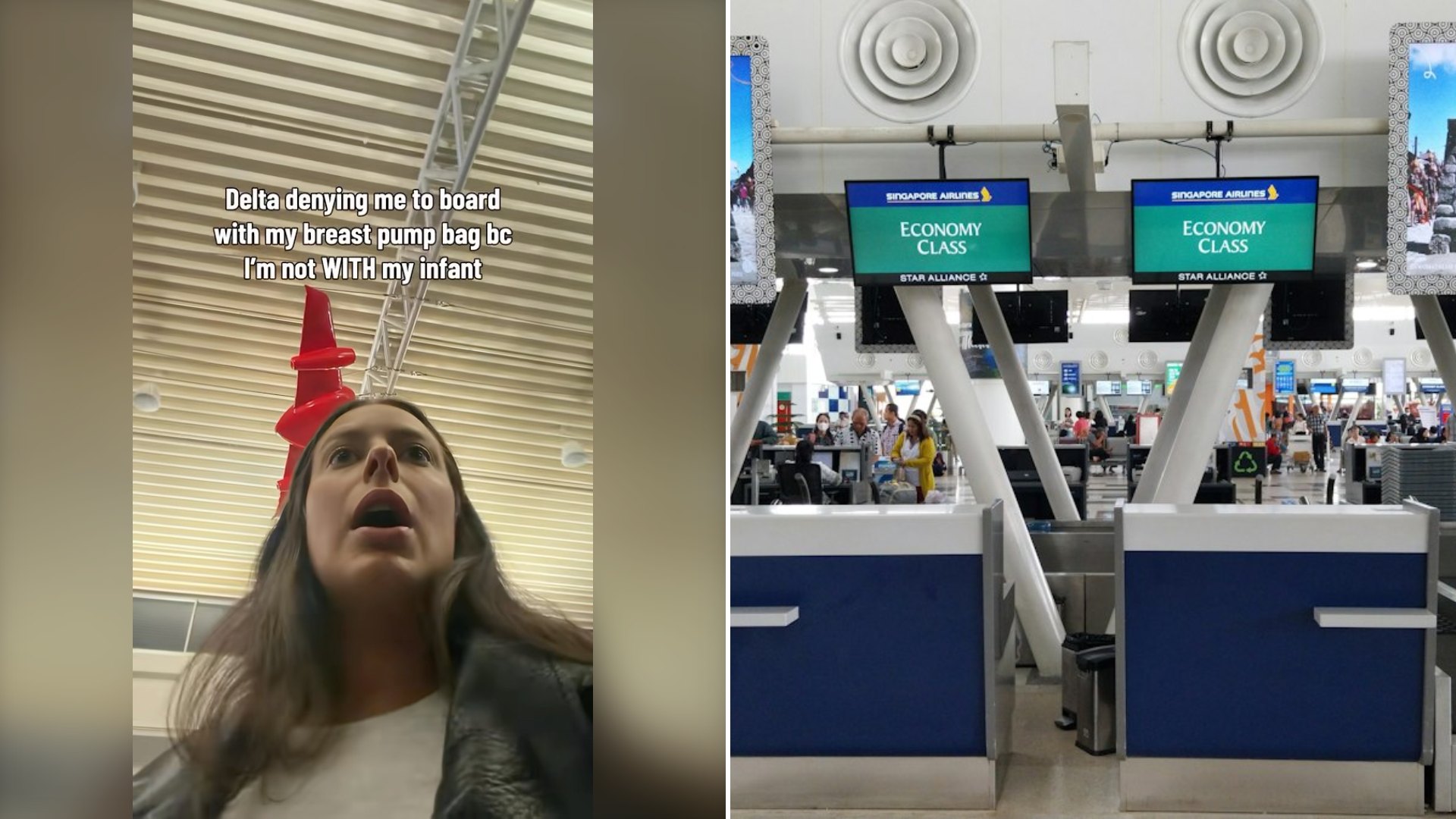
The video picks up in the middle of the back and forth. “You are not traveling with an infant,” the agent says. “That is the thing.”
Lally, carrying a regular carry on plus a separate bag for her pump and nursing supplies, tries to explain. “It’s all nursing stuff. It’s breast pump and like parts,” she says. “That’s what your policy says online.”
The agent agrees the policy mentions breast pumps but reads it differently. “It says so if you are traveling with an infant, but in this case you are not traveling with an infant.”
“So that wouldn’t even make sense,” Lally answers. “If I would travel with an infant, I wouldn’t need a breast pump.” She also questions what difference it makes whether the medical bag goes in the cabin or the hold.
Check It or Stay Behind
The agent’s solution was for Lally to check one of her bags. Lally worried aloud about her belongings being damaged. The agent assured her that nothing would get hurt or damaged, which did little to ease the stress of handing over her belongings at the last minute.
Out of options and needing to make her flight, Lally gave in and checked a bag so she could keep her pump with her. “I’ll tell you, you’ll need to educate your employees better,” she says. In the end, she boarded with her breast pump bag, but she calls the whole episode ridiculous.
In her caption, she directs her frustration at the airline’s training. “Pumping is not a choice, it’s a medical need,” she writes, adding that if sharing her experience helps even one parent avoid the same stress, it is worth it. “Do your research, know your rights and speak up!”
What Traveling Moms Should Know
Whether you are a nursing mom or a grandparent helping your daughter plan a trip, these points can prevent a scene like this one:
Security rules are on your side. The TSA allows breast milk in reasonable quantities in carry on bags, more than the usual 3.4 ounce liquid limit, and it does not require that the baby be traveling with you. Breast pumps are permitted in carry on bags too. Tell the officer at the start of screening that you have breast milk or pumping equipment.
Airline rules are separate. Each airline sets its own policy on whether a pump bag counts toward your carry on limit. Many airlines treat breast pumps like medical devices that do not count against the allowance, but the wording varies. Before you fly, look up your airline’s policy, print it or save a screenshot, and bring it to the airport.
Ask for a supervisor calmly. Front line agents may not know every exception. If an agent reads a policy differently than you do, politely ask for a supervisor or customer service manager. Showing the written policy often settles the matter quickly.
Pack smart. Put the pump, parts, cooler bag and ice packs in one clearly labeled bag. Keep your personal items in a single carry on that fits under the seat if possible. That way, even if you are forced to check something, it is not the pump.
Know your screening options. Ice packs, freezer packs and other cooling accessories for breast milk are allowed through security. If you prefer your milk not go through the X-ray machine, tell the officer. You will likely get some additional screening instead, so leave a little extra time.
Never check the pump if you can avoid it. A delayed or lost pump can mean painful engorgement, a risk of clogged ducts and a dip in milk supply. Treat it like medicine you cannot be without.
Finding a Place to Pump
Federal law now requires large and medium hub airports in the United States to provide private, non bathroom lactation spaces in each terminal, with a place to sit, a table and an electrical outlet. Many airports also have small freestanding pods. Check your airport’s website or ask at an information desk.
On board, flight attendants can often help with a little extra privacy, and a nursing cover or a window seat makes pumping easier. Battery powered or wearable pumps are a big help on longer flights.
If It Happens to You
Get the agent’s name or employee number, note the time and flight, and write down exactly what you were told. Afterward, file a complaint with the airline’s customer care team and ask for reimbursement of any checked bag fee you were charged. If you are not satisfied, you can also file a complaint with the U.S. Department of Transportation, which tracks consumer complaints against airlines.
Lally made her flight, but her message is aimed at the next mom in line. Know the rules before you get to the counter, carry them with you, and do not be afraid to speak up.
More From Cultivated Comfort
- Family Checks Into a Hotel Room With Hardly Any Light Switches a Mystery Mark on the Mirror and a Microwave That Is Not Plugged In and Shares a Full Room Tour
- Man Says the Best Tacos in Ireland and Maybe All of Europe Came from a Place He Did Not Expect
- Mom Packs up Four Kids Early After a Hotel She Trusted Put Them in a Room with Bed Bugs and Tells the Whole Story