Some relationship conflicts are big and obvious, the kind that force immediate decisions and clear sides. Others are quieter, almost easy to dismiss at first, until they start revealing something deeper underneath. This story sits right in that uncomfortable middle space, where it begins with something as simple as kitchen knives but gradually turns into a conversation about respect, boundaries, and whether someone is truly listening.
Because on the surface, it sounds trivial. It’s just knives. But when you look a little closer, it becomes clear that it isn’t really about the knives at all. It’s about repeated behavior, ignored requests, and the kind of frustration that builds when something you care about keeps getting damaged despite you asking, again and again, for it not to be.
When a Small Habit Becomes a Constant Problem
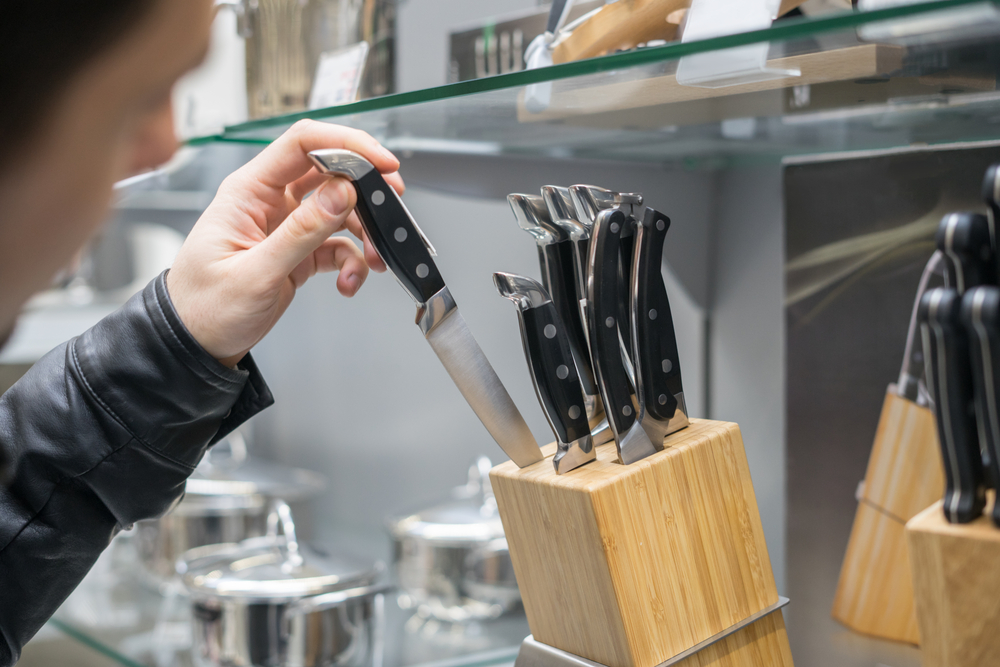
The issue didn’t appear overnight. The man explained that over the years, he had invested in a high-quality set of kitchen knives, something he valued both for their cost and their performance. Along with owning them came a few basic care rules, the kind that anyone familiar with good knives would recognize as standard.
They weren’t complicated. Don’t put them in the dishwasher, don’t leave them soaking in the sink, and don’t store them while they’re still wet. These were simple habits meant to preserve their condition and keep them functioning properly. But despite how straightforward those rules were, his wife didn’t follow them.
According to him, she would regularly leave the knives in the sink, often submerged under water and covered by other dishes or pots. From her perspective, she was helping by cleaning up, but in reality, he found himself repeatedly fixing the results of that “help,” drying them properly, checking for damage, and maintaining them to undo what had been done. Over time, what might have started as a minor annoyance turned into a consistent source of frustration.
The Moment That Turned Frustration Into Action
The situation reached a breaking point when one of his most expensive knives, a $170 fillet knife, ended up broken at the bottom of the sink. It had been buried under a heavy pot, and the damage was something that couldn’t be undone.
For him, that moment wasn’t just about the cost of the knife. It was the culmination of years of asking for something simple and feeling like those requests weren’t being taken seriously. The broken knife became a symbol of that pattern, rather than just a one-time accident. At that point, continuing to repeat the same conversation didn’t feel like a solution anymore.
A Practical Fix That Didn’t Land the Way He Expected
Instead of escalating the argument or continuing to express frustration in the same way, he decided to try something more practical. He bought his wife her own set of knives, separate from his own, with the intention of removing the source of conflict entirely.
The idea was straightforward. She could use her knives however she preferred, even if that meant putting them in the dishwasher or leaving them in the sink, while his set would remain protected and cared for the way he had always asked. From his perspective, it felt like a reasonable compromise that allowed both of them to operate comfortably in the kitchen without stepping on each other’s preferences. But that’s not how it was received.
When a Boundary Is Interpreted as Control
When he explained that he didn’t want his knives to be shared anymore, his wife pushed back. She responded by saying she would use whatever knife she needed while cooking, effectively rejecting the idea of separating them.
That response is what shifted the situation from a practical disagreement into something more personal. It wasn’t just about kitchen tools anymore, but about whether a clearly stated boundary would be respected.
For him, the request wasn’t about control or restriction. It was about protecting something he cared about after years of feeling like his concerns were being dismissed. But from her reaction, it seemed like she either didn’t see it the same way or didn’t agree that the boundary should exist at all. That difference in perspective is what made him question whether he had gone too far.
Why This Feels Bigger Than It Looks
The reason this story resonated with so many people is because it reflects a dynamic that goes far beyond knives. At its core, it’s about what happens when one person repeatedly expresses that something matters to them, and the other person continues to act in a way that suggests it doesn’t.
It’s not just the behavior itself, but the repetition of it. When the same issue comes up over and over again without change, it starts to feel less like an accident and more like a pattern. That’s what makes the situation feel heavier than it appears on the surface.
The introduction of a clear solution, separate knives for separate use, should have simplified things. But the refusal to respect that solution made the issue feel more intentional, which is what many people reacted to most strongly.
What People Had to Say
A large number of commenters sided with the husband, pointing out that the situation wasn’t about being controlling but about basic respect for something that clearly mattered to him. One user, u/2dogslife, described the broken knife as the final straw after a long pattern of ignored requests.
Others focused on the emotional layer behind the situation. u/Mean-Construction207 noted that even if the knives weren’t important to her, that didn’t change the fact that they were important to him, and that alone should have been enough to warrant care.
Some responses leaned toward practical solutions, suggesting ways to physically remove the problem. u/SpacerCat recommended storing the knives separately, like a chef would with a knife roll, to prevent access altogether.
There were also stronger reactions that framed the issue in terms of respect within the relationship. u/TicoSoon argued that the behavior reflected not just a disregard for the knives, but a disregard for him as a person.
At the same time, a few commenters tried to bring balance to the conversation. u/Burnt_and_Blistered pointed out that while the knives were valuable, the relationship itself mattered more, suggesting that it was worth considering whether this was an issue worth escalating further.
The Real Question Beneath the Surface
What makes this situation linger is the question it leaves behind. On one hand, it’s easy to reduce it to something small and replaceable, something that shouldn’t carry so much weight in a relationship.
On the other hand, when someone repeatedly ignores something that matters to you, even after clear communication and a reasonable attempt at compromise, it stops being about the object itself. It becomes about whether your concerns are being heard and respected. That’s where the tension really lies.
Because if a simple boundary like this can’t be respected, it naturally raises questions about what happens with bigger ones. It’s not about the knives anymore, it’s about the pattern of behavior and what that pattern represents. And that’s why this story stuck with so many people. It speaks to a feeling that goes beyond any single situation, the need to feel like what matters to you is taken seriously by the person you’re sharing your life with.
More from Cultivated Comfort: