
Sometimes the smallest household disagreements turn into something far bigger than they need to be, especially when frustration replaces patience in the middle of an otherwise simple situation. This story caught attention not because of the cats themselves, but because of how quickly a minor misunderstanding escalated into something that felt personal and, ultimately, disrespectful.
At first glance, it almost sounds lighthearted. A couple, two cats, and an attempt to keep kitchen counters clean doesn’t seem like the kind of situation that would spark strong reactions. But the way the conversation unfolded, and more importantly, the way it was handled, is what made people stop and pay attention. Because by the end, it wasn’t really about pets anymore.
A Fix That Seemed Smart and Effective
The situation started in a fairly reasonable way. The man explained that he and his wife had just moved into a new home, one that finally had a proper kitchen space they both wanted to maintain. As part of settling in, they agreed on a simple rule: their two cats shouldn’t be walking across food preparation surfaces.
At first, he tried using a spray bottle to keep the cats off the counters, which is a method many pet owners rely on. However, his wife didn’t like that approach and felt it was unnecessarily harsh, which meant he had to find a different solution that would still achieve the same goal.
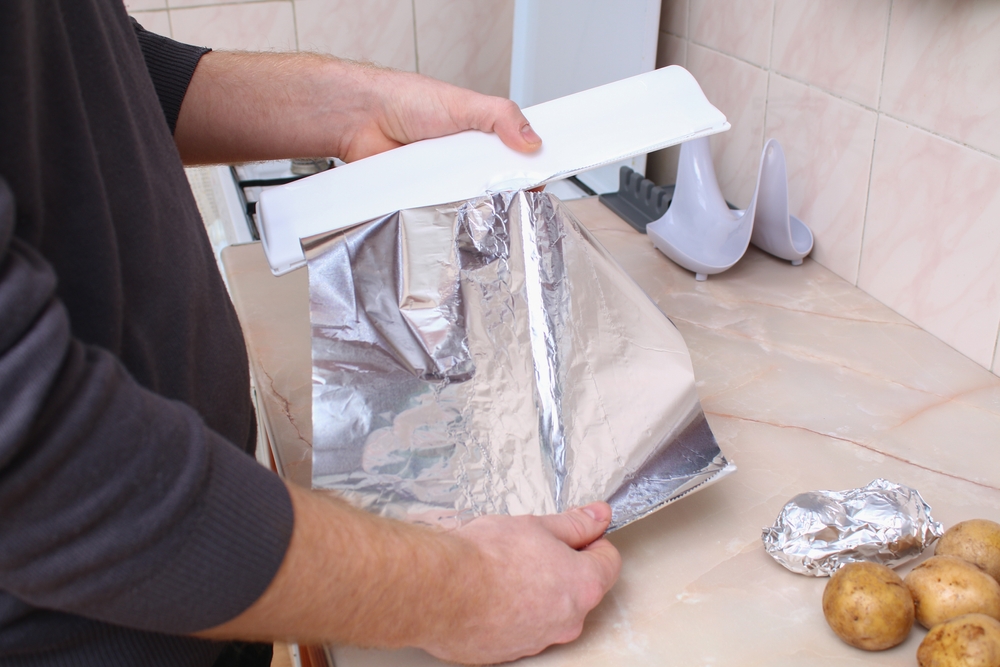
After looking into alternatives, he decided to try placing tin foil on the counters, since many cats dislike the texture and the sound it makes when they step on it. This approach didn’t involve direct punishment, and it relied more on discouraging the behavior naturally.
According to him, the method worked almost immediately. The cats avoided the counters altogether, and it seemed like the issue had been resolved without any further conflict.
The Moment Everything Shifted
Things took a turn when he came home one day and noticed something that didn’t align with what he thought had already been settled. Instead of avoiding the foil, the cats were being encouraged to interact with it, and his wife was the one guiding them.
Naturally, this confused him. When he asked what she was doing, her response made it clear that she had understood the situation differently. In her mind, the foil wasn’t there to train the cats to stay off the counters, but rather to act as a protective barrier so their paws wouldn’t directly touch the surface.
From her perspective, helping the cats get used to the foil made sense because it reduced their fear of it. From his perspective, it completely undermined the entire purpose of using it in the first place.
This difference in understanding is where the situation could have been clarified and resolved with a simple conversation. Instead, it became something else.
When Frustration Turns Personal
Rather than just explaining his reasoning again and correcting the misunderstanding, his reaction took a sharper turn. He began questioning her logic in a way that felt less like frustration with the situation and more like criticism of her as a person.
He described asking why “any intelligent person” would approach it that way, which shifted the tone from problem-solving to judgment. What made it even more intense was a follow-up comment where he joked, or at least presented it as a joke, about reconsidering having children in case her thinking was “genetic.”
At that point, the disagreement was no longer about cats, foil, or even cleanliness. It had become about respect. Because once a conversation moves from “this doesn’t make sense” to “you don’t make sense,” it changes how the entire interaction is experienced.
Why This Situation Struck a Nerve
This story resonated with people because it operates on two different levels at once. On the surface, there is a clear and understandable issue. Teaching the cats that the foil is safe would indeed make the training method less effective, which means his frustration with the situation itself wasn’t entirely unfounded.
However, the deeper layer is what people focused on more. The way he chose to express that frustration, both in how he spoke to his wife and how he described her afterward, raised concerns that went beyond the original disagreement.
It brought up a question that applies to many everyday situations. Can you be technically correct in your reasoning and still handle the situation poorly? For many readers, the answer was an easy yes.
The Reactions Were Split, But the Tone Was Clear
Some people understood his frustration and agreed that the situation itself was being handled incorrectly. They pointed out that if the goal was to train the cats to stay off the counters, then making them comfortable with the foil would naturally undo that effort.
Comments like “She knew the purpose and then decided to show them it’s okay… defeating the point” reflected that perspective. Others shared similar experiences where inconsistent training led to confusion for pets, reinforcing the idea that his concern wasn’t entirely unreasonable.
But even among those who agreed with the logic, there was still discomfort with how he handled it.
A large portion of the responses focused less on the cats and more on the tone he used. Many people pointed out that questioning his wife’s intelligence crossed a line that didn’t need to be crossed, especially over something that could have been resolved with a calmer explanation.
Some responses captured this clearly, with comments like “You’re not wrong but the way you talk about your wife is disrespectful and unkind,” while others simplified it even further by saying, “You can be right and still be the problem.”
There were also reactions that highlighted how quickly things escalated, noting that once a disagreement reaches the point of personal insults, it becomes much harder to recover from.
The Bigger Takeaway
What makes this situation stand out is how relatable it feels. Almost everyone has experienced a moment where they misunderstood something simple or approached a situation from a different angle than someone else. That part is normal and, in most cases, easy to fix. What matters more is how those moments are handled.
In this case, the issue wasn’t really about foil or cats, even though that’s what started the conversation. It was about how quickly frustration turned into something more personal, and how a small disagreement became a reflection of how one partner viewed the other.
Because in relationships, it’s rarely the disagreement itself that causes the most damage. It’s the way people speak to each other in those moments that tends to leave a lasting impression. And that’s why, for many people reading, the real problem wasn’t what happened on the kitchen counter. It was what was said afterward.
More from Cultivated Comfort:
- 7 Vintage Home Items From the ’60s That Are Collectors’ Dream Finds
- 7 Vintage Home Goods That Became Collectors’ Gold
- 7 Fast-Food Chains That Changed for the Worse
- 7 Frozen Dinners That Were Better Back in the Day

As a mom of three busy boys, I know how chaotic life can get — but I’ve learned that it’s possible to create a beautiful, cozy home even with kids running around. That’s why I started Cultivated Comfort — to share practical tips, simple systems, and a little encouragement for parents like me who want to make their home feel warm, inviting, and effortlessly stylish. Whether it’s managing toy chaos, streamlining everyday routines, or finding little moments of calm, I’m here to help you simplify your space and create a sense of comfort.
But home is just part of the story. I’m also passionate about seeing the world and creating beautiful meals to share with the people I love. Through Cultivated Comfort, I share my journey of balancing motherhood with building a home that feels rich and peaceful — and finding joy in exploring new places and flavors along the way.