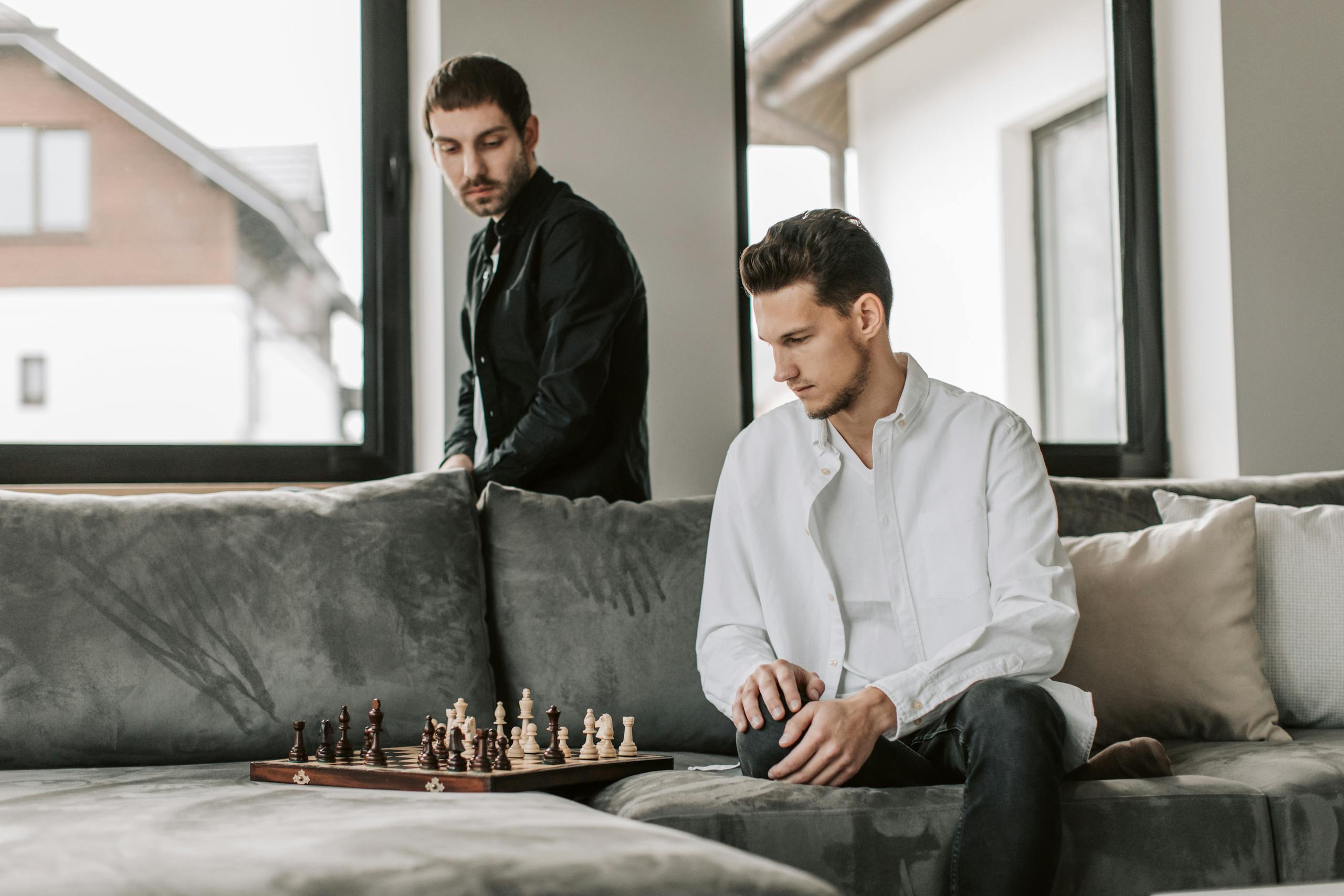
In the world of shared living spaces, it’s no surprise that conflicts arise. One Reddit user, a 21-year-old male who goes by the username Cruisienn, found himself at the center of a rather frustrating situation with one of his roommates, referred to in the post as “H.” With two roommates in a townhouse, the dynamics were already set for potential issues, but H’s behavior was pushing the limits.

H, the 23-year-old roommate, had a habit that left Cruisienn scratching his head. While he was capable of driving, he often chose to spend time with his sister instead. This wouldn’t have been a problem if H didn’t seem to forget one critical item when he left the house: his keys. Time and time again, H would venture out, leaving his keys behind and the front door unlocked, only to return to find himself locked out.
The scenario was all too familiar. Cruisienn would come home after a long day, often accompanied by their other roommate, a 35-year-old male who had learned to manage the door situation quite well. However, as they would enter the house, they would frequently receive a message from H that read something like, “You locked me out, can you come open the door?” It became a routine that was beginning to wear thin on Cruisienn.
Cruisienn made repeated attempts to solve the problem by communicating directly with H. “Take your keys with you,” he’d say, trying to instill some common sense into the situation. Yet, H was dismissive, often insisting that he wouldn’t be gone long enough to warrant taking them. “It’s just for a little while,” he would argue. But whether it was 15 minutes or an hour, the principle of the matter remained—the door should be locked, and he should have his keys.
Interestingly, Cruisienn’s other roommate didn’t have a problem with the locks. He was diligent about keeping everything secure and ensured that the door was locked whenever he left. This only highlighted H’s nonchalant attitude towards the situation. As Cruisienn was left to handle the fallout each time H forgot his keys, it felt increasingly unfair. Why should they have to come to the rescue when H could simply take his keys?
The bizarre part of it all was not just H’s forgetfulness, but also his tendency to hang out on the side of the road, often with his sister just outside. It seemed ironic that he would be so close to home yet so far from being able to get back in. Living in a townhouse, the proximity didn’t help when the door remained unlocked, leaving their home vulnerable. If for some reason they let someone else in or if someone wandered by, it raised concerns about safety, not to mention the sheer inconvenience of H’s behavior.
Feeling overwhelmed and frustrated, Cruisienn decided to take a stand. He asked H directly: “Can you just take your keys whenever you leave?” It seemed like a reasonable request to him, but H’s reaction was anything but understanding. It was as if Cruisienn was overreacting instead of addressing the simple act of remembering to take his keys. Cruisienn couldn’t shake the feeling that H was making his own forgetfulness the responsibility of everyone else.
As the situation continued to spiral, Cruisienn vented his frustrations on Reddit, asking the community if he was being unreasonable for expecting a 23-year-old roommate to manage his keys. The sympathetic responses poured in, with many users sharing similar experiences of living with roommates who seemed detached from their responsibilities.
Ultimately, the crux of the issue revolved around more than just keys left on a hook; it represented a broader challenge of shared living spaces. As Cruisienn navigated his frustrations, he wasn’t just looking for a solution but also a sense of validation in holding his roommate accountable for his actions, or lack thereof.
More from Cultivated Comfort:
- 7 Vintage Home Items From the ’60s That Are Collectors’ Dream Finds
- 7 Vintage Home Goods That Became Collectors’ Gold
- 7 Fast-Food Chains That Changed for the Worse
- 7 Frozen Dinners That Were Better Back in the Day