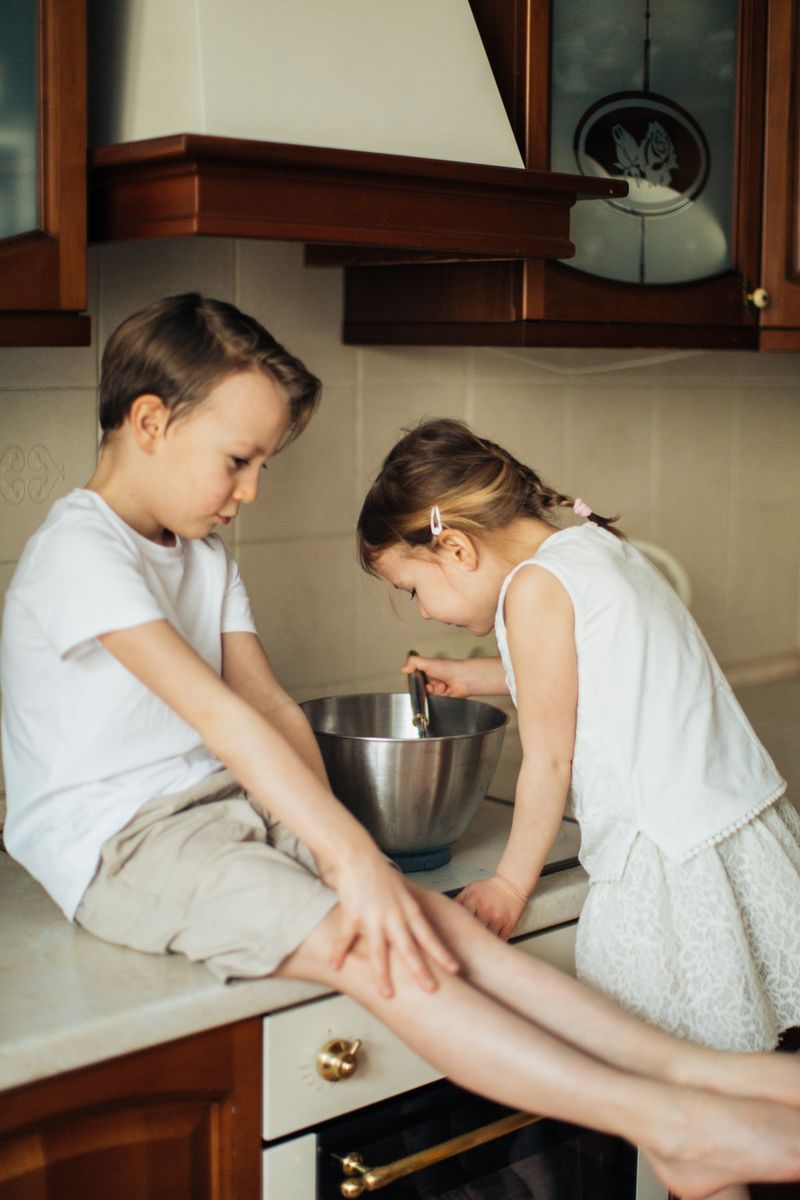
Letting small children climb onto a kitchen counter for a messy activity is the kind of decision that would have sent an earlier generation of parents into a panic, which is exactly why this creator’s video is striking such a chord. In it, she lets her kids clamber up onto the counter for a sticky, chaotic balloon project, and walks viewers through the mindset shift that finally allowed her to say yes instead of her default no.
Rather than treating the mess as something to be managed or minimized, she reframes it as part of the point. The video isn’t really about balloons at all; it’s about the ongoing internal negotiation so many parents go through between keeping a tidy home and giving their kids room to be genuinely, messily engaged in something.
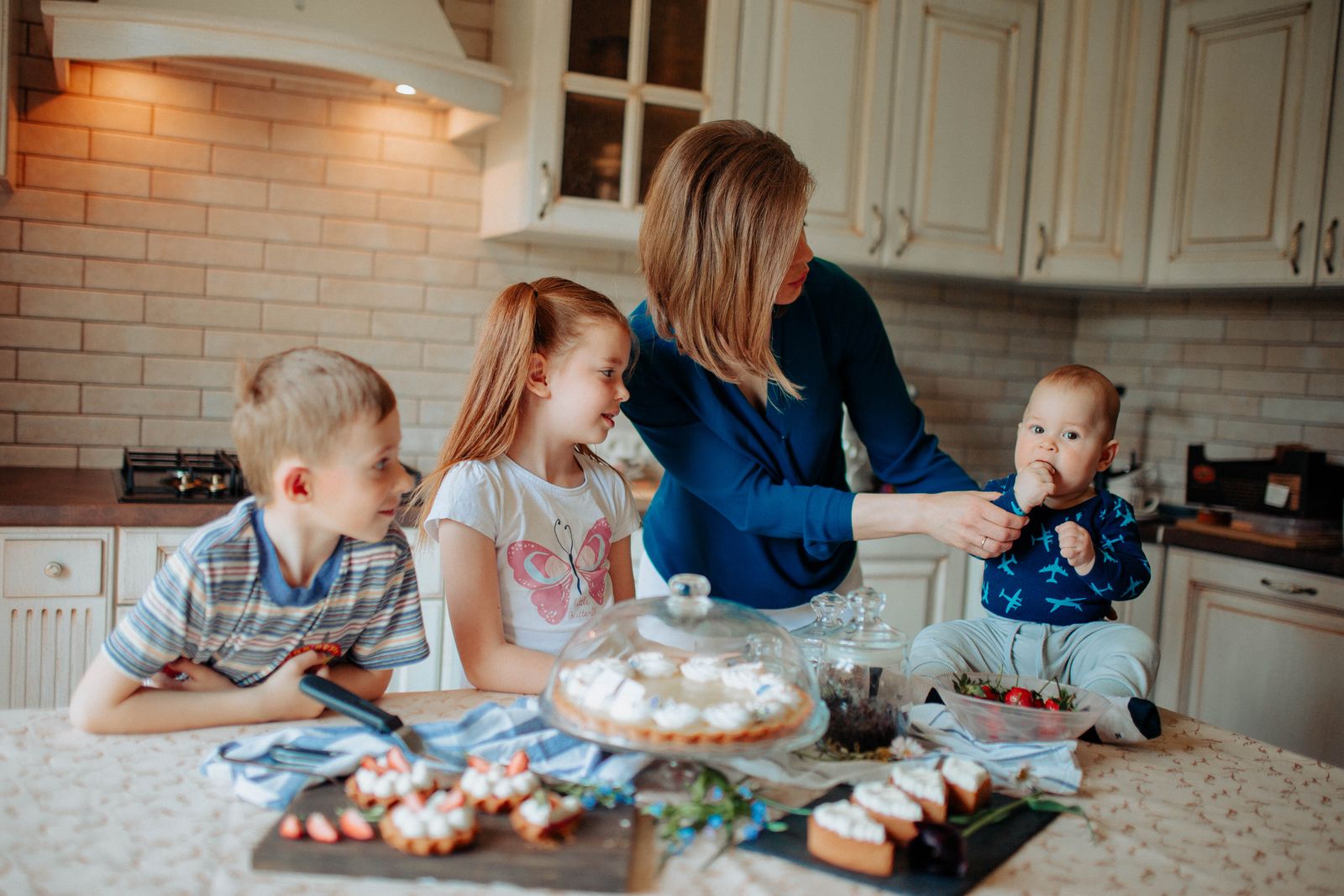
This tension sits at the center of a lot of parenting content right now, as a growing number of moms and dads push back against the idea that a well-run household requires constant control over mess, noise, and spontaneity. The ‘bring back messy play’ sentiment has been building steadily across parenting social media, driven partly by research suggesting that unstructured, sensory-rich activities play a meaningful role in childhood development, and partly by simple parental exhaustion with the pressure to keep everything photo-ready.
There’s also something quietly radical about filming the ‘yes’ rather than the aftermath. Most mess-related parenting content shows either the chaos itself for comedic effect or the exhausted cleanup that follows. Here, the focus is on the decision point, the moment right before the mess happens, when a parent has to choose between protecting the counter and protecting the experience.
Kitchen counters carry a strange symbolic weight in home life. They’re meant to be clean surfaces, prepped and ready, a kind of domestic control center. Letting kids use that space as a stage for an imaginative, messy project upends the usual hierarchy of the home, if only for twenty minutes, and that small subversion is part of why it reads as meaningful rather than just cute.
It’s also a quiet rebuttal to the curated, color-coordinated version of family life that still dominates a lot of home content online. Perfectly styled playrooms and spotless kitchens are easy to admire but hard to actually live inside of with young kids. Videos that show real, in-progress mess, balloon residue on the counter, sticky little hands, water pooling somewhere it shouldn’t, offer a far more honest and ultimately more useful model for parents watching at home.
The mindset shift she describes likely resonates because so many parents are quietly carrying a version of the same internal debate. Is a clean counter worth more than a memory? Is avoiding a mess worth the opportunity cost of a kid who wanted to try something and was told to wait? These aren’t trivial questions, even if they show up in a thirty-second reel about balloons.
Comment sections on this kind of content tend to split into two camps: parents cheering the permissiveness and parents admitting they wish they could loosen up the same way but haven’t quite gotten there yet. Both reactions point to the same underlying truth, that letting go of control in small, safe doses is harder than it sounds, even when every instinct says it’s the right call.
In the end, this video works because it documents something bigger than balloons on a countertop. It’s a small case study in choosing presence and joy over tidiness, and a reminder that some of the best childhood memories are made in exactly the moments parents are tempted to shut down.
What’s easy to miss in a quick scroll past this kind of video is just how much patience it actually requires from the parent behind the camera. Letting a chaotic, unpredictable moment unfold without rushing to control or correct it takes real restraint, especially when the instinct to manage mess or interruption runs so deep for most adults.
This genre of parenting content also plays a quietly important role in setting realistic expectations for people watching who may not yet have kids of their own, or who are deep in the thick of early parenthood and feeling like their own house never looks as composed as what they see online. Showing the real, chaotic texture of family life alongside the sweetness of it offers a far more honest preview than a polished highlight reel ever could.
There’s also something worth saying about how quickly these specific moments become irretrievable. A toddler’s particular way of mispronouncing a word, or the exact chaos of a specific kitchen project, has a narrow window before it changes entirely, which gives even a thirty-second clip a kind of quiet, built-in urgency to capture it now rather than later.
For the Cultivated Comfort audience specifically, content like this reinforces something that bears repeating often: that a genuinely warm home rarely depends on how tidy it looks in any given moment, and more often depends on whether the people inside it feel free to be fully, messily themselves.
There’s also a broader point worth making about how children shape the emotional temperature of a household in ways that are easy to overlook day to day. A single toddler’s unscripted reaction or insistent demand can turn an ordinary ten minutes into something a parent remembers fondly for years, long after the specific mess has been cleaned up and forgotten.
For the Cultivated Comfort community specifically, this kind of video serves as a gentle, ongoing reminder that the versions of home life worth documenting aren’t always the tidiest ones. Some of the most valuable, most rewatched family content comes from exactly the moments that would have otherwise gone unrecorded simply for being too chaotic to seem worth capturing.