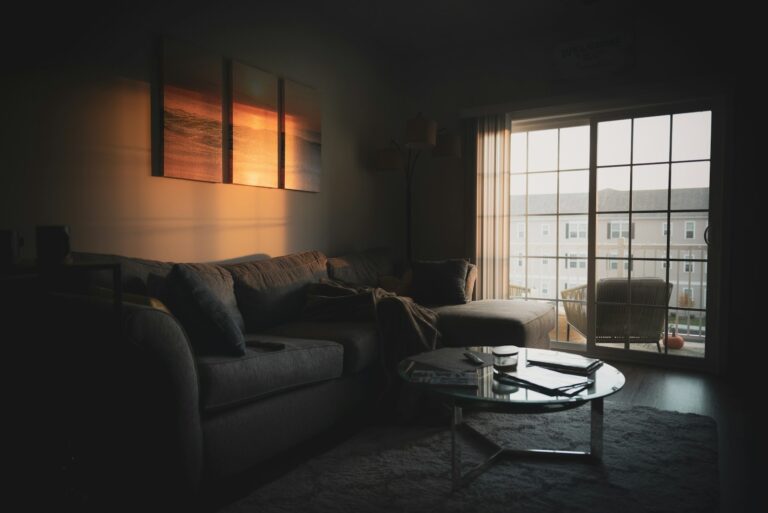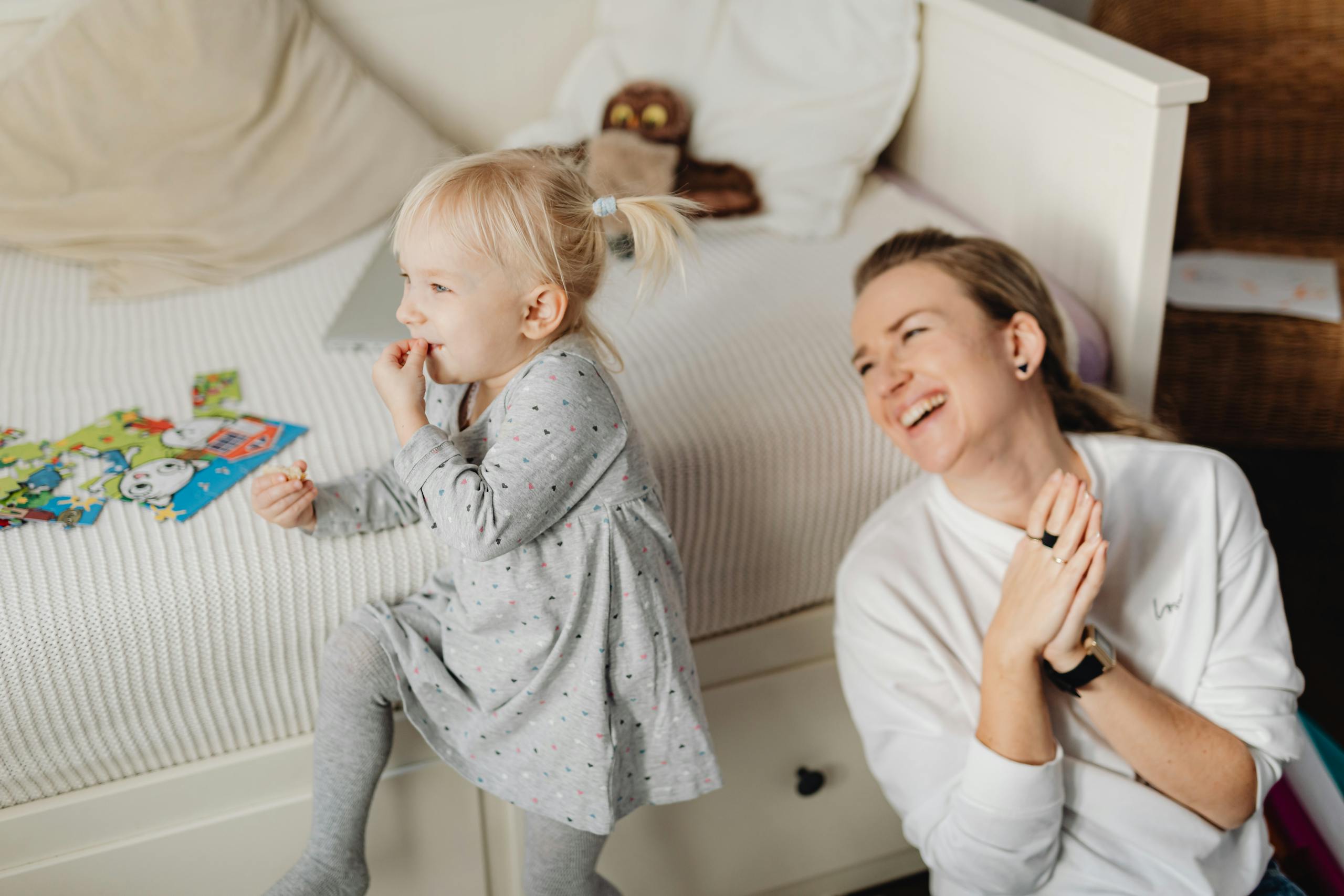
In a quiet moment, a mother sits in her living room, the sounds of her two young children—a 15-month-old and a spirited 3-year-old—echoing in the background as they nap. It had been a day filled with the ups and downs typical of toddlerhood, yet something felt off about her own reactions today. She realized, with a sense of astonishment, that she hadn’t yelled once. This wasn’t just a victory over frustration; it was a significant realization about her journey and the generational trauma she was determined to break.

Her mind wandered back to her childhood, where yelling and chaos were the norm, not the exception. Raised in a household where emotional dysregulation reigned supreme, she had learned early on to be the one who calmed the storms, often at the cost of her own childhood. Her mother’s tantrums mirrored those of a toddler, forcing her to adapt and take on the role of caregiver rather than the nurtured child.
It was in therapy that the intensity of these emotions struck her. The realization hit her that her son’s tantrums—those wild bursts of frustration and sadness—triggered echoes from her past. They reminded her painfully of a relationship that was so upside-down, she sometimes still had trouble understanding what a healthy dynamic looked like. In the face of her son’s big feelings, she often had to remind herself that this wasn’t about reliving her childhood. He was a typical 3-year-old, navigating his own emotional landscape, while she was there to guide him, not to parent him in reverse.
She thought about the work she was doing. There was a safety in her home that she never had. She could see the profound difference it made when she approached her son’s emotions with compassion rather than fear or anger. “I am the safety,” she whispered to herself. This acknowledgment became a grounding mantra, helping her to view her child’s experiences through a different lens. She was not the parent who would shut down emotions; she was the parent who would validate them.
Of course, the day had its challenges. There were moments she stumbled and found herself raising her voice or resorting to too many time-outs. But each time she did, she made it a point to apologize. She understood the power of words and the importance of modeling healthy behavior. “I was wrong,” she would say. “I’m sorry.” This practice was foreign to her, something her own mother had never done. There had been no apologies in her childhood, only further fuel for the fire of resentment and confusion.
Despite the struggles, she felt an overwhelming sense of pride in her ability to be different. “I never hit. I never tell him that his feelings aren’t okay,” she reflected, feeling the weight of her commitment to break the cycle. Unlike her own experiences, she built her parenting on a foundation of understanding and accessibility, fostering an environment where her children could express their emotions without fear. She was consciously choosing to react differently, to be the opposite of the parent she had grown up with.
As she sat in the stillness of her living room, she considered the broader implications of breaking a cycle that had persisted for generations. There was a notion she had come across—something about healing seven generations back and planting the seeds for seven generations ahead. It resonated deeply with her, cementing the idea that her efforts were not just about her children but about a legacy of emotional safety and awareness.
The day may have tested her patience, and there would surely be more challenges ahead. But in this moment of reflection, she found strength in acknowledging her progress. Every time she chose patience over anger, understanding over frustration, she was consciously reshaping her family’s future. As she looked around at the sleeping forms of her children, she felt a profound sense of responsibility and hope. This was her legacy to them, and it was beautiful.
More from Cultivated Comfort:
- 7 Vintage Home Items From the ’60s That Are Collectors’ Dream Finds
- 7 Vintage Home Goods That Became Collectors’ Gold
- 7 Fast-Food Chains That Changed for the Worse
- 7 Frozen Dinners That Were Better Back in the Day