It was one of those days where the clock felt personal. A kid with a fever wanted to be held, another one needed snacks in the exact wrong moment, and my inbox kept pinging like it had no idea my house was basically a tiny urgent-care clinic. I’d already done two loads of laundry, one half-hearted wipe-down of the bathroom sink, and the kind of multitasking that should qualify as an extreme sport.

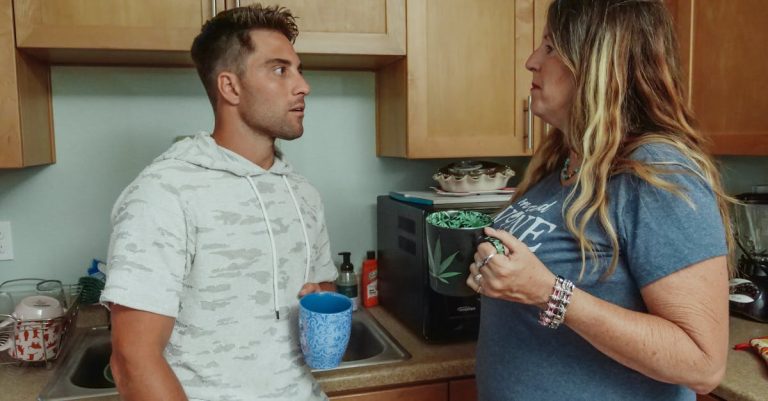
So when my husband walked in and asked, casually, “What did you do all day?” I blinked like I’d misheard him. I started listing things—meds, laundry, emails, lunch, disinfecting door handles like a raccoon with a mission—when he added, “I just meant you were home anyway.” And there it was: the phrase that makes a lot of people see red while still holding a thermometer.
The question that lands like a paper cut
On paper, “What did you do all day?” can be innocent. Maybe it’s curiosity, maybe it’s a bid for connection, maybe it’s genuinely not meant as an audit. But in real life—especially on a day when you’ve been running a household triage unit—it can land like a tiny paper cut that stings way more than it should.
The “home anyway” part is what really flips the switch. It quietly suggests that being home equals being available, that you must’ve had pockets of time, that the day was soft around the edges. If you’ve ever tried replying to a work email with one hand while wiping a kid’s forehead with the other, you know that’s not how it works.
Inside the “home anyway” misunderstanding
Being home doesn’t mean being idle; it means you’re the default responder. You’re the one who notices the fever climbing, the laundry mountain forming, the permission slip that needs signing, the email that can’t wait until tomorrow. The work is constant, but the proof of it disappears as fast as you do it.
And a lot of what fills the day isn’t “tasks” so much as management. Scheduling, anticipating, preventing meltdowns, keeping everyone alive and moderately clean—none of it comes with a receipt. The only time anyone notices is when it doesn’t happen, which is a pretty rude business model if you think about it.
A day in the life, minus the highlight reel
Start with sick kids. It’s not just giving medicine; it’s tracking doses, watching symptoms, washing the cup, changing sheets because someone sweated through them, and answering “Do I have to take it?” twenty-seven times. Add the emotional labor of being the calm one while your body is running on coffee and optimism.
Then there’s laundry, which is never just laundry. It’s gathering, sorting, remembering whose shirt shrank last time, switching loads before they mildew, folding while someone cries because the “wrong” spoon was used, and putting it away—or piling it neatly enough that it looks like you might. If you ever want to humble a person, ask them to keep up with laundry when the household is home all day.
And of course, work emails. Not glamorous, not loud, but persistent. You’re trying to sound professional while someone coughs directly into your soul, and you’re calculating how long you can delay a call without losing your credibility. It’s like doing two jobs at once, except both jobs think they’re the only job.
Why some partners genuinely don’t see it
Sometimes this isn’t malice; it’s invisibility. If you’re not the one who’s home, you don’t witness the constant interruptions, the micro-decisions, the way “I’ll do it in five minutes” turns into “I never got to it.” The house looks the same when you walk in, because the whole point of the work was to keep things from falling apart.
There’s also the tricky fact that home tasks don’t stack up in a satisfying way. You can’t point to a finished spreadsheet and say, “Look, I completed this.” You can point to children who are hydrated and clothed, but weirdly society doesn’t treat that like a project deliverable, even though it absolutely is.
The moment it turns from annoyance to something bigger
For a lot of people, that question hits an old bruise. It taps into the fear of not being valued, not being seen, or being treated like the work you do at home is optional, fluffy, or somehow less real. And when you’re already depleted, you don’t have extra patience to translate your day into something that sounds “productive enough.”
It can also create a strange competition: who had the harder day. Nobody wins that game, and the prize is usually resentment. What most people actually want is simple recognition and a sense that they’re on the same team.
What “I meant you were home anyway” is really saying
Usually, it’s shorthand for: “I assumed you had more flexibility than I did.” Or: “I didn’t think it was that intense.” Or even: “I don’t know what happens here when I’m not around.” It’s not always an accusation, but it can sound like one because it discounts the reality of being the on-call parent.
Sometimes it also reveals an unspoken expectation: if you’re home, you’re the automatic solution to whatever needs doing. That’s convenient, but it’s not neutral. Over time, those assumptions can quietly load one person’s plate until it’s basically a buffet tower of responsibilities with no structural support.
How people are responding—and what helps
In households where this comes up, the most helpful shift tends to be making the invisible visible. Not in a petty way, but in a “here’s what it takes to keep us running” way. Some couples do a quick rundown at the end of the day, not as a report card, but as context: sick kid details, school notes, work deadlines, what’s coming tomorrow.
Others find it clicks when tasks get named more accurately. “I stayed home” becomes “I managed childcare while working,” which is a different category entirely. “I did laundry” becomes “I kept everyone in clean clothes during a stomach bug,” which sounds dramatic because it is.
And yes, sometimes humor helps. “I was home anyway, so I ran a small medical facility, a cleaning service, and a customer support desk, all while answering emails.” A light tone can open the door, as long as the underlying message still lands: this work is real, and it matters.
The bigger story: recognition, not perfection
What most partners want in these moments isn’t a trophy or a grand apology. It’s that feeling of being seen: “That sounds like a lot,” or “Thank you for handling today,” or “How can I help right now?” Those are small sentences with a surprisingly calming effect.
Because when someone says, “You were home anyway,” what you hear is, “Your day didn’t count.” And when you’re holding a sick kid and a phone full of unread messages, counting is kind of the whole thing. The good news is that this is fixable—usually not with a big speech, but with clearer assumptions, shared responsibility, and the simple habit of believing each other’s days.
More from Cultivated Comfort:
- 7 Vintage Home Items From the ’60s That Are Collectors’ Dream Finds
- 7 Vintage Home Goods That Became Collectors’ Gold
- 7 Fast-Food Chains That Changed for the Worse
- 7 Frozen Dinners That Were Better Back in the Day

As a mom of three busy boys, I know how chaotic life can get — but I’ve learned that it’s possible to create a beautiful, cozy home even with kids running around. That’s why I started Cultivated Comfort — to share practical tips, simple systems, and a little encouragement for parents like me who want to make their home feel warm, inviting, and effortlessly stylish. Whether it’s managing toy chaos, streamlining everyday routines, or finding little moments of calm, I’m here to help you simplify your space and create a sense of comfort.
But home is just part of the story. I’m also passionate about seeing the world and creating beautiful meals to share with the people I love. Through Cultivated Comfort, I share my journey of balancing motherhood with building a home that feels rich and peaceful — and finding joy in exploring new places and flavors along the way.