It started the way these things usually do: a normal weekday, a tight street, and one car that “always” seems to be in the “wrong” spot. After a few weeks of side-eye and passive-aggressive timing (you know, the kind where you swear someone’s waiting for you to leave), my neighbor and I finally had it out. Nothing dramatic like shouting across lawns, but definitely the kind of tense exchange that leaves you replaying your own lines in the shower later.
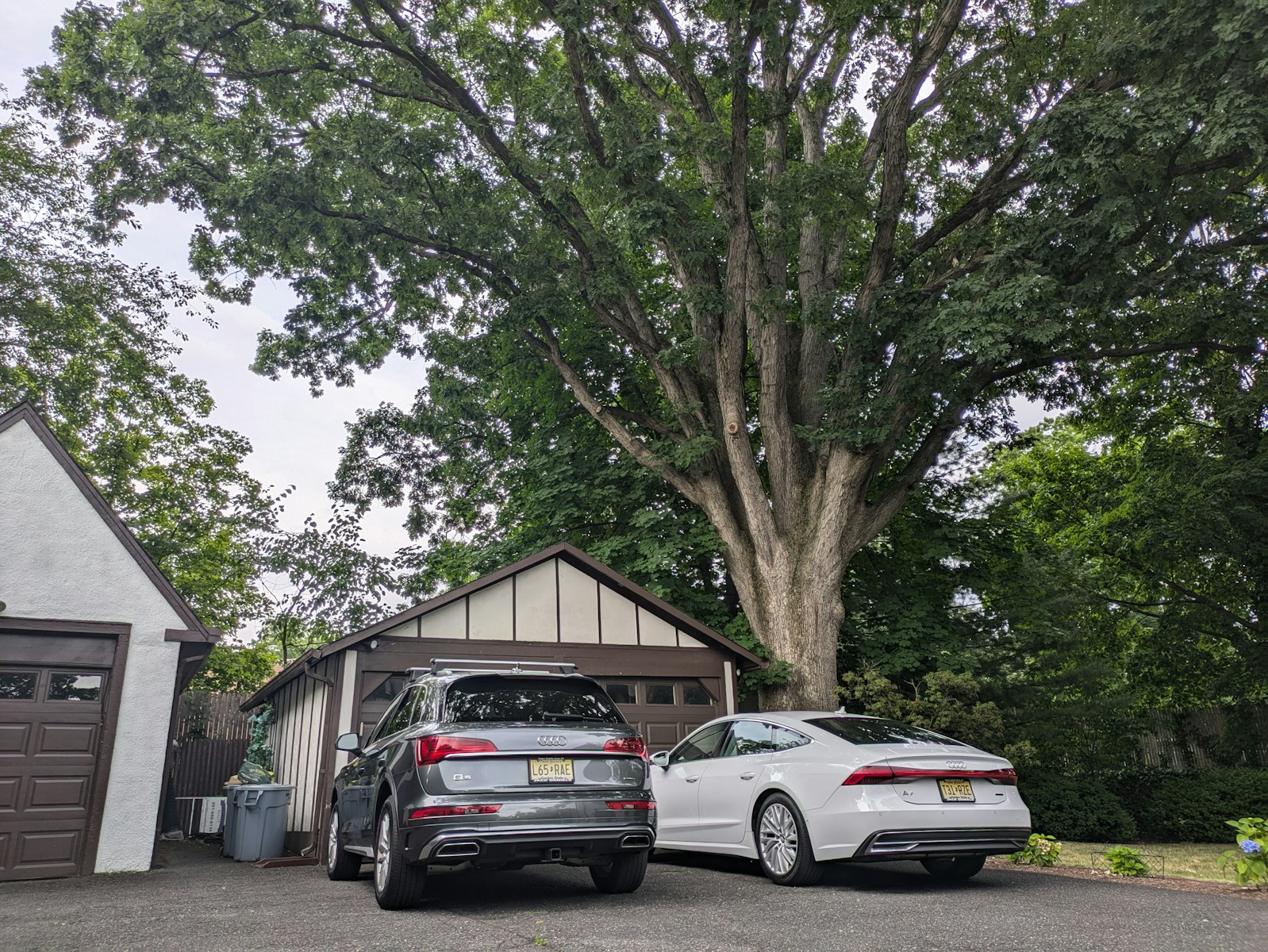
We argued about what’s “fair,” what’s “neighborly,” and who’s been parking where for how long. The street is public, the curb is curb-shaped, and yet somehow we were treating it like a contested border. I thought that would be the end of it: an uncomfortable moment, a little silence, and then we’d both move on. I was wrong.
Then the Camera Appeared
A couple days later, a new outdoor camera showed up on their house—angled in a way that felt… pointed. It wasn’t subtle, either: a neat little device with that “I can see your pores from space” vibe, mounted near the front corner. From my driveway, it looked like it could easily capture my car, my front steps, and the part of the sidewalk I use every day.
I noticed it immediately, because people generally don’t install surveillance gear right after a parking argument unless they’re trying to send a message. At first, I tried to talk myself down. Lots of folks are putting up cameras these days; package theft is a thing, and everyone’s got a doorbell cam now.
Still, the timing felt like a wink you don’t want. And the angle? That felt like the real headline.
“If You Feel Watched, It’s Because You’re Acting Suspicious”
When I finally brought it up—politely, carefully, with my “I’m not trying to start World War III” voice—my neighbor didn’t exactly reassure me. They told me, flat out, that if I feel watched, it’s because I’m “acting suspicious.” Not “It’s for security” or “It’s not aimed at you.” Just that neat little reverse-card: if you’re uncomfortable, you must be the problem.
It’s a line that sounds confident until you sit with it for a second. It shifts the conversation away from what the camera is doing and onto what you’re supposedly doing wrong. And it’s also the kind of comment that can make a totally normal person start wondering if they’re going to get narrated like a true-crime documentary every time they take the trash out.
Why This Feels Personal (Even If It’s “Just Security”)
Cameras aren’t inherently hostile, but context matters. A camera installed after a dispute—especially one about space and boundaries—can feel less like “home security” and more like “I’m documenting you.” Even if your neighbor swears it’s not about you, the emotional math doesn’t always add up that neatly.
There’s also a difference between capturing your own porch and capturing someone else’s daily routine. People don’t love feeling observed in their own neighborhood, where the whole point is that you can relax. It’s hard to feel at ease when you’re wondering if a lens is tracking your comings and goings like it’s a part-time job.
What the Camera Might Actually Be Recording
Here’s the tricky part: it can be genuinely hard to tell what a camera can see from the street. Wide-angle lenses can capture more than you’d think, and some cameras record continuously while others only activate with motion. Add in night vision, audio, and app alerts, and it’s easy for your imagination to fill in the gaps.
Sometimes what looks like a direct shot at your driveway is actually aimed at their own car or front door, with your property just caught on the edge. Other times, it’s exactly what it looks like. And without clarity, it’s normal to feel unsettled—even if you’re doing nothing more “suspicious” than living your life and occasionally carrying a weirdly shaped Amazon box.
The Bigger Trend: Neighborhood Surveillance Is Everywhere Now
Ten years ago, a camera going up on a suburban house might’ve been unusual. Now it’s practically a standard feature, like patio furniture or a grill that gets used twice a year. People buy cameras for legitimate reasons: break-ins, stolen packages, vandalism, or simply peace of mind.
But as cameras become normal, the social rules around them are still catching up. Most neighborhoods don’t have clear expectations for what’s considerate, what’s intrusive, and what crosses the line. So when conflict is already in the air—like after a parking fight—technology can turn a petty disagreement into a cold war with Wi‑Fi.
When “Security” Starts Feeling Like Intimidation
The comment about “acting suspicious” is what makes this story feel less like everyday home security and more like a power move. It’s dismissive, and it puts you on the defensive. It also implies they’re watching you closely enough to judge your behavior, which is… not exactly calming.
In many places, it’s legal for homeowners to record what’s visible from public areas, like the street or sidewalk. But “legal” and “comfortable” aren’t the same thing, and “I can do it” isn’t the same as “I should do it.” If the camera is positioned to capture private areas like inside your windows or fenced backyard, that’s where things can get more complicated, depending on local laws.
How People Are Handling These Situations
In neighborhoods where this kind of tension pops up, most people try a few practical steps before things escalate. They’ll ask for clarification about the camera’s field of view, request a slight repositioning, or suggest privacy masking if the device supports it. Sometimes a calm conversation works—especially if the installer didn’t realize how it looked from next door.
Other times, the conversation goes the way mine did: defensive, accusing, and weirdly personal. In that case, residents often start documenting their own experiences, checking local ordinances, or contacting a community association if one exists. Nobody wants to be “that neighbor,” but nobody wants to feel monitored in their own driveway either.
Parking: The Original Spark That Keeps Reigniting
It’s almost funny how often parking is the gateway argument to bigger neighbor drama. It’s not just about the spot—it’s about control, fairness, routine, and the feeling that someone’s taking more than their share. When trust is thin, every parking choice starts to feel like a statement.
And once a camera gets involved, even normal behavior can look loaded. You pull in late? Suspicious. You leave early? Also suspicious. You sit in your car for a minute to finish a call? Congratulations, you’re now the star of your neighbor’s private channel.
What This Says About Modern Neighbor Relationships
This whole situation has a familiar shape: a small disagreement, a technology upgrade, and a sharp comment that makes everything feel personal. It reflects a broader shift in how people deal with uncertainty—more recording, more receipts, less trust. Cameras can make people feel safer, but they can also make communities feel less friendly, like everyone’s bracing for the next complaint.
The real issue isn’t just whether the camera is allowed. It’s the sense that a basic neighbor relationship—wave, nod, coexist—has been replaced by suspicion. And when someone tells you that your discomfort proves your guilt, it’s hard not to wonder what they’re really trying to accomplish.
What Happens Next on This Street
Right now, the camera’s still up, and the parking is still… a thing. I’m trying to stay calm, stay normal, and not start narrating my own movements like I’m providing commentary for the footage. But the vibe has changed, and that part is real whether or not a lens is technically pointed at me.
In the meantime, I’m learning what a lot of people are learning: in 2026, the neighbor disputes aren’t just about fences and hedges anymore. They’re about optics, apps, and who gets to define what “suspicious” looks like. And apparently, it might be whoever bought the camera first.
More from Cultivated Comfort:
- 7 Vintage Home Items From the ’60s That Are Collectors’ Dream Finds
- 7 Vintage Home Goods That Became Collectors’ Gold
- 7 Fast-Food Chains That Changed for the Worse
- 7 Frozen Dinners That Were Better Back in the Day

As a mom of three busy boys, I know how chaotic life can get — but I’ve learned that it’s possible to create a beautiful, cozy home even with kids running around. That’s why I started Cultivated Comfort — to share practical tips, simple systems, and a little encouragement for parents like me who want to make their home feel warm, inviting, and effortlessly stylish. Whether it’s managing toy chaos, streamlining everyday routines, or finding little moments of calm, I’m here to help you simplify your space and create a sense of comfort.
But home is just part of the story. I’m also passionate about seeing the world and creating beautiful meals to share with the people I love. Through Cultivated Comfort, I share my journey of balancing motherhood with building a home that feels rich and peaceful — and finding joy in exploring new places and flavors along the way.