Most people over 60 walk into the airport carrying a problem they could have solved for about a dollar. A bottle of lotion leaks all over the good blouse. A pair of shoes drags the airport floor onto clean clothes. A carry-on gets pulled away at the gate and sent under the plane with the pills still zipped inside. That is the opening pitch from Catherine Reynolds and Ryan Caldwell, whose video features a former flight attendant with 20 years in the air.
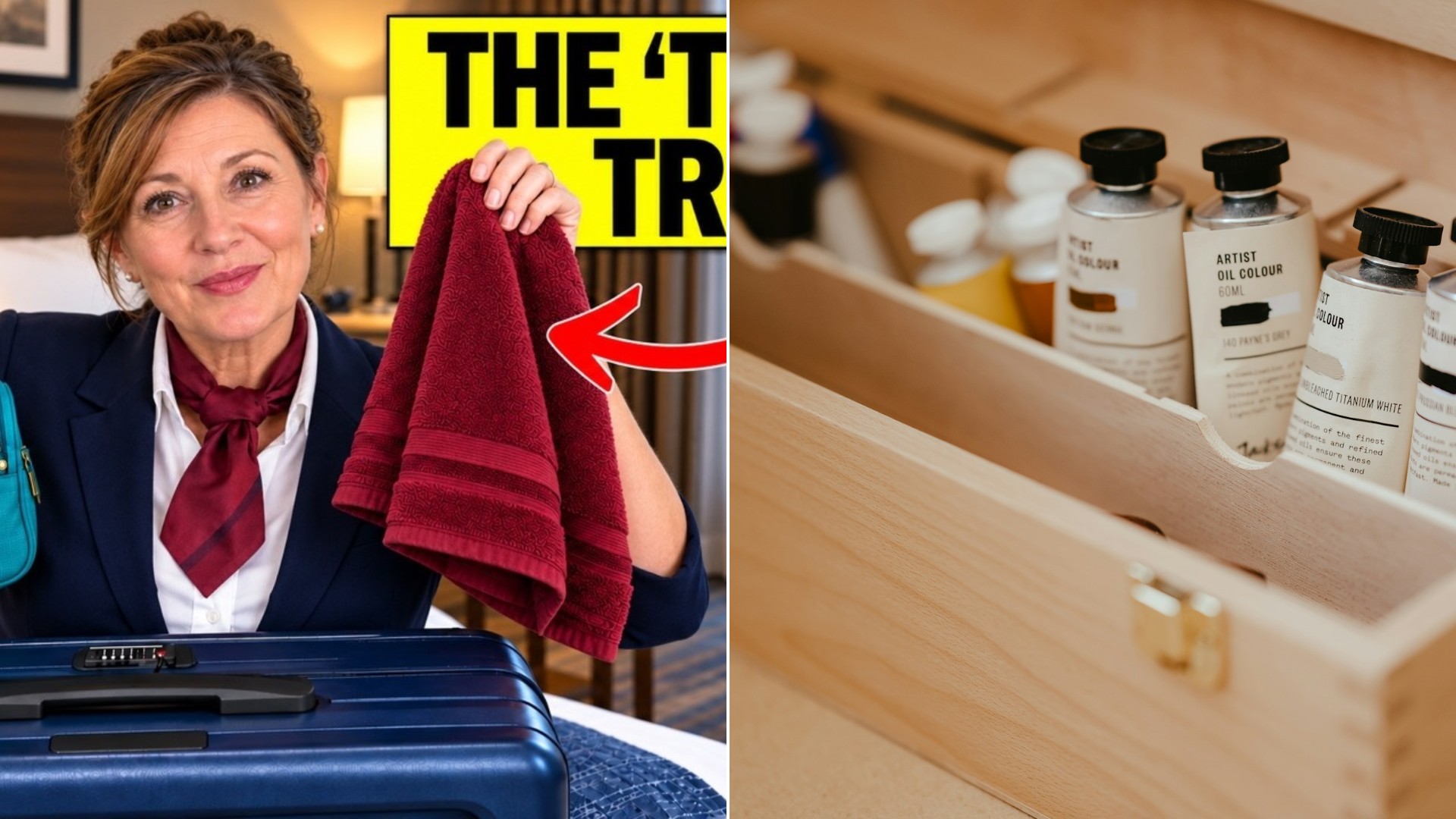
She says almost every fix she relied on came from a drugstore shelf, a dollar store or a kitchen drawer, not a travel shop. Her first tip is already in your kitchen: a small square of plastic wrap under the bottle cap. It costs a fraction of a penny, and here is how it works.
The Plastic Wrap That Stops The Leak
The cabin of an airliner is pressurized, but not to sea level. Under federal rules it normally sits at the equivalent of no more than 8,000 feet, about the height of a mountain town in Colorado. As the air pressure drops, the pocket of air inside a bottle pushes outward, which is why shampoo can greet you with a puddle at the hotel.
Before you pack, tear off a small square of plastic wrap, unscrew the cap, lay the wrap over the opening and screw the cap back on over it. That thin layer becomes a seal that works on lotion, shampoo, mouthwash and anything with a screw top. Remember the TSA 3-1-1 rule too: each container holds up to 3.4 ounces, everything fits in one clear quart-size bag, and the officer goes by the size printed on the bottle, not how much is left inside.
The Pill Organizer That Holds Jewelry
Earrings, rings, a brooch and the tiny batteries for hearing aids tend to sink to the bottom of the bag. She suggests a 7-day pill organizer from Dollar Tree, which many stores carry for a dollar and a quarter. Give each day its own door, with Monday’s earrings in the Monday box and rings and spare batteries in their own, and nothing gets lost, tangled or scratched.
Real medicine is different. TSA does not require medication to stay in its prescription bottle, but states have their own labeling laws, so she keeps prescriptions in original labeled bottles or carries a copy of each prescription. Pills ride in the carry-on, never a checked bag.
The Shower Cap On Your Shoes
Shoes are the dirtiest thing in a suitcase, she says, since they have walked through airport restrooms, parking garages and wet sidewalks. Slip a shower cap over the bottom of each shoe. The elastic holds it tight, and the dirt stays inside the plastic. Take the one from your hotel bathroom, or buy a pack of 100 at Walmart for around five or six dollars, about a nickel a shoe.
She also points out that in July of 2025 the Department of Homeland Security announced that travelers at standard TSA screening no longer have to take their shoes off, a rule that had been in place since 2006. An officer can still ask for them to come off, so slip-ons remain the smart choice.
The Binder Clip With Three Jobs
A box of small binder clips costs a few dollars at an office supply store. Clip one over the head of your razor to avoid nicked fingers in the toiletry bag. Pinch hotel curtains shut so a stripe of parking lot light does not land on your pillow at 5 in the morning. Wrap your charger cord into a loop and clip it closed.
Mark each clip with a dot of nail polish in a different color per cord, and you will know at a glance which charger you are holding and whether one is still plugged in behind the nightstand.
The Dryer Sheet In The Bottom Of The Bag
A suitcase that has sat in a closet since last summer has a smell, and worn clothes make it worse. Tuck one dryer sheet flat at the bottom of the bag and another in with your shoes. A box of 240 Bounce sheets runs roughly $15 at Walmart, about 6 cents a sheet, and an unscented version is called Free and Gentle. A light pass of the sheet over a skirt or slacks also calms static after a dry flight.
The Dry Cleaning Bag Against Wrinkles
Save those thin plastic bags that come back over your clothes. Slide a blouse, slacks or dress inside one and fold the whole thing together. Many wrinkles come from fabric rubbing on fabric, and with a layer of plastic between them the clothes slide instead of grabbing. A cut-open kitchen garbage bag does a similar job, and the shower steam at the hotel handles the rest.
The Socks That Protect Your Legs
Sitting still for hours slows blood in the legs, and the risk of a blood clot goes up with age, recent surgery, certain medications and long trips. She notes the CDC’s guide for travel doctors says graduated compression stockings appear to reduce symptomless clots in travelers and that most people tolerate them well. A three-pack rated 15 to 20 mm of mercury sells for around $17 at Walmart, under $6 a pair.
Put them on in the morning before your legs swell, book an aisle seat so you can walk, and do ankle circles every hour. Anyone with poor circulation, peripheral artery disease, diabetes with numb feet, heart failure or an open sore on a leg should ask a doctor first.
The Tiny Screwdriver For Your Glasses
A loose hinge screw can drop an arm off your glasses and leave you squinting at a menu in a strange city. Walmart’s Equate brand sells a repair kit for about $2 with a small screwdriver and spare screws. TSA allows screwdrivers 7 inches long or shorter in the carry-on, and the officer on duty has the final say. Tuck in a pair of dollar store readers as backup so you can still read your boarding pass.
The Sentence That Keeps Your Full-Size Medicine
TSA allows medically necessary liquids, gels and aerosols in amounts larger than 3.4 ounces, in reasonable quantities for your trip. That includes liquid medicine, eye drops or a prescription cream. Say it out loud before screening: “I have medically necessary liquids,” and put them in a separate bin. A cold pack must be frozen solid at the checkpoint, or it gets extra screening. TSA Cares, at 855-787-2227, helps travelers with medical conditions, and TSA recommends calling about 72 hours before your flight.
The Pouch On Top And The Tag Inside
When a gate agent says your roller bag must be checked, you have about 10 seconds. Pack everything you cannot live without overnight in one small zip pouch on top of the carry-on: medicine, glasses, spare readers, keys, charger and passport if flying abroad. Lift the pouch out and close the bag. Nothing important goes under the plane.
She also slips an Apple AirTag into the bag, listed at $29. Since late 2024, Apple’s share item location feature lets you give a link to an airline, and American, United and Delta are among those that accept it. The link turns itself off after 7 days or when you get the bag back. Take a photo of the claim stub and the bag at the jet bridge, too.
Her closing thought is that every trick on the list came from a dollar store, a drawer or a closet, and none of it is for sale at the airport.
More Stories You May Like
- Flight Attendant Helps a Passenger Who Cannot Find Her Seat Only to Discover She Was Searching for Seat G18, Which Was Actually the Gate the Plane Was At
- Airbnb Host Reacts to the New Checkout Rules and Says What Guests Are Really Going to Face When the Changes Take Effect
- Guest Spends a Night at the Ritz Carlton Paris and Finds It Old Looking Expensive and Short on Customer Service