Most of us were raised to be polite to strangers, but not necessarily to join them for dinner. A creator named Kira decided to try it anyway. In a recording shared by @kiramilann, she walks up to a stranger in a restaurant and asks a question that takes real nerve: may I sit and eat with you?
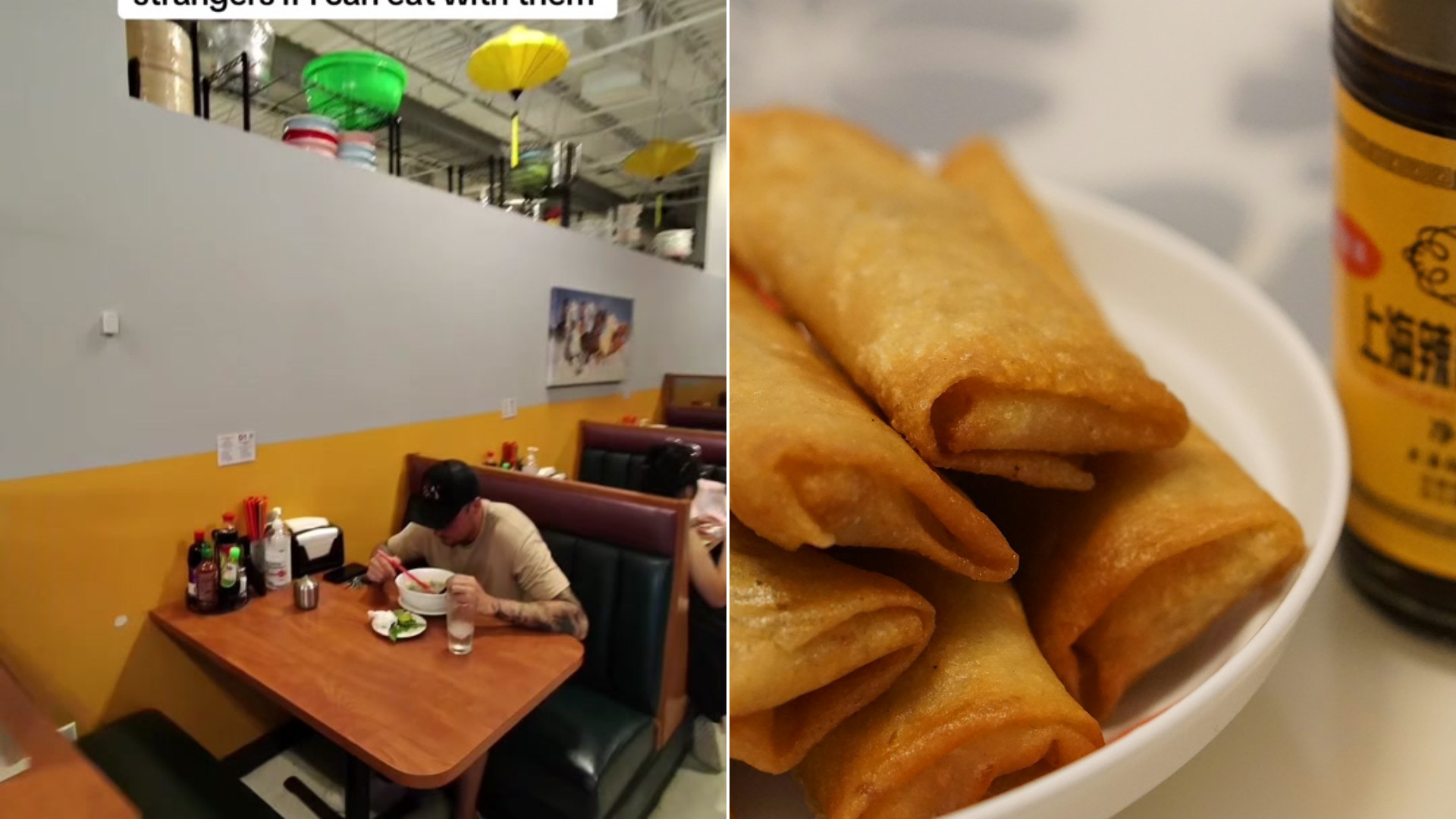
Her caption describes the project in a single line, “asking strangers if i can sit and eat with them,” and tags it with rejection therapy. That phrase refers to the idea of deliberately seeking out small moments where someone might say no, so that the fear of hearing it slowly shrinks. The surprising part is how warmly the person she meets responds.
@kiramilann
Starting With a Simple Question
The recording opens with Kira approaching a person at a table and asking whether they are waiting for someone. When the answer is no, she asks if she can join. The reply is friendly, and the two sit down. It is a small moment, but anyone who has ever hesitated before speaking to someone new will recognize how big it feels in the moment.
The conversation that follows is easy and relaxed. The stranger has ordered spring rolls and is waiting for them to arrive. The two get to talking about the dish, and the stranger gives Kira a real tip. They say the spring rolls here are good, and they suggest she also try the egg rolls, which they describe as something like a shrimp spring roll. Kira asks if they would recommend adding anything to it, and they say it is good as it is. The stranger adds that they come to this restaurant once or twice a week, which is about as strong an endorsement as a regular can give.
From Spring Rolls to Sports and Tattoos
As the meal goes on, the talk wanders the way real conversations do. Kira asks about sports, and the stranger mentions playing baseball and basketball. The talk turns to tattoos, and someone at the table compliments the ink on display. The tattoo owner says most of theirs are good ones, with a couple of regrets along the way. Kira admits that she does not have any tattoos and is too scared to get one, and the stranger gently tells her that she is probably smart to think about it a lot.
That small exchange says a lot about the whole project. A moment earlier, these two did not know each other. Now one is offering friendly advice about permanent decisions, and the other is laughing and listening. Near the end, Kira introduces herself properly, spelling her name, and says she had a good time. She explains the idea behind her project in simple terms: she wanted to try talking to a stranger, and she hopes other people will not be scared to do the same. The two part with thanks and kind words on both sides.
It is worth noting that the conversation we can follow is one encounter, so it is hard to say how every stranger she asks would respond. This one went well. Not every request would turn out that way, and that is exactly what rejection therapy is meant to teach: that a polite no is survivable.
Why Talking to Strangers Feels Harder Than It Is
If the idea makes you nervous, you are not alone, and researchers have looked into why. Psychologists Nicholas Epley and Juliana Schroeder ran nine studies involving people on trains, buses, planes, in taxis and in a waiting room. As described in a British Psychological Society research digest, commuters who were told to chat with a stranger reported the most positive experiences. Those told to sit in solitude enjoyed their trip the least, and those who behaved as they normally would fell in between.
Several other findings stand out:
- It did not cost anyone productivity. Chatting did not reduce self reported productivity.
- Both people enjoyed it. In the waiting room study, pairs enjoyed talking more whether they started the conversation or were approached.
- Introverts and extraverts benefited alike. Both groups enjoyed talking with strangers.
- Our predictions are usually wrong. People who only imagined the experience expected chatting to be the least enjoyable option, the exact opposite of what participants actually reported.
- We overestimate rejection. Participants predicted that more than half of strangers would rebuff them, but none of the people who were instructed to start a conversation were turned away.
The researchers pointed to what they call pluralistic ignorance. In plain terms, each of us assumes everyone else wants to be left alone, when many of them would welcome a chat. The study also noted that its results may be specific to urban American culture, and that it looked at one time conversations rather than repeated contact. Even so, the message is encouraging. Kira’s experiment fits neatly with what the research found.
How to Be Friendly Without Being Pushy
You do not need to ask to share a stranger’s table to enjoy the benefits. A few gentler ways to start are below.
- Start with a compliment or a question. Asking what someone ordered or whether they recommend a dish is an easy opening, much like the one Kira used.
- Read the room. If someone is wearing headphones, reading or looks busy, a friendly nod may be enough. Respect a polite no right away.
- Keep it light. Food, the weather, a local team and hobbies are safe topics that invite stories.
- Give them an easy exit. Say something like “no pressure if you would rather eat in peace.” People relax when they feel free to say no.
- Introduce yourself. A name turns a stranger into a person. Kira did exactly that before she said goodbye.
- Stay in public places. Restaurants, coffee shops and community events are comfortable settings for meeting new people.
A Small Act of Courage
For many older adults, especially those who live alone, a shared meal can be the highlight of the day, and a kind invitation can mean more than the person receiving it lets on. Kira’s project is a reminder that connection often starts with someone being brave enough to ask. Whether you try rejection therapy yourself or simply say hello to the person next to you at the diner counter, the effort is likely to be received better than you fear.