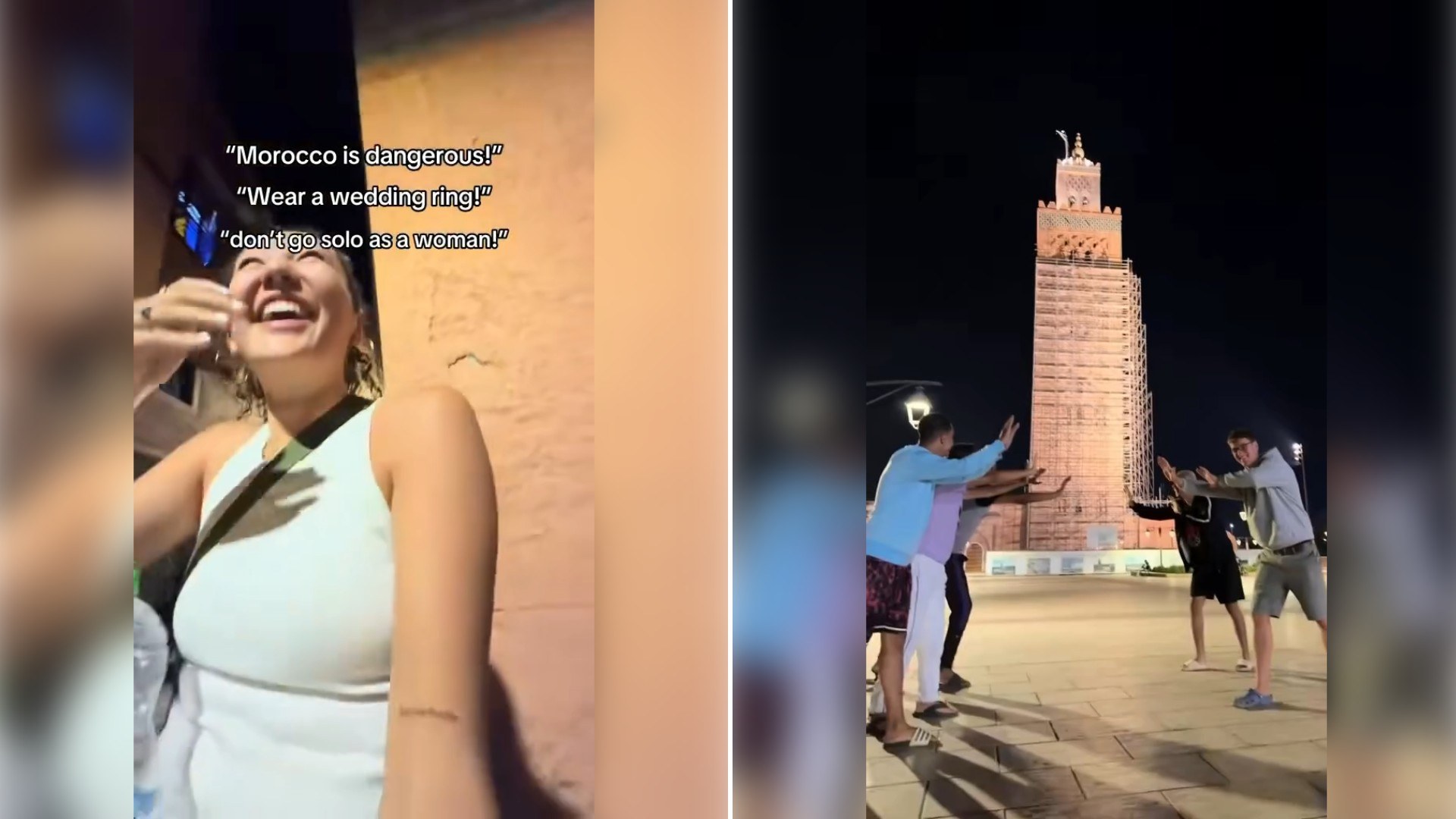
Solo female travelers tend to hear a fairly predictable set of warnings before visiting certain countries, and one creator’s footage from Morocco leans into that familiar framing before showing a moment that pushes back against it.
The creator, @fiona_travels_solo, shares footage described as a throwback to a previous visit, showing a group of local men in her neighborhood waving her over and welcoming her in for a warm, hospitable, home-cooked dinner. Online, the clip has circulated framed against the kind of familiar solo-travel warnings often aimed at women visiting the region, though the caption on the post itself is brief, and it’s worth noting the specific quoted warnings attached to the story elsewhere haven’t been independently confirmed as things she actually said in this clip.
View this post on Instagram
Solo female travel content built around myth-busting has become its own genre precisely because the gap between secondhand warnings and firsthand experience tends to be enormous. Plenty of destinations carry a reputation shaped by outdated advice, isolated incidents, or simple unfamiliarity, and footage of genuine, everyday hospitality tends to do more to reshape that reputation than any written travel guide.
It’s worth thinking about where that gap between reputation and reality actually comes from. Warnings about a given destination, especially ones aimed specifically at women traveling alone, tend to circulate widely online long after the specific context that produced them has faded, repeated in forum posts, comment sections, and secondhand advice passed from one nervous traveler to the next. Very few of those warnings come with the kind of nuance that separates an isolated incident from a genuine, widespread pattern, which means a single old story can end up shaping an entire country’s reputation among travelers who have never actually been there themselves. Footage like this one offers a direct counterweight to that secondhand narrative, a firsthand account that carries more weight precisely because it’s lived experience rather than repeated hearsay.
Neighborhood hospitality of the kind shown here, a spontaneous invitation extended to someone clearly identifiable as an outsider, tends to reflect something specific about how many communities around the world relate to guests generally, treating an unfamiliar face less as a source of suspicion and more as an opportunity for welcome. That dynamic can be jarring for travelers arriving with a mental checklist of precautions built from warnings absorbed before the trip even started, precisely because it runs so counter to the wariness those warnings tend to instill. Discovering, in practice, that an entire neighborhood is more interested in feeding a stranger than in anything more sinister tends to be one of the more disarming experiences solo travel has to offer.
Home-cooked hospitality shared with a total stranger also carries its own quiet significance beyond the immediate warmth of the gesture. Cooking for a guest, rather than simply offering a passing kindness, requires time, ingredients, and a willingness to bring someone into a domestic space that is normally reserved for family. That a group of neighbors chose to extend that specific kind of welcome, rather than a more superficial greeting, suggests a genuine desire to connect rather than a performance staged for a passing camera.
What the footage does show clearly is the hospitality itself: a spontaneous invitation into a home, a shared meal, and a level of warmth that requires no shared language or advance planning to communicate. Whatever specific warnings she may or may not have heard before this trip, the footage speaks for itself as an example of unplanned generosity from people with nothing to gain from extending it. There’s a simplicity to that kind of hospitality that’s easy to overlook precisely because it asks for nothing in return, no payment, no favor, no expectation beyond the basic pleasure of sharing a meal with someone new. That simplicity is often what travelers describe as the most disorienting part of encountering it firsthand after having braced for something entirely different.
Content built around this kind of experience also plays an important role for other travelers weighing a similar trip. Solo female travelers researching a destination often find themselves caught between official travel advisories, secondhand warnings from people who have never actually visited, and firsthand accounts from those who have. Footage of a genuinely warm, unplanned welcome carries a particular kind of credibility in that mix, not because it disproves every possible caution, but because it adds a real, specific counterexample to weigh against the more generic warnings circulating elsewhere.
It’s also worth noting the specific dynamic of being welcomed by a group of men as a solo woman traveler, precisely because that is usually the exact scenario the familiar warnings are built around. Much of the caution directed at solo female travelers centers on interactions with unfamiliar men in unfamiliar settings, which makes footage of exactly that scenario resolving into nothing more than a shared, generous meal particularly striking. It doesn’t erase the reality that caution has its place in travel generally, but it does complicate the blanket assumption that an invitation from a group of local men abroad is inherently something to fear rather than something that might, in a given moment, simply be genuine hospitality extended without any ulterior motive at all.
Solo travel, by nature, tends to produce a mix of genuinely cautious moments and genuinely warm ones, often within the same trip. This clip is squarely an example of the latter, a reminder that a neighborhood’s reputation and a neighborhood’s actual residents don’t always match, and that the most reliable way to find out which version is true is very often to simply go and see for yourself, armed with reasonable caution but without assuming the worst before a single conversation has even taken place.