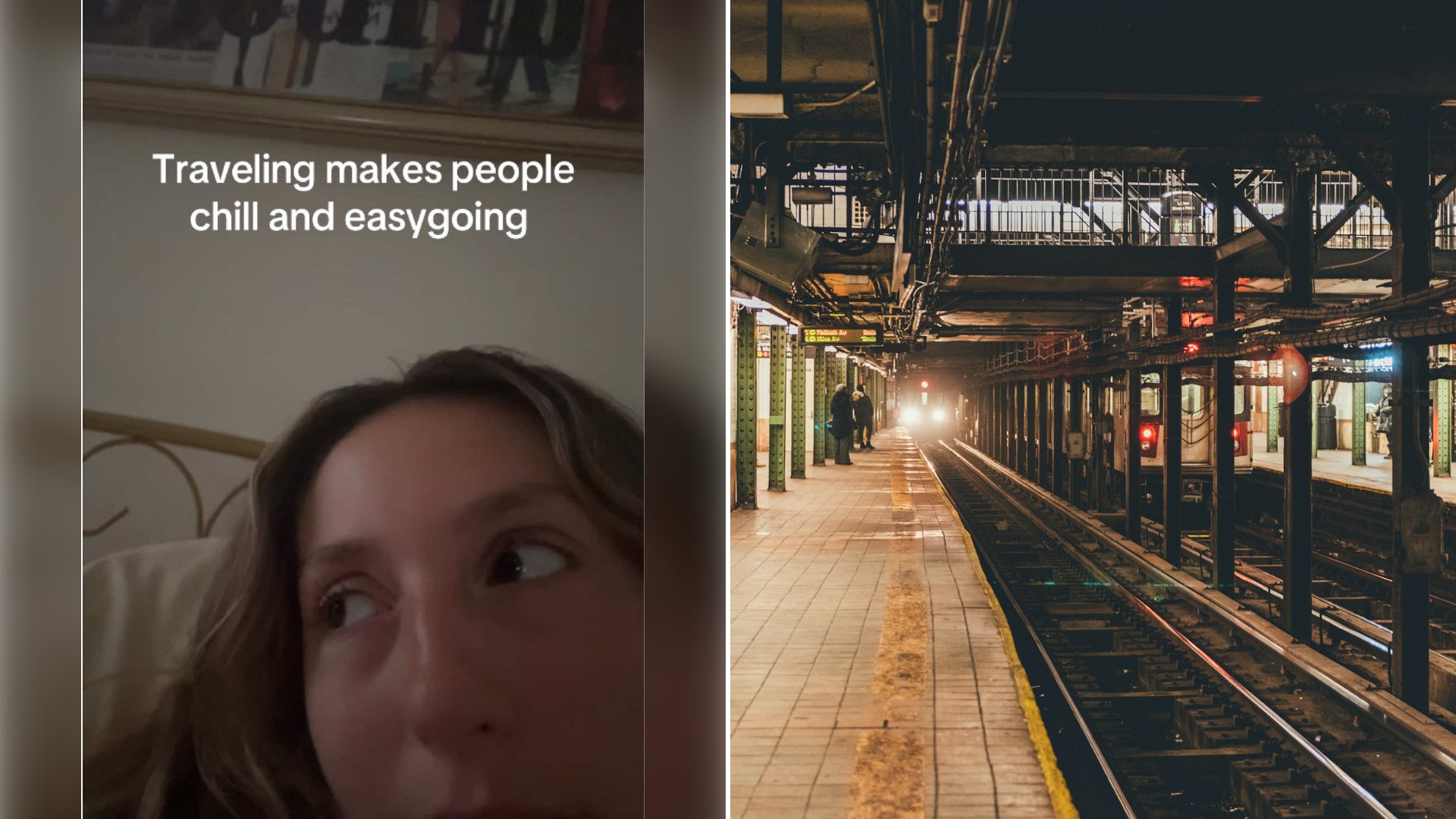
Lying back on a bed with the camera close to her face, @roseroamsaround, whose display name is Rose, makes a 44 second argument that the way to spot someone who has traveled a lot is by how they react to small problems. Text across the video reads “Traveling makes people chill and easygoing,” and her caption says “The mishap will CONDITION you.”
“I think the way I can tell someone’s really well traveled is they don’t get faced by, like, annoying little inconveniences or life stuff,” she begins. Her example is household: “Like if their oven breaks, they’re just gonna be like, okay, whatever, I’ll figure this out.”
She sets that reaction against the opposite one, people who respond to the same problem by “complaining about it non stop.” Her explanation for the difference comes in a single line: “I’m like, wow, that person hasn’t been stranded on the subway in a foreign country.” The stranded subway rider is her picture of the experience that changes how a person handles a broken appliance later.
Then she narrows the claim in three steps. “Traveling, specifically budget traveling, even more specifically solo traveling, is the best way you can, like, raise your tolerance of what you can handle,” she says. “And really quickly, you’ll become the easy going, chill person. You weren’t always that way.” She ends on her recommendation, “that’s why I think everyone should do it if they can.”
In the last few seconds she turns to her own account. She says she posts budget itineraries and gives one example from them: “I went to San Francisco for like $400 including my flight.” The video does not show an itinerary or break that number down, so it stays her claim.
Her own examples, a stranded subway ride and a broken oven, are both situations where nothing can be done except figure out the next step. The practice she describes is to choose a trip where small things can go wrong, travel alone, and treat each mishap as the training.