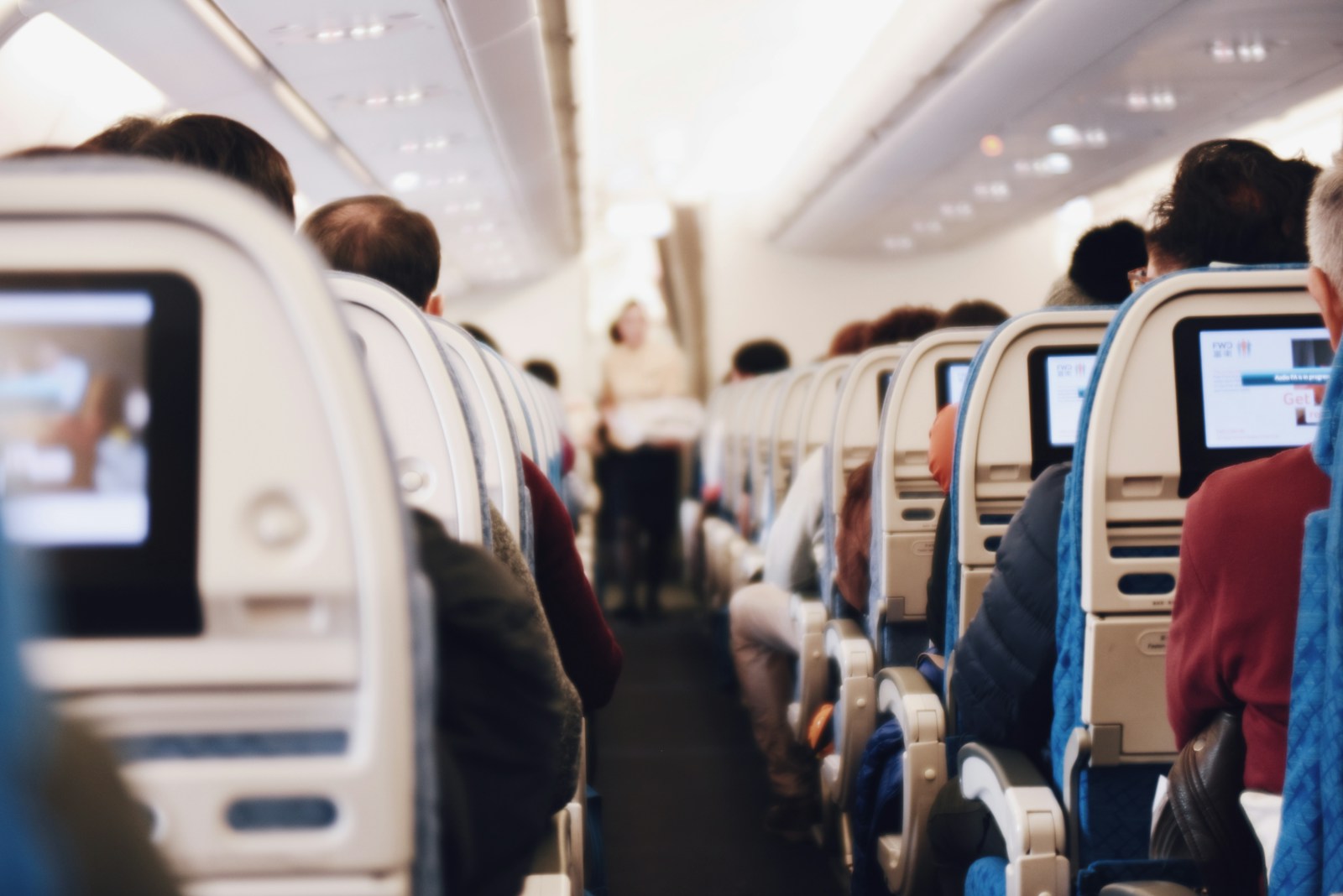
It started like a perfectly ordinary flight: shoes off, podcast on, tray table down, laptop open. I’d just found my groove—emails queued, a half-warm coffee within reach—when the seat in front of me suddenly lurched backward like it had a personal vendetta.
The top edge of my screen took the hit. There was a sharp crack, the kind your stomach recognizes before your brain catches up, and my laptop went from “workday” to “modern art” in a second.
A recline that turned into a collision
I’m not anti-recline. Planes are uncomfortable and everybody’s trying to survive the same cramped geometry, so I usually just adjust and move on.
But this wasn’t a gentle lean. It was a full-body slam, the kind that makes you wonder if the person is trying to start a lawn mower with the seatback.
I tapped the passenger’s shoulder and kept my voice calm. “Hey—sorry—my laptop just got hit pretty hard. Any chance you could raise your seat a bit?”
He turned halfway, looked at my cracked screen like it was a minor inconvenience to his personal freedom, and snapped, “You should’ve paid for business class.” Then he reclined again, a little extra, like punctuation.
Why this struck a nerve for so many travelers
If you’ve flown in the last few years, you already know the vibe: seats feel tighter, tempers feel shorter, and everyone’s operating on airport sleep. It doesn’t take much for small etiquette questions—reclining, armrests, bag space—to turn into a weird little power struggle.
What made this moment travel so fast in conversations (and later online, once I mentioned it to friends) wasn’t just the cracked laptop. It was the attitude behind that line—like basic courtesy is a premium upgrade you unlock with points.
And honestly, that’s what gets people. We all know we didn’t buy a private suite. But most of us still expect a baseline: if you accidentally damage someone’s stuff, you don’t respond like you’re running a customer service desk for karma.
The awkward reality: reclining is allowed, but it’s not consequence-free
Most airlines do allow seat recline in economy (when permitted—usually not during taxi, takeoff, and landing). So technically, the passenger in front of me wasn’t breaking a rule by leaning back.
But “allowed” isn’t the same as “do whatever you want, no notes.” The modern tray-table setup basically invites this exact problem, especially when someone reclines fast and the person behind has a laptop positioned upright.
There’s also the unspoken social contract: if you’re going to change the shared space, you do it like a human. A quick glance behind you, a slower recline, or even a polite “mind if I lean back?” goes a long way.
What I did next (and what flight attendants can actually do)
I took a breath and flagged a flight attendant, mostly because my laptop was visibly damaged and I didn’t want it to become a “he said, she said” situation later. I explained what happened, showed the cracked hinge area, and pointed out that the recline had been sudden.
The attendant didn’t scold anyone like a sitcom referee. Instead, she did what airline staff usually can do: de-escalate, document, and try to prevent round two.
She asked the passenger to bring his seat upright for a moment while we repositioned things. He complied with a lot of dramatic sighing, the international language of “I’m the victim here,” but he did comply.
Then she suggested I store the laptop during most of the flight and use it only when the seat in front was upright. Not ideal, but in the air, “not ideal” is basically the default setting.
Damage at 35,000 feet: who pays, and what’s realistic
This is the part people always ask: can you make the recliner pay? Sometimes, but it’s rarely straightforward, and it depends on whether you can identify them, whether they cooperate, and what documentation you have.
Airlines generally don’t assume liability for passenger-on-passenger damage unless there’s something unusually clear-cut, and even then it can be messy. Practically speaking, the most common routes are travel insurance, credit card purchase protection, or your own device coverage.
If this ever happens to you, take photos immediately—your device, the seat position, any visible impact points. Ask a flight attendant to note it, and if you can do so without escalating things, get the person’s name and seat number.
It’s not about going full courtroom drama at the gate. It’s about having enough detail that, if you file a claim later, you’re not trying to reconstruct everything from memory and rage.
The “business class” comment, decoded
“You should’ve paid for business class” sounds like a mic drop, but it’s really just a shortcut around empathy. It turns a simple request—“please don’t crush my stuff”—into a weird class-based argument no one asked for.
Also, it ignores reality. Plenty of people are flying for work on tight budgets, visiting family, or dealing with last-minute emergencies, and “just upgrade” isn’t advice so much as a fantasy.
If we followed that logic all the way down, nobody in economy would be allowed to want anything: legroom, quiet, personal space, or basic respect. You don’t have to buy a nicer seat to deserve a normal interaction.
Small habits that prevent seatback disasters
After this happened, I started watching how other travelers manage the laptop-and-recline dance. The people who never have issues tend to do a few simple things consistently.
First, they lower the laptop screen angle slightly once cruising starts, so there’s a bit of “give” if the seat moves. Second, they keep drinks and fragile items farther from the hinge zone, because that’s where the chaos happens.
And if the person in front begins reclining, they gently steady the top of their screen with one hand and slide the laptop a touch back on the tray. It’s not foolproof, but it’s a lot better than trusting strangers to recline like they’re handling fine china.
A bigger question: have we forgotten how to share space?
The weirdest part of flying isn’t the turbulence or the tiny pretzels. It’s the way it compresses strangers into a shared living room where nobody agreed on the rules.
Most passengers are decent and tired and doing their best. But every now and then, you meet someone who treats the cabin like a personal kingdom, and suddenly you’re negotiating over two inches of plastic and foam like it’s international diplomacy.
My laptop’s still usable, in a limping sort of way, and yes, I’m now the proud owner of a screen that closes with the confidence of a loose cabinet door. The bigger bruise, though, was realizing how quickly some people jump from “Oops” to “Not my problem.”
Still, the small silver lining: plenty of fellow passengers noticed, offered sympathetic looks, and one person even whispered, “That guy’s a tool,” which, in economy, is basically a hug.
More from Cultivated Comfort:
- 7 Vintage Home Items From the ’60s That Are Collectors’ Dream Finds
- 7 Vintage Home Goods That Became Collectors’ Gold
- 7 Fast-Food Chains That Changed for the Worse
- 7 Frozen Dinners That Were Better Back in the Day

As a mom of three busy boys, I know how chaotic life can get — but I’ve learned that it’s possible to create a beautiful, cozy home even with kids running around. That’s why I started Cultivated Comfort — to share practical tips, simple systems, and a little encouragement for parents like me who want to make their home feel warm, inviting, and effortlessly stylish. Whether it’s managing toy chaos, streamlining everyday routines, or finding little moments of calm, I’m here to help you simplify your space and create a sense of comfort.
But home is just part of the story. I’m also passionate about seeing the world and creating beautiful meals to share with the people I love. Through Cultivated Comfort, I share my journey of balancing motherhood with building a home that feels rich and peaceful — and finding joy in exploring new places and flavors along the way.