Solo dining in Tokyo is usually a quiet, almost meditative experience, especially at an omakase counter where the chef and a handful of guests share a small, intimate space. That is exactly what creator @time.w.toni expected when she booked a solo omakase dinner during her trip, only for her chef to start an unexpected, flirtatious exchange right there at the counter.
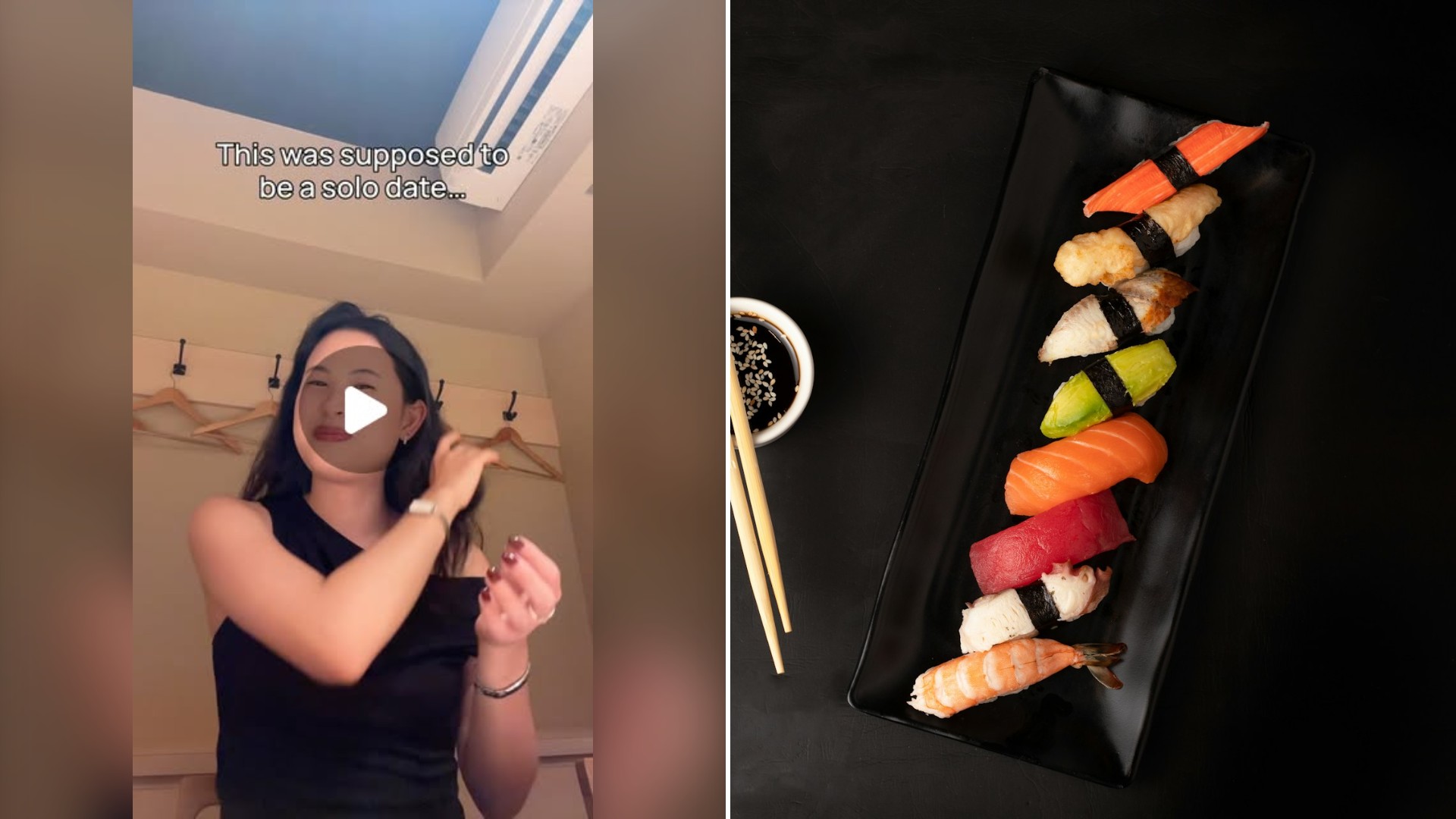
The video has pulled in more than 321,000 likes, and it is easy to see why it crossed over so widely: it combines the aspirational pull of solo travel in Japan with a dating twist nobody expects at a sushi counter, landing squarely in both the travel and relationships niches at once.
Omakase, which translates roughly to “I’ll leave it up to you,” is a dining format built entirely around trust between the diner and the chef, who selects and prepares each course without a menu to consult. Tokyo is widely considered the global epicenter of the format, with counters ranging from high-end, reservation-only establishments costing several hundred dollars per person to smaller, more accessible neighborhood spots that still deliver an intimate, chef-led experience for a fraction of the price.
Solo travel to Japan has surged in popularity in recent years, and dining culture is a big part of why. Unlike many Western countries, where solo dining can carry a slight social stigma, Japan has long had a robust culture of counter-seating restaurants built specifically around single diners, from ramen shops with individual booths to omakase counters where a solo guest is treated with the same care as a full table. For travelers nervous about eating alone in an unfamiliar country, this makes Tokyo in particular one of the more welcoming cities in the world to do it.
The counter format also naturally encourages conversation in a way that a traditional table setup does not. Because the chef is working directly in front of diners, often narrating each piece as it is served, there is a built-in opportunity for small talk that can occasionally tip into something more personal, as it apparently did in this case. Travel writers covering Japan’s dining scene have noted that these chef-diner interactions are part of what makes omakase feel distinct from other high-end dining formats, since the meal becomes as much about the relationship at the counter as it is about the food itself.
For travelers hoping to book a similar experience, etiquette matters more at an omakase counter than at a typical restaurant. Reservations are often required well in advance, especially at smaller, highly regarded counters, and diners are generally expected to avoid strong perfumes or colognes that could interfere with the delicate flavors being served, along with keeping photography minimal and respectful of the chef’s workflow.
Whether or not the flirtation went anywhere beyond the counter, the story captures something travelers genuinely love about solo trips: the unpredictability of who you might end up talking to, and the fact that some of the most memorable moments of a trip happen in the spaces you least expect them to, including, apparently, mid-bite at a sushi counter in Tokyo.