Surprise visits are wonderful, as long as the right person opens the door. One little girl found that out the hard way when she knocked on her great grandpa’s door and got her uncle instead.
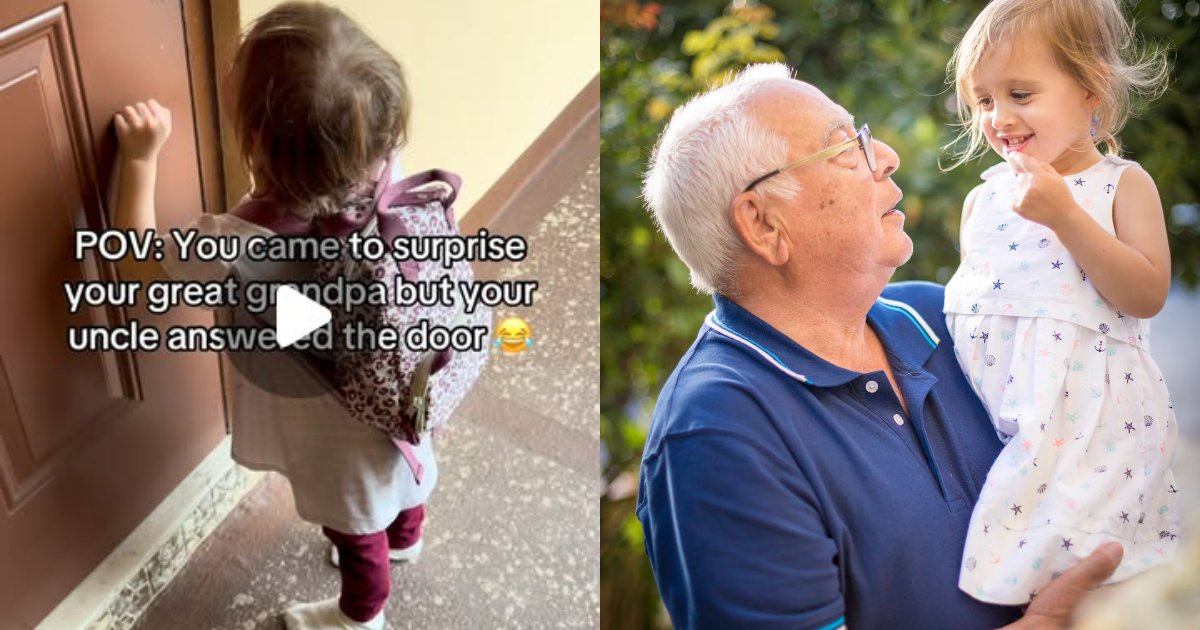
The sweet little moment was shared by @ericaann.co on Instagram, with the caption that she came to surprise her great grandpa but her uncle answered the door.
A Knock in the Hallway
In a warmly lit apartment hallway, a toddler in a dress, leggings and a little leopard print backpack knocks on a brown door with all her might. She turns to smile at her mom, calling out for “Baba,” her name for her great grandpa. She has clearly been looking forward to this moment.
The Wrong Person at the Door
The door swings open and a cheerful voice says hi, but it is her uncle, not Baba. Her face falls. She turns around, walks back to her mom, hugs her legs and whimpers that she wants Baba. Her mom gently asks whether it is just her uncle, whether she does not want to see him, and where Papa is.
A Voice From Inside
Then, from deeper in the apartment, a voice calls out hello and tells her to come here. It is great grandpa, sitting at the dining table. Her mood changes at once. She leans against the wall, breaks into a huge smile, and with her mother urging her to go get him, she toddles through the doorway and down the hallway toward him.
The actual hug is left to the imagination, but it is easy to picture.
Little Visits That Mean a Lot
- Let little ones knock. Giving a child the job of announcing the visit makes the moment special.
- Prepare the family. A heads up to the person inside means someone is ready with open arms.
- Comfort the disappointment. Toddlers feel big feelings, and a calm reassurance helps them through.
- Capture the reunion. Moments with great grandparents become treasured keepsakes.
- Visit often. Even short stops build the bond between generations.
Why Toddlers Feel Disappointment So Strongly
For a very young child, the world runs on expectations. A toddler who has been told that a favorite person is on the other side of the door builds a clear picture in her mind, and when reality does not match it, the feeling can be overwhelming. Toddlers are still learning to manage emotions and have few words to explain them, so tears are often their way of saying that something did not go as hoped. This is normal development, not bad behavior, and it usually passes quickly once the expected comfort arrives.
Helping a Little One Through Big Feelings
- Get down to the child’s level and speak in a calm, soft voice.
- Name the feeling in simple words, such as sad or disappointed, so a toddler begins to connect words with emotions.
- Offer a hug or a hand to hold, but let the child choose how much comfort she wants.
- Explain what happens next in short sentences, like where the person she is looking for is waiting.
- Praise her afterward for being brave, which builds confidence for the next time.
Why Great Grandparent Bonds Are Worth Protecting
Time with older relatives gives children stories, traditions and a sense of where the family comes from. For older adults, regular visits with little ones can bring joy and a reason to look forward to the week. Four generations in one family is something many people treasure, and the memories children form, even small ones, become part of the family story. A short visit is often better than none, so it is worth making time for them whenever possible.
Tips for Visiting an Elderly Relative With a Toddler
- Call ahead, so the host is rested, dressed and ready when you arrive.
- Keep the visit short and plan it around the child’s nap and meal times.
- Bring a few quiet toys, books or crayons so the child can play while adults talk.
- Move fragile items out of reach and keep walkways clear for everyone’s safety.
- Include the older relative in simple activities, like reading a book together or sharing a snack.
Common Questions
Should I tell a toddler about a surprise ahead of time? It depends on the child. Some enjoy building up to it, while others do better with a short heads up just before the moment.
What if my child is shy around relatives she rarely sees? Let her warm up at her own pace, and use familiar objects, like a favorite toy, to make the setting feel safe.
The Takeaway
A toddler’s heartbreak at the wrong face behind a door is a small moment, but it shows how much love she carries for the person on the other side. Prepare the family, comfort the big feelings and keep those visits coming.
Credit for the original post goes to @ericaann.co on Instagram.