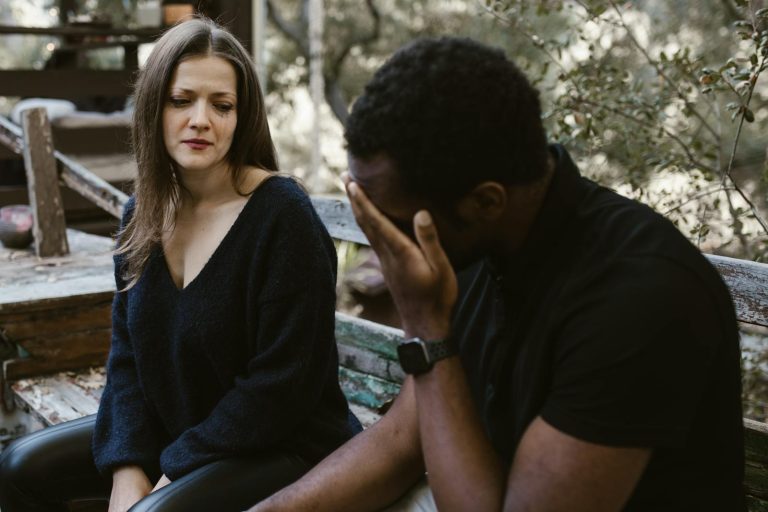
A woman says she’s started to dread making plans—not because she’s a homebody, but because her boyfriend seems to “fall apart” the moment she tries to do anything enjoyable. In a story that’s getting people talking, she claims his emotional meltdowns show up with suspicious consistency whenever there’s a concert, dinner reservation, day trip, or even a casual hangout on the calendar. “It happens every time I try to do something fun,” she said, adding that she’s left feeling guilty, confused, and honestly a little played.

Friends and commenters who’ve heard her account aren’t just reacting to the dramatic timing; they’re reacting to the pattern. She isn’t describing one bad week or a single tough moment. She’s describing what sounds like a repeat script—one that always ends with her canceling her plans and focusing on him.
“The meltdown starts right on schedule,” she says
According to the woman, the cycle is oddly predictable. She’ll mention an activity she’s excited about, he’ll seem fine at first, and then—often the day of—his mood shifts. He becomes overwhelmed, upset, or suddenly in crisis, and she feels like she has two choices: go without him and look “heartless,” or stay and soothe him.
She says she’s tried different approaches, like giving lots of notice, inviting him to help pick the activity, and even planning low-key outings that don’t require much energy. The result, she claims, is basically the same: an emotional spiral that pulls all attention back to him. “Even when it’s something he agreed to,” she said, “somehow we still don’t go.”
What these “emotional meltdowns” look like
The woman describes his episodes as intense and consuming—crying, shutting down, saying he feels “unsafe,” or accusing her of not caring about him. Sometimes he’ll bring up unrelated issues, like old arguments or personal insecurities, and the evening becomes a long, emotional processing session. She says the original plan quietly disappears while she’s busy reassuring him.
And it’s not just the emotional intensity—it’s the aftermath. She claims that when she cancels, he calms down surprisingly fast, sometimes acting almost normal within an hour. That contrast, she says, is part of what makes her feel like something’s off.
She says she’s not trying to be mean—just trying to live
One of the hardest parts for her, she says, is that she doesn’t want to dismiss anyone’s mental health. She knows stress and anxiety are real, and she’s not looking for a partner who’s “on” all the time. But the timing has made her question whether these moments are genuine breakdowns or a way—conscious or not—to avoid doing things she enjoys.
She also says she’s started shrinking her life to keep the peace. Instead of planning outings, she stays home, watches what he wants, and avoids bringing up events that might “set him off.” That might sound like compromise, but she says it feels more like she’s being trained to stop asking for joy.
A familiar dynamic: control without saying “no”
People reading her story quickly pointed out something that can be hard to name when you’re inside it: control doesn’t always look like yelling or issuing rules. Sometimes it looks like a crisis that conveniently arrives when you’re about to do something independent. If a partner makes it emotionally expensive to leave the house, it can slowly box you in without ever explicitly forbidding anything.
There’s also the social pressure factor. Many people have been raised to treat emotional distress as an emergency that overrides everything else. So when someone melts down, you cancel your plan—because what kind of person goes to brunch while their partner is sobbing on the couch?
Could it be anxiety, avoidance, or something else?
To be fair, there are reasons a person might genuinely struggle around plans. Social anxiety can spike before events, depression can drain motivation, and trauma can make certain environments feel threatening. Sometimes people don’t fully understand what’s happening internally, so it comes out as a sudden emotional crash.
But the woman’s main point is the predictability and payoff. If the distress reliably appears when she plans something fun and reliably disappears when she cancels, it’s understandable she’d wonder whether the pattern is serving a purpose. Even if he’s not consciously “staging” anything, the behavior may still be shaping her choices in a way that isn’t healthy for either of them.
The guilt loop: how she ends up the “bad guy”
She says conversations about the pattern don’t go well. When she tries to bring it up calmly—like, “I’ve noticed this happens a lot when I make plans”—he reportedly gets defensive or hurt. Sometimes he accuses her of calling him “crazy,” or he shifts into a deeper sadness that makes her feel like she needs to apologize for even asking.
This is where a lot of people get stuck: you raise a concern, and suddenly you’re comforting the person you’re trying to talk to. The original issue never gets addressed, but you’re left feeling guilty and a little ridiculous for bringing it up in the first place.
What commenters say she should watch for
Readers chimed in with a mix of empathy and alarm, especially those who recognized the pattern from past relationships. Several people suggested tracking the episodes—literally writing down when plans are made, what the plan is, when the meltdown occurs, and what happens afterward. Not because relationships should feel like a lab experiment, but because patterns are easier to see when they’re not swirling around in your head.
Others encouraged her to test a boundary: keep the plan, go anyway, and see what happens. If he escalates, punishes her, or tries to make her “pay” emotionally for not canceling, that can reveal a lot. If he’s genuinely struggling, he might still be upset—but he’ll also be capable of respecting her autonomy and working toward solutions.
What “support” can look like without sacrificing your life
The woman says she’s open to being supportive, but she wants it to be sustainable. People suggested practical options: agreeing that if he feels overwhelmed, he can stay home while she goes; setting a time limit for pre-event anxiety talks; or planning a small grounding routine he can do when he’s spiraling. Support doesn’t have to mean abandoning everything you care about.
Another common suggestion was professional help, especially if these episodes are frequent and intense. Therapy, coping skills, and even a medical evaluation can be game-changers—if he’s willing. A key point many people made: help works best when the person who’s struggling takes ownership, rather than outsourcing stability to their partner.
The bigger question: is she allowed to have fun?
Underneath all the details is a pretty simple question the woman keeps coming back to: is she allowed to enjoy her life without it turning into a crisis? Because in a healthy relationship, your happiness isn’t a threat. Your plans aren’t a trigger that must be neutralized.
For now, she says she’s weighing her next steps—talking again, setting firmer boundaries, and deciding what she can live with long-term. The internet may not know what’s in her boyfriend’s heart, but it knows a pattern when it sees one. And plenty of people are gently reminding her that “fun” isn’t a luxury—it’s part of being alive.
More from Cultivated Comfort:
- 7 Vintage Home Items From the ’60s That Are Collectors’ Dream Finds
- 7 Vintage Home Goods That Became Collectors’ Gold
- 7 Fast-Food Chains That Changed for the Worse
- 7 Frozen Dinners That Were Better Back in the Day

As a mom of three busy boys, I know how chaotic life can get — but I’ve learned that it’s possible to create a beautiful, cozy home even with kids running around. That’s why I started Cultivated Comfort — to share practical tips, simple systems, and a little encouragement for parents like me who want to make their home feel warm, inviting, and effortlessly stylish. Whether it’s managing toy chaos, streamlining everyday routines, or finding little moments of calm, I’m here to help you simplify your space and create a sense of comfort.
But home is just part of the story. I’m also passionate about seeing the world and creating beautiful meals to share with the people I love. Through Cultivated Comfort, I share my journey of balancing motherhood with building a home that feels rich and peaceful — and finding joy in exploring new places and flavors along the way.