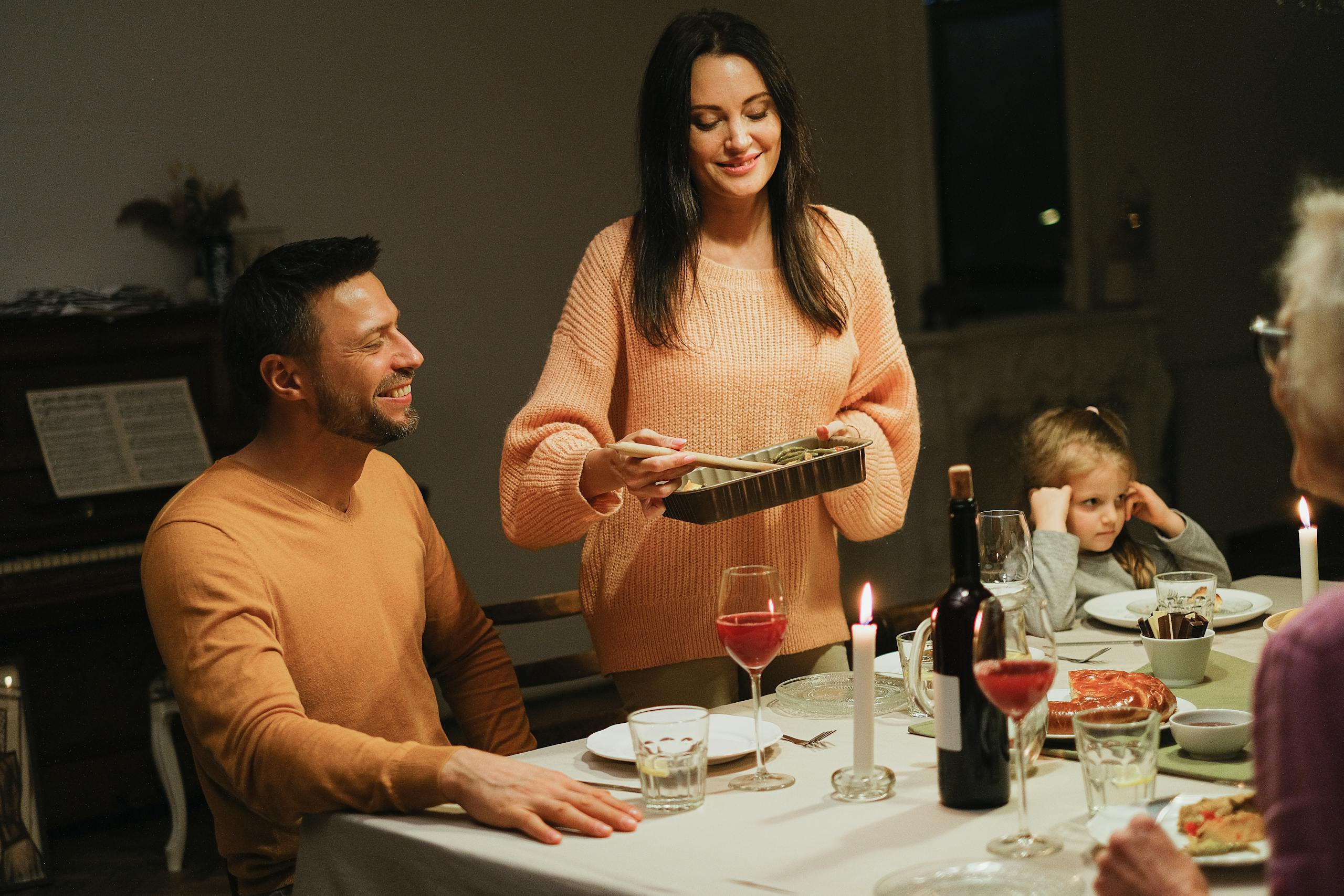
Setting boundaries within family dynamics can be a delicate issue, especially when dealing with traditional parents. One woman’s attempt to carve out personal space during a family dinner turned into an unexpectedly dramatic evening, illustrating the challenges that arise when new-age communication meets old-school family values.

At just 26 years old, the woman, often referred to as “26F” online, found herself at her parents’ home for a regular dinner. This particular occasion, however, quickly morphed into a theatrical family debate rather than the simple meal she had anticipated. Her father, who is described as old school, often uses dinner as a time to delve into his daughter’s personal life, especially concerning her relationship with her boyfriend.
As the evening unfolded, the discussion turned to her relationship. Her father began his usual line of questioning, probing about the frequency of their visits, future plans, and the overall seriousness of their bond. Although these are common family inquiries, 26F knew she needed to stand her ground. In an effort to assert her independence, she had rehearsed a calm and neutral response: “I appreciate that you care, but I’m not going to discuss those details.”
However, when the time came to deliver her line, a surge of nerves turned her words into something resembling a corporate memo rather than a simple personal boundary. Instead of the intended message, she found herself stating, “I appreciate your interest, but I am not accepting feedback on my relationship at this time.” The room fell silent, and her mother’s confused expression suggested that she had just spoken in a foreign language.
It didn’t take long for 26F’s father to catch onto her tone, and his reaction was immediate. “Feedback?” he questioned incredulously, as if she had just left a poor review on a restaurant’s service. In that moment of confusion and panic, 26F tried to clarify her stance, fumbling over her words and unintentionally framing her boyfriend as some sort of manipulative guru. “I mean like, unsolicited input,” she blurted out, inadvertently deepening the divide between her and her father.
The mood shifted dramatically, transforming the dinner table into an arena. What was meant to be a peaceful family meal shifted into a heated 20-minute discussion that revolved around respect, adulthood, and the concept of boundaries. For her mother, who attempted to intervene and redirect the conversation toward dessert multiple times, the dinner quickly spiraled out of control. It became apparent that what began as a simple dinner had unwittingly turned into a passionate debate.
Feeling overwhelmed and cornered, 26F decided to eat her meal hastily and ultimately left the dinner early. It certainly looked like an exit born from frustration, which inadvertently validated her father’s perspective that setting boundaries could be interpreted as a refusal to engage in family matters. Back at home, she was left to process the whirlwind of events, only to be met with a barrage of texts from both parents. Her mother checked in to ensure she was okay, while her father sent a detailed message about the importance of open familial communication.
This situation raises interesting questions about how different generations communicate and perceive boundaries. For 26F, her attempt to establish a respectful distance in her relationship with her parents was well-intentioned, yet it collided with her father’s traditional views. The dinner saga serves as a reminder that the landscape of family discussions is often fraught with misunderstandings, particularly when boundaries come into play. Each party involved holds different expectations and interpretations, which can lead to confusion and unintended reactions.
In the end, 26F’s experience highlights the complexities of family dynamics in modern relationships. While her journey to assert herself remains ongoing, the evening’s events demonstrate how even the most straightforward attempts at setting boundaries can inadvertently trigger deeper family discussions. As families navigate the intersection of tradition and individual autonomy, there may be more dinners that turn into debates, but perhaps they pave the way for more understanding in the long run.
More from Cultivated Comfort:
- 7 Vintage Home Items From the ’60s That Are Collectors’ Dream Finds
- 7 Vintage Home Goods That Became Collectors’ Gold
- 7 Fast-Food Chains That Changed for the Worse
- 7 Frozen Dinners That Were Better Back in the Day