When new neighbors move in, you expect the usual little adjustments: a different lawn schedule, a new dog that barks at squirrels, maybe a fresh wave of cardboard boxes by the curb. What most people don’t expect is a security camera that seems to have a front-row seat to their backyard patio. And yet, that’s exactly what one homeowner says happened just days after a family moved in next door.
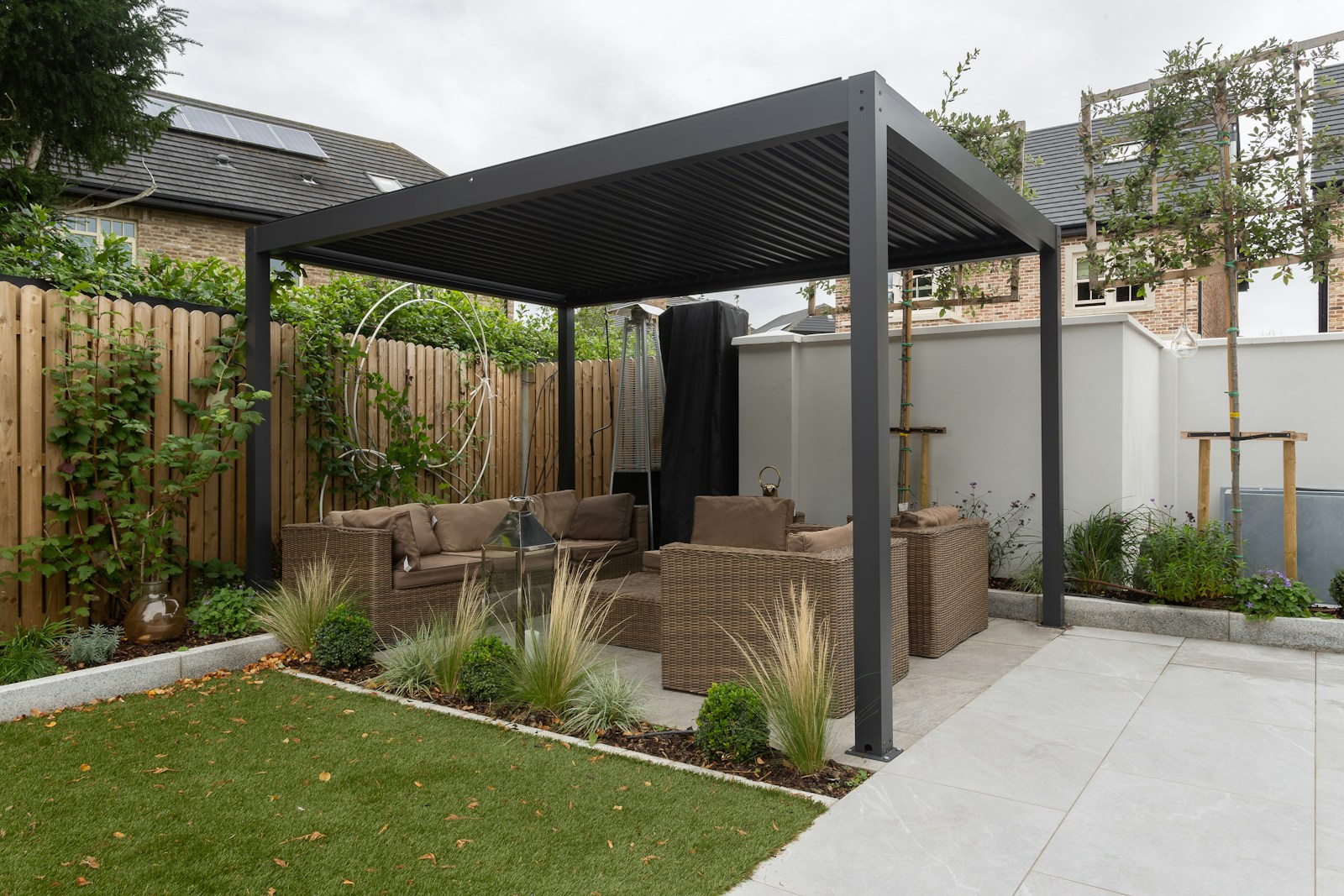
The homeowner, who asked to keep details private, says the device is mounted high enough to capture a wide view and angled in a way that appears to include their patio seating area. “They told me it’s just for safety,” the homeowner said, “but I can’t relax back there knowing it’s pointed directly at my space.”
A “Welcome to the Neighborhood” Moment… With a Lens
According to the homeowner, the first hint came during a casual glance over the fence after noticing some new hardware near the neighbor’s eaves. At first, it seemed like a normal home-security setup—doorbell cams and driveway coverage are common these days. But then the angle became hard to ignore.
“It’s not like it’s generally in the direction of the yard,” the homeowner explained. “It’s like it’s aimed at my patio. That’s where I sit, where my family eats outside, where we hang out.”
When they approached the new neighbors about it, the response was polite but firm: the camera was for “safety,” and they didn’t see an issue. The homeowner says they tried to explain that it made them uncomfortable, but the neighbors didn’t offer to reposition it.
Why This Feels Different Than “Normal” Security
Security cameras have become so common that many people barely register them anymore. A camera aimed at a front door or a driveway is one thing—those are public-facing areas where random visitors might wander through. A backyard patio, though, lives in a different category in most people’s minds: it’s where you exhale.
Even if nobody is actively watching footage, the feeling of being recorded can change how you use your own home. Folks describe it as the “performing in your own backyard” problem. Suddenly you’re thinking about where you sit, how you talk, whether you’re visible in a swimsuit, or whether your kids are within frame.
And yes, some people will say, “If you’re not doing anything wrong, who cares?” But privacy isn’t about wrongdoing. It’s about comfort, boundaries, and the basic ability to exist without feeling monitored.
What the Neighbors Might Be Thinking
To be fair, many families install cameras right after moving in because everything feels unfamiliar. New street, new routines, unfamiliar foot traffic—security can feel like a reasonable first purchase. Some people also buy multi-camera sets and mount them wherever the app tells them coverage looks “best,” without thinking through how it lands on the other side of a fence.
There’s also the possibility that the neighbors are aiming to protect their own property line—like a side gate, shed, or back door—and the patio happens to be in the camera’s wide-angle view. Modern cameras can capture a lot more than people expect, and wide lenses don’t exactly respect fences.
Still, intent doesn’t erase impact. Even a well-meaning “just for safety” camera can feel intrusive if it’s pointed at the spot where someone eats dinner under string lights.
The Big Question: Is It Allowed?
This is where things get tricky, because laws vary widely by location. In many places, recording video of areas visible from your property can be legal, especially outdoors. But audio recording often has stricter rules, and pointing a camera directly into someone’s private area can raise legal and ethical eyebrows.
Some municipalities have ordinances about “nuisance” surveillance or limits on where cameras can be aimed, while others rely on broader privacy or harassment statutes. Homeowners associations may also have rules about camera placement, especially if it captures neighbors’ yards or shared spaces.
In plain English: it might be allowed, but that doesn’t mean it’s automatically okay. And it doesn’t mean you’re stuck with it.
When a Backyard Stops Feeling Like Yours
The homeowner says the hardest part isn’t just the camera—it’s the feeling that their discomfort was dismissed. “I wasn’t trying to start a fight,” they said. “I just wanted them to adjust it a little so it’s not staring at my patio.”
That reaction—being brushed off—can make a small problem feel bigger fast. Suddenly it’s not just a device; it’s a signal about respect, boundaries, and how future neighbor-to-neighbor issues might go.
And then there’s the daily mental load. Do you avoid that corner of your yard? Do you put up an umbrella even when it’s not sunny? Do you stop letting kids play where they normally would? It’s a lot to ask someone to reorganize their life around a piece of tech next door.
What People Typically Do Next
In situations like this, the most common next step is a second, more specific conversation—still friendly, but clearer. Instead of “It makes me uncomfortable,” people tend to get better results with something like, “When I’m sitting on my patio, I’m in the center of your camera’s view. Can you angle it down toward your back door and enable privacy masking for my side?”
Privacy masking is a real feature on many camera systems, letting users block out zones so they’re not recorded. Some neighbors genuinely don’t know it exists, and offering that option can turn a tense standoff into an easy fix.
If a direct chat doesn’t work, homeowners often document the situation—photos of the camera’s placement and visible angle, dates of conversations—just in case it escalates. Others check local ordinances, talk to the HOA (if there is one), or ask community mediation services to step in before it becomes a full-on neighbor war.
Small Changes That Can Make a Huge Difference
There are also practical, non-confrontational ways people try to reclaim privacy. Adding taller plants, a privacy screen, a pergola with curtains, or repositioning seating can reduce what’s visible. None of these options are free, of course, and it can feel unfair to spend money to solve a problem you didn’t create.
Still, some homeowners choose a “two-track” approach: pursue a neighborly solution while also improving privacy on their side. It’s not surrender so much as self-preservation—because your backyard should feel like a place you actually want to be.
And yes, a few people go the humor route, joking about setting up a mannequin on the patio to “wave” at the camera. It’s funny in theory, but most folks ultimately just want peace, not a suburban prank war.
A Modern Neighborhood Problem, With Old-School Feelings
At its core, this is a story about how technology can accidentally bulldoze social norms. Cameras are cheap, easy to install, and marketed as must-have safety tools. But communities are still figuring out the etiquette—like how “my security” and “your privacy” can share the same fence line without either side feeling steamrolled.
For the homeowner, the hope is simple: a small adjustment and a little empathy. “I want them to feel safe,” they said. “I just also want to feel comfortable in my own backyard.”
That’s not a dramatic ask. It’s just the kind of neighborly compromise that keeps the peace—no matter how many cameras the modern world tries to bolt onto it.
More from Cultivated Comfort:
- 7 Vintage Home Items From the ’60s That Are Collectors’ Dream Finds
- 7 Vintage Home Goods That Became Collectors’ Gold
- 7 Fast-Food Chains That Changed for the Worse
- 7 Frozen Dinners That Were Better Back in the Day

As a mom of three busy boys, I know how chaotic life can get — but I’ve learned that it’s possible to create a beautiful, cozy home even with kids running around. That’s why I started Cultivated Comfort — to share practical tips, simple systems, and a little encouragement for parents like me who want to make their home feel warm, inviting, and effortlessly stylish. Whether it’s managing toy chaos, streamlining everyday routines, or finding little moments of calm, I’m here to help you simplify your space and create a sense of comfort.
But home is just part of the story. I’m also passionate about seeing the world and creating beautiful meals to share with the people I love. Through Cultivated Comfort, I share my journey of balancing motherhood with building a home that feels rich and peaceful — and finding joy in exploring new places and flavors along the way.