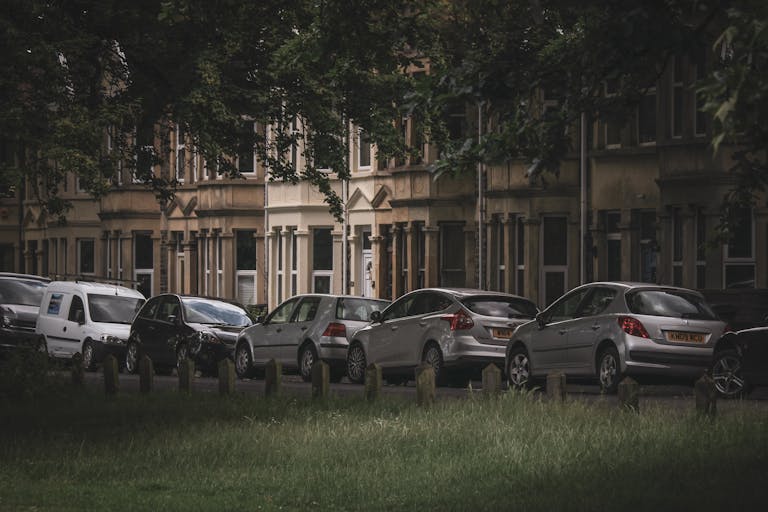
In a neighborhood where most disputes involve lawn edges, noisy leaf blowers, or the mysterious appearance of a third trash can, one resident says they’ve run into a surprisingly modern problem: curbside “aesthetics.” According to the homeowner, the couple next door routinely parks their vehicles in front of the homeowner’s house—specifically when company is coming over—so their own driveway and curb look “cleaner for guests.” When confronted, the couple’s response was simple: it’s public street parking.
It’s the kind of situation that sounds minor until you’re living it, day after day, watching the curb outside your place become someone else’s unofficial staging area. And because the curb is technically public in many communities, the tension can simmer in that awkward space between “they’re allowed” and “come on, really?”
A curbside conflict with a very specific motivation
The homeowner, who asked not to be identified, described a pattern that became hard to ignore. “It’s not random,” they said. “It’s like clockwork—Friday night, Saturday afternoon, any time they’re having friends over, their cars slide over in front of my house and suddenly their place looks like it’s in a brochure.”
Neighbors in similar situations often describe the same odd detail: the parking choice isn’t about convenience. It’s about presentation. One local resident joked that it’s “like moving clutter to the closet before people come over—except the closet is your neighbor’s curb.”
Is it legal? Usually, yes—until it isn’t
In many cities and suburbs, street parking is public, meaning anyone can park along the curb as long as they follow posted signage, time limits, and safety rules. That includes not blocking driveways, staying clear of fire hydrants, and obeying permit requirements where they exist. So, on paper, the couple’s defense may hold up.
But legality isn’t the only factor, and it can get more complicated depending on local ordinances. Some areas restrict parking for oversized vehicles, enforce “no parking” zones near intersections, limit overnight street parking, or require resident permits. If any of those rules apply, what looks like a petty neighbor issue can quickly become a straightforward enforcement question.
Why it feels personal, even when it’s “public”
Here’s the thing: even if you don’t own the curb, you still live with it. It affects visibility when backing out, it changes how your home looks from the street, and it can make it harder for your own visitors, delivery drivers, or service workers to park nearby. There’s also a subtle psychological factor—people tend to feel protective about the space directly in front of their home, whether it’s technically theirs or not.
That’s why this kind of parking choice can feel like a weird power move. The homeowner described it as “being treated like extra storage,” especially when the couple’s driveway is empty at the same time. “They’re not out of space,” the resident said. “They’re curating.”
Neighborhood reactions: “Sure, but it’s kind of rude”
Talk to enough people about curbside parking disputes and you’ll hear the same phrase over and over: “It’s public, but…” The “but” is doing a lot of work. Most neighbors understand that public parking comes with give-and-take, yet many still see it as basic courtesy not to monopolize the space in front of someone else’s house when you have room at your own.
It’s also the stated reason—“so our house looks cleaner for guests”—that’s raising eyebrows. If the goal is to make their home look more welcoming, some residents find it strange to do so by exporting the mess to someone else’s front view. One neighbor, hearing a similar story, quipped that it’s “like borrowing sugar but instead you’re borrowing curb appeal.”
What the homeowner tried—and what made it worse
The homeowner says they brought it up politely at first, assuming it was a one-off. “I said, ‘Hey, would you mind leaving that spot open sometimes? We get visitors too,’” they recalled. The response they got—“It’s public street parking”—felt less like a clarification and more like a shutdown.
After that, the homeowner says the behavior continued, and now it feels intentional. “If they’d said, ‘Oh, sorry, we didn’t think about it,’ I could’ve lived with it,” the resident said. “But the honesty about doing it for guests made it feel… pointed.”
The unspoken rules of shared streets
Most neighborhoods run on a set of unofficial agreements: you don’t blast music at midnight, you return a stray package if it lands on your porch, and you don’t treat the curb in front of someone else’s place like your personal driveway extension. None of that is law, but it’s the glue that keeps people from glaring through blinds.
When someone leans hard on “It’s public,” it can come off as refusing to participate in that social contract. And once that happens, even small things—trash bins left out too long, a dog barking, a fence repair—can start feeling like part of a bigger pattern.
Practical options that don’t require a neighborhood cold war
Experts in community mediation often suggest starting with a calm, specific request and offering a simple alternative. In this case, that might sound like: “Could you park in front of your own place when you’re hosting? We need that space for our driveway visibility and visitors.” It’s direct, it’s not accusatory, and it frames the issue around your needs rather than their motives.
If that goes nowhere, documentation can help—nothing dramatic, just notes on dates and times if the behavior is frequent and disruptive. If parking is blocking access, violating timed restrictions, or creating a safety issue, local parking enforcement or a non-emergency city line can clarify the rules for your street. And if your neighborhood has an HOA or a community association, it may have guidelines about street parking during events, even if enforcement varies.
A small dispute that can shape the whole block vibe
Street parking fights rarely stay only about parking. They become shorthand for respect, consideration, and whether neighbors see each other as people or obstacles. The homeowner said they’re not trying to “win” the curb, just trying to stop feeling like their home is being used as a backdrop for someone else’s hosting goals.
In the end, “public street parking” can be true and still not be kind. And for many neighborhoods, kindness is the currency that makes shared spaces work. If nothing else, the situation is a reminder that curb appeal shouldn’t come at the cost of neighborly appeal—because one of those is a lot harder to repaint.
More from Cultivated Comfort:
- 7 Vintage Home Items From the ’60s That Are Collectors’ Dream Finds
- 7 Vintage Home Goods That Became Collectors’ Gold
- 7 Fast-Food Chains That Changed for the Worse
- 7 Frozen Dinners That Were Better Back in the Day

As a mom of three busy boys, I know how chaotic life can get — but I’ve learned that it’s possible to create a beautiful, cozy home even with kids running around. That’s why I started Cultivated Comfort — to share practical tips, simple systems, and a little encouragement for parents like me who want to make their home feel warm, inviting, and effortlessly stylish. Whether it’s managing toy chaos, streamlining everyday routines, or finding little moments of calm, I’m here to help you simplify your space and create a sense of comfort.
But home is just part of the story. I’m also passionate about seeing the world and creating beautiful meals to share with the people I love. Through Cultivated Comfort, I share my journey of balancing motherhood with building a home that feels rich and peaceful — and finding joy in exploring new places and flavors along the way.