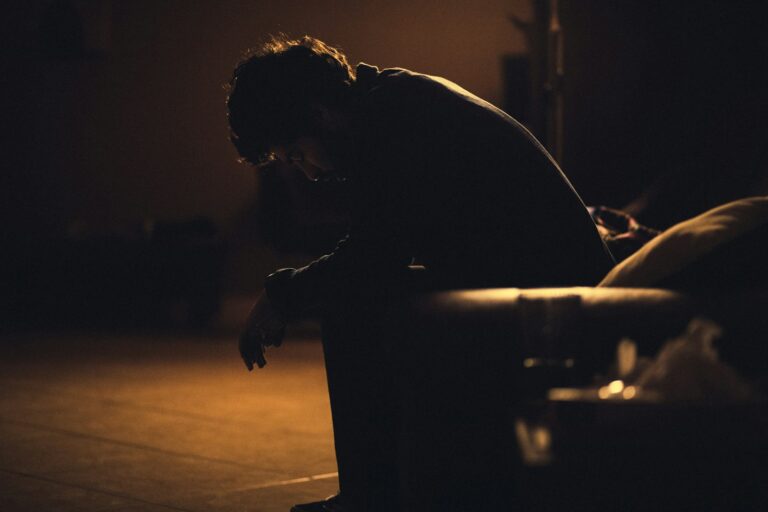
In a small town, a woman found herself caught in a web of emotional turmoil and fear, feeling increasingly isolated from her partner. She had moved in with him, bringing her entire life into what she hoped would be a loving and supportive environment. However, reality had taken a dark turn, leaving her feeling more alone than ever.

The story began several months after the birth of their daughter. Postpartum depression weighed heavily on her, and the pressures of motherhood were compounded by her partner’s volatile behavior. He had a history that left her feeling uneasy; he was now facing felony charges for animal cruelty. This was a pivotal moment that forced her to confront the unsettling truth about their relationship.
Despite being a new mother, she found herself carrying not only the emotional weight of postpartum depression but also the burden of navigating her partner’s unhinged temperament. He had a knack for oscillating between extremes—one moment, he could be charming and attentive, and the next, he transformed into someone she barely recognized, filled with anger and threats. This unpredictable behavior played a significant role in her sense of safety, or rather, the lack thereof.
There had been a particularly terrifying incident that stood out in her mind. One day, he held a loaded gun to his head while she and their daughter were within mere feet of him. At that moment, all her instincts screamed for her to protect her child. She felt paralyzed by fear, watching as he toyed with something so dangerous, and for the first time, she questioned whether their little family could withstand this kind of turmoil.
As if things were not complicated enough, she struggled with the logistics of leaving him. The police had made it clear that they couldn’t intervene; this was a personal matter, and they didn’t consider it a situation warranting their involvement. She was left to fend for herself in a tangled mess of emotions and practicalities. The thought of leaving with her daughter haunted her; she feared that her partner would retaliate by destroying her belongings—everything she owned, everything she had worked to build, was wrapped up in that house.
With no one to turn to, she felt the weight of solitude pressing heavily against her chest. Whenever she attempted to voice her concerns, he would turn things around, gaslighting her into believing her feelings were invalid. “Why can’t you just be happy?” he would ask, seeming genuinely confused, despite the chaos that swirled around them. This manipulation twisted her perception of reality, making it hard to discern what was true and what was part of his psychological game.
As time passed, she began to recognize the signs of emotional abuse; the manipulation, the threats, and the constant cycle of affection followed by rage left her in a constant state of anxiety. Each time she considered leaving, she was met with the familiar dread of what might happen next. Would he explode in anger? Would he switch gears and act as if nothing was wrong, leaving her questioning her resolve?
Friends and family had their suspicions about her partner’s behavior, but she rarely felt comfortable discussing the full extent of her situation. The thought of opening up about the loaded gun incident or revealing the depths of her loneliness felt impossible. Instead, she held it all in, feeling trapped by the walls of emotional isolation her partner had erected around her.
Even in the moments when he seemed supportive—when he would bring her flowers or say the right things—there was an underlying tension that she could never shake. She had the palpable sense that she was always last in line when it came to his priorities. His parents and siblings enjoyed financial support from him, and despite her sacrifices for their small family, she felt relegated to a lesser role in his life. The love she thought they shared seemed overshadowed by his obligations to others and his erratic behavior.
Her internal conflict was tearing her apart. She recognized that the obvious choice would be to gather her things and leave for her safety and her daughter’s. Yet the fear of her partner’s unpredictable reactions kept her paralyzed. She was caught in a cycle of uncertainty, longing for freedom while feeling trapped in a situation that felt increasingly untenable.
As days turned into weeks, the urgency to make a decision grew more pressing. She had to find a way to break free from a life that felt more like a prison than a partnership. As she navigated the complexities of her situation, it became clear that her journey toward safety was only just beginning.
More from Cultivated Comfort:
- 7 Vintage Home Items From the ’60s That Are Collectors’ Dream Finds
- 7 Vintage Home Goods That Became Collectors’ Gold
- 7 Fast-Food Chains That Changed for the Worse
- 7 Frozen Dinners That Were Better Back in the Day