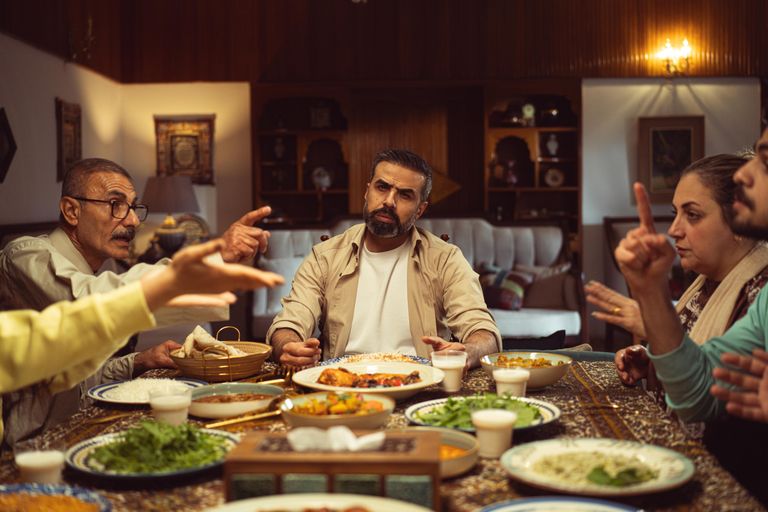
In a small community, there’s a family that was once filled with laughter and joy. This family consists of an aunt, her four daughters, and four sons. For years, they were a constant part of each other’s lives, sharing memories and milestones. The teenager at the center of this story—let’s call him Amir—grew particularly close to his cousins during his childhood, often visiting them and forming bonds that felt almost like siblings.

Things started to shift when Amir’s aunt moved in late 2021 to a new house closer to him. Wanting to keep the family close, she opened a laundry and general store with a two-story structure. It was in this multi-functional space that the family dynamics would gradually unravel amid chaos and dysfunction, largely stemming from Amir’s uncle’s abusive behavior.
Amir had heard murmurs throughout his life about his uncle. His mother and father would occasionally whisper about the man’s outbursts and the terrible things he did in the name of religion. The stories painted a dark picture: a father who would slam his children’s heads against the wall and withhold affection for days if they made even the smallest mistake. People claimed he presented a twisted version of religious fervor, preaching about things like polygamy and his misguided interpretation of the teachings of Islam. The most chilling moment Amir learned about was when his uncle labeled the Prophet Muhammad as a liar for prioritizing mothers over fathers in his teachings.
As Amir grew older, he began to recognize the implications of such behavior. His aunt suffered silently, seemingly defeated by her husband’s unrelenting abuse. The more Amir learned, the more he realized how this environment stunted his cousins’ emotional growth. Some of the older cousins became desensitized, blending into a life of instability. They dropped out of jobs and barely made any effort to better their circumstances, though Amir knew that their father’s volatile nature played a significant role in their lack of ambition. The youngest of the cousins, however, managed to keep their heads above water; one had even opened a café, while another helped run the family business.
But it only got worse. Amir noticed how his aunt and younger cousins would often leave the house during his uncle’s meltdowns, sometimes disappearing for days. To Amir, this made life unbearable to watch. Here he was, with a relatively healthy family, while his cousins faced turmoil that would inevitably scar them emotionally. It started to weigh on him more heavily as he pondered what to do. What could a seventeen-year-old like him possibly do to help such a complex situation?
Hesitation gripped Amir. His family had stopped visiting his aunt’s house after tensions escalated, fearing that their presence would only exacerbate the problems. He didn’t quite understand that reasoning; it felt like abandoning his family during a time they needed help the most. After months of silence, Amir finally had a heart-to-heart with his dad about the situation, and they poured over theories and emotions for hours. But even then, Amir felt lost and powerless. It became more than a fleeting worry—it morphed into a need to take action, yet he had no path forward.
On a sporadic visit to his aunt’s house three weeks prior, Amir encountered his cousins and aunt, but it was clear that the family’s troubles hadn’t been resolved. The familiar warmth and laughter were replaced by a palpable tension. Amir wanted nothing more than to help, but he didn’t know how to approach the situation without overstepping boundaries or making it worse.
Would joining them for family activities help? Should he confront his uncle? Or was it better to encourage his aunt and cousins to reach out for professional help? All these questions swirled around in Amir’s mind as he navigated the complexities of this family drama. He knew he couldn’t just stand by, but he felt stuck, unsure of where to go from here.
This story isn’t just about Amir’s struggle; it’s a reflection of countless families facing similar issues. The sense of helplessness is overwhelming, especially when someone yearns to make a difference but feels unable to do so. Amir’s journey illustrates the challenges of supporting loved ones trapped in toxic environments, leaving readers wondering: What should he do next?
More from Cultivated Comfort:
- 7 Vintage Home Items From the ’60s That Are Collectors’ Dream Finds
- 7 Vintage Home Goods That Became Collectors’ Gold
- 7 Fast-Food Chains That Changed for the Worse
- 7 Frozen Dinners That Were Better Back in the Day