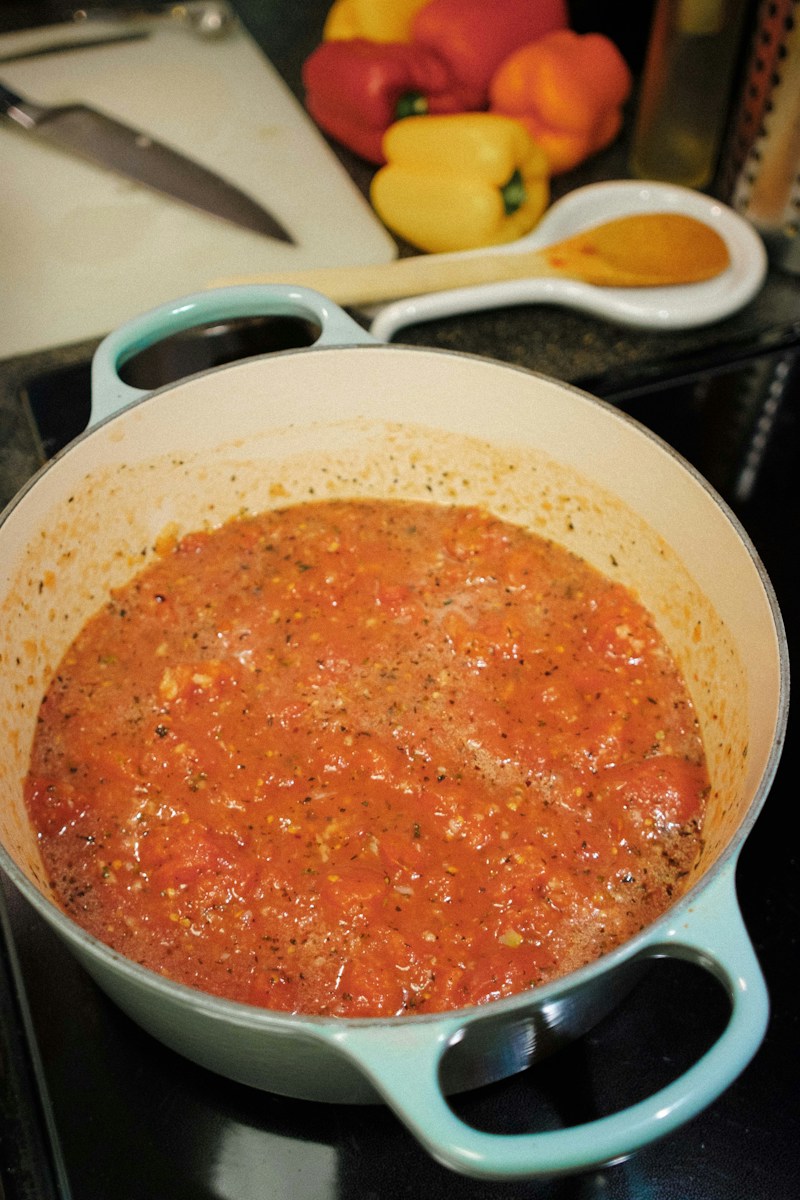
There’s a long-running debate in home kitchens about whether cookware really changes the way food tastes, and one home cook has waded directly into it with a video built around a single ingredient: fresh tomato sauce. Rather than arguing the point in the abstract, he set out to demonstrate it, filming himself making pasta sauce from scratch in a stainless steel pan while narrating his reasoning for the choice throughout the process. It’s a simple premise, but it taps into something a lot of home cooks quietly wonder about every time they reach for a pan.
The video follows him step by step as he builds the sauce, explaining along the way why he trusts stainless steel over the nonstick alternatives that dominate a lot of kitchens, as @steelpan.guy laid out in his own post on the subject. What separates this clip from a typical cooking tutorial is the ending: rather than simply plating the finished sauce for the camera, he brings it to an actual family taste test, capturing real, unscripted reactions from relatives as they try what he’s made. That authenticity, watching people genuinely taste and comment rather than perform enthusiasm for the camera, is a big part of why the video has caught on.
image: bowl with sauce. photo credit: unsplash
@steelpan.guy
Stainless steel has a reputation among serious home cooks for a reason that goes beyond durability. Unlike nonstick surfaces, which are engineered specifically to prevent food from sticking or browning, stainless steel allows for what’s often called fond to develop: the browned, caramelized bits that form on the bottom of the pan as ingredients cook. For a tomato sauce, that fond can be deglazed and incorporated back into the dish, adding a depth of flavor that’s difficult to replicate in a pan designed to keep everything from making contact with the surface in the first place.
That’s a large part of the argument the creator makes throughout the video, and it’s one that’s grounded in real cooking chemistry rather than kitchen mythology. Searing garlic, onions, or any aromatics in stainless steel before adding tomatoes creates a foundation of flavor that a nonstick pan simply isn’t built to produce in the same way. It’s a small, almost invisible difference in technique, but it’s exactly the kind of detail that separates a good homemade sauce from a great one, and it’s clearly something this creator has thought carefully about.
For anyone watching who’s on the fence about their own cookware, the video offers a useful, low-stakes way to think about the decision. Stainless steel pans tend to require a bit more attention, mainly around preheating properly and using enough oil or fat to prevent sticking, but they reward that attention with results that many cooks describe as noticeably richer. They’re also, notably, more durable over the long run than nonstick coatings, which degrade over time and eventually need replacing, making stainless steel arguably the better long-term investment for anyone who cooks sauces, seared proteins, or pan sauces on a regular basis.
The real payoff of the video, though, is that final family taste test. It would have been easy to end the clip with a beautifully plated bowl of pasta and a confident voiceover insisting the sauce came out well. Instead, the creator hands that judgment over to the people who know his cooking best, and lets their genuine reactions speak for the technique. It’s a small structural choice that makes the whole video feel more like a real kitchen experiment than a polished recipe demo, and it’s probably exactly why it resonated with so many people who’ve had the same stainless-steel-versus-nonstick debate in their own homes.
For home cooks weighing whether it’s worth switching pans, the practical advice that tends to come from professional kitchens is fairly consistent: stainless steel takes a bit of a learning curve, mostly around temperature control and knowing when the pan is properly preheated before anything hits the surface, but the payoff in flavor development is real and well documented. A cold pan is the most common culprit behind sticking, not the material itself, and once that habit is corrected, the fond it produces becomes an asset rather than a mess to scrub off. For a dish as simple and ingredient-dependent as tomato sauce, where there’s nowhere for a lackluster technique to hide, that extra bit of built-in flavor can be the difference between a sauce that tastes fine and one that a family keeps asking for on repeat, which is exactly the kind of quiet, repeatable win this video is really about.
There’s also a broader point buried in this video about how much of good cooking comes down to fundamentals rather than fancy equipment or exotic ingredients. A stainless steel pan is not an expensive or specialized purchase; it’s often the most basic, affordable option in a cookware aisle, and it has been a kitchen staple for generations precisely because it performs so reliably across so many different dishes. What this video demonstrates, more than anything, is that the biggest upgrades to a home-cooked meal often come from small adjustments in technique rather than new gadgets, and that a family taste test, however casual and unscripted, remains one of the most honest forms of quality control a home cook can ask for.
There’s a useful comparison to cast iron here too, since the two materials often get grouped together in conversations about flavor-enhancing cookware despite behaving quite differently. Cast iron builds a seasoned, nonstick-like surface over time through repeated use, while stainless steel relies on the fond mechanism the creator demonstrates rather than any seasoning layer at all. Knowing which mechanism is actually driving the flavor difference helps explain why swapping in just any heavy pan won’t automatically replicate what this particular sauce technique achieves.