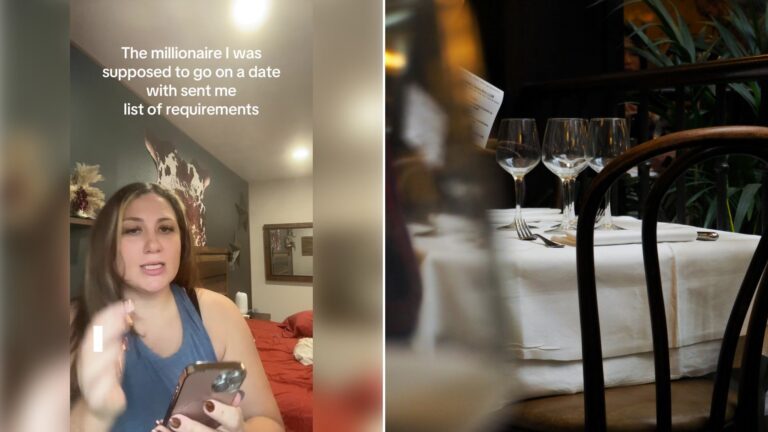
More than three-quarters of daters have either ghosted someone or been ghosted themselves, according to survey data from Forbes Health and OnePoll, making the practice of cutting off contact without explanation less an outlier dating behavior and more a near-universal one. The underlying survey polled 5,000 U.S. adults about their dating habits, and ghosting emerged as one of the most consistently reported experiences across nearly every demographic slice the data captured.
The scale of the finding is worth sitting with. When three-quarters of any group reports the same experience, it stops functioning as a personal grievance and starts functioning as a structural feature of how dating actually works right now, less a character flaw in any one person and more a default behavior the format of modern dating seems to produce.

Why ghosting became the default exit
Dating apps get a lot of the structural credit, or blame, for normalizing ghosting as a breakup method. When a connection starts with a swipe and a few days of texting rather than a shared social circle, there’s rarely any social cost attached to simply stopping. No mutual friends to answer to, no shared context that makes disappearing awkward. The interface itself, an app that primarily exists to reduce friction, quietly extends that same low-friction logic to the exit as well as the entrance.
That structural explanation doesn’t fully account for how common ghosting has become even in situations with more investment behind them, several dates in, an established rapport, sometimes physical intimacy. The Forbes Health data doesn’t isolate exactly where along that spectrum most ghosting happens, but the sheer prevalence, three in four daters, suggests it isn’t confined to first-message dead ends. It’s happening deep enough into connections that plenty of people are left genuinely confused rather than just mildly inconvenienced.
The geography of ghosting
Ghosting rates aren’t evenly distributed across the country. Survey data broken down by state shows meaningful variation in both how often people report ghosting others and how often they report being ghosted themselves, though the national headline figure, three-quarters of daters touched by it in some form, holds as the dominant pattern regardless of location. Dating culture, app usage rates, and even regional communication norms likely all play some role in why certain states report higher ghosting rates than others, though the survey data doesn’t isolate a single cause.
Age plays a role too, though not always the one people assume. Younger daters, who do the most swiping and match with the most people in a given month, report both ghosting others and being ghosted at higher rates than older daters navigating apps later in life. That tracks with sheer volume: someone juggling a dozen active conversations at once has more opportunities to let one quietly lapse than someone going on one or two dates a month, even if neither person set out to treat the other carelessly.

What ghosting actually costs the people on the receiving end
The practical damage of ghosting isn’t really about the lost connection itself, most people can recover from a match that didn’t pan out. It’s the absence of information. A clear rejection, however unwelcome, gives someone something to work with: a reason, even a vague one, that lets them mentally close the loop and move on. Ghosting removes that closure entirely, leaving the person on the receiving end to construct their own explanation, usually a less generous one than reality would have offered.
That gap between actual rejection and imagined rejection is where a lot of the accumulated frustration around modern dating seems to concentrate. Being told no is uncomfortable but finite. Being left to guess, repeatedly, across match after match, compounds in a way that shows up in broader dating-fatigue and burnout data collected alongside these same surveys.
None of this makes ghosting defensible, but the scale of the Forbes Health findings does suggest it’s less useful to treat any individual instance as a personal betrayal and more useful to treat it as evidence of how the current dating landscape, low-friction entrances and low-friction exits alike, has reshaped what an ending is even supposed to look like. Three in four daters have been on one side of that equation or the other, which means almost everyone dating right now already knows exactly what it feels like to wait for a text that was never coming.