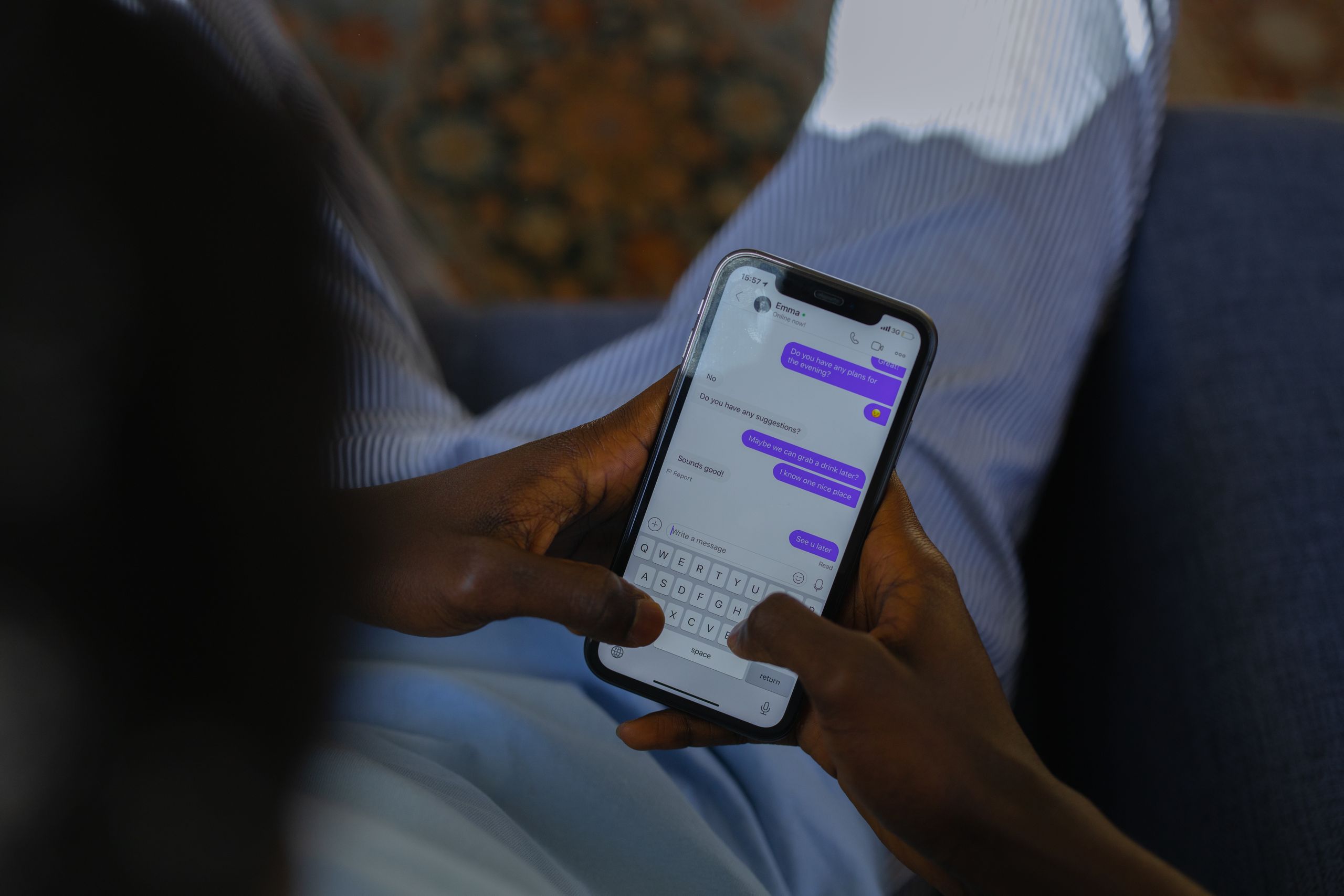
Couples who use texting to apologize, resolve conflict, or make decisions report measurably lower relationship satisfaction than couples who save those conversations for in person, according to research out of Brigham Young University. The effect shows up most clearly for women. The study, published in the Journal of Couple and Relationship Therapy, surveyed 276 young adults in serious relationships, engagements, and marriages, and found that 82% of them exchanged texts with a partner multiple times a day. How couples used all that texting mattered far more than how much of it there was.
For women in the study, using text messages to work through disagreements or make real decisions correlated directly with lower relationship quality. For men, a different pattern emerged: it was sheer texting frequency, not necessarily conflict-specific texting, that tracked with lower satisfaction, and that held true even when the men themselves were the ones initiating most of the messages. Texting a lot, it turns out, isn’t inherently a sign of connection for either partner. It depends heavily on what the texts are actually being used to do.

One finding cut against expectations entirely. Affectionate texting, the “thinking of you” and “can’t wait to see you” messages that carry no practical content at all, boosted relationship satisfaction for both men and women. Sending those messages was even more strongly linked to satisfaction than receiving them. The problem, in other words, was never texting itself. It was asking a text thread to carry weight it was never built for.
Why conflict specifically breaks down over text
“Reaction to disappointment and reality testing occurs more quickly face to face,” the BYU researchers noted, describing why in-person conversation functions differently during hard moments. A partner’s tone, hesitation, and facial expression shift the meaning of what’s being said in real time, and a text message strips almost all of that context away, leaving only the words themselves to carry an entire disagreement. “The way couples text is having an effect on the relationship,” said Lori Schade, a marriage and family therapy professor who worked on the study, in comments included in BYU’s own release on the findings. Texting, the researchers concluded, doesn’t let a partner see “the breadth of a person that you need to see” during the exact conversations where that breadth matters most.
The underlying study is now more than a decade old, but nothing about its central mechanism has aged out of relevance; if anything, couples now route a larger share of daily communication through text than they did when the data was collected. Broader relationship research has continued to reinforce the same basic principle from a different angle. Work built on the Gottman Institute’s decades of couples research, summarized in an NPR Life Kit segment, emphasizes techniques like the deliberate “soft startup” and structured pauses during arguments, tools that depend on tone, timing, and real-time responsiveness that a text conversation simply can’t replicate.

There’s also a structural reason texted conflict tends to go worse than couples expect going in. A text conversation removes the natural pacing of a spoken argument, the pauses, the visible de-escalation, the moment a partner’s face softens mid-sentence, and replaces it with a format that lets both people draft, delete, and send their sharpest possible phrasing with no real-time feedback to soften it. Two people can sit with a hurtful message for twenty silent minutes, composing a response, while the other person waits with no idea whether they’re being ignored, thought through, or quietly written off. That gap is where a manageable disagreement escalates into something that feels far more serious than the original issue warranted.
What this actually means for couples
None of this requires abandoning texting, which remains one of the primary ways modern couples stay connected throughout an ordinary day. The distinction that matters is between texting as connective tissue and texting as a substitute for the harder conversation two people actually need to have. Sending a partner a message that says you love them costs nothing and appears to help. Trying to resolve a real disagreement, apologize for something that actually hurt, or make a decision that matters through the same small text box seems to quietly cost more than either partner usually notices. If a conversation is important enough to cause friction, the research suggests it’s important enough to look someone in the face for.