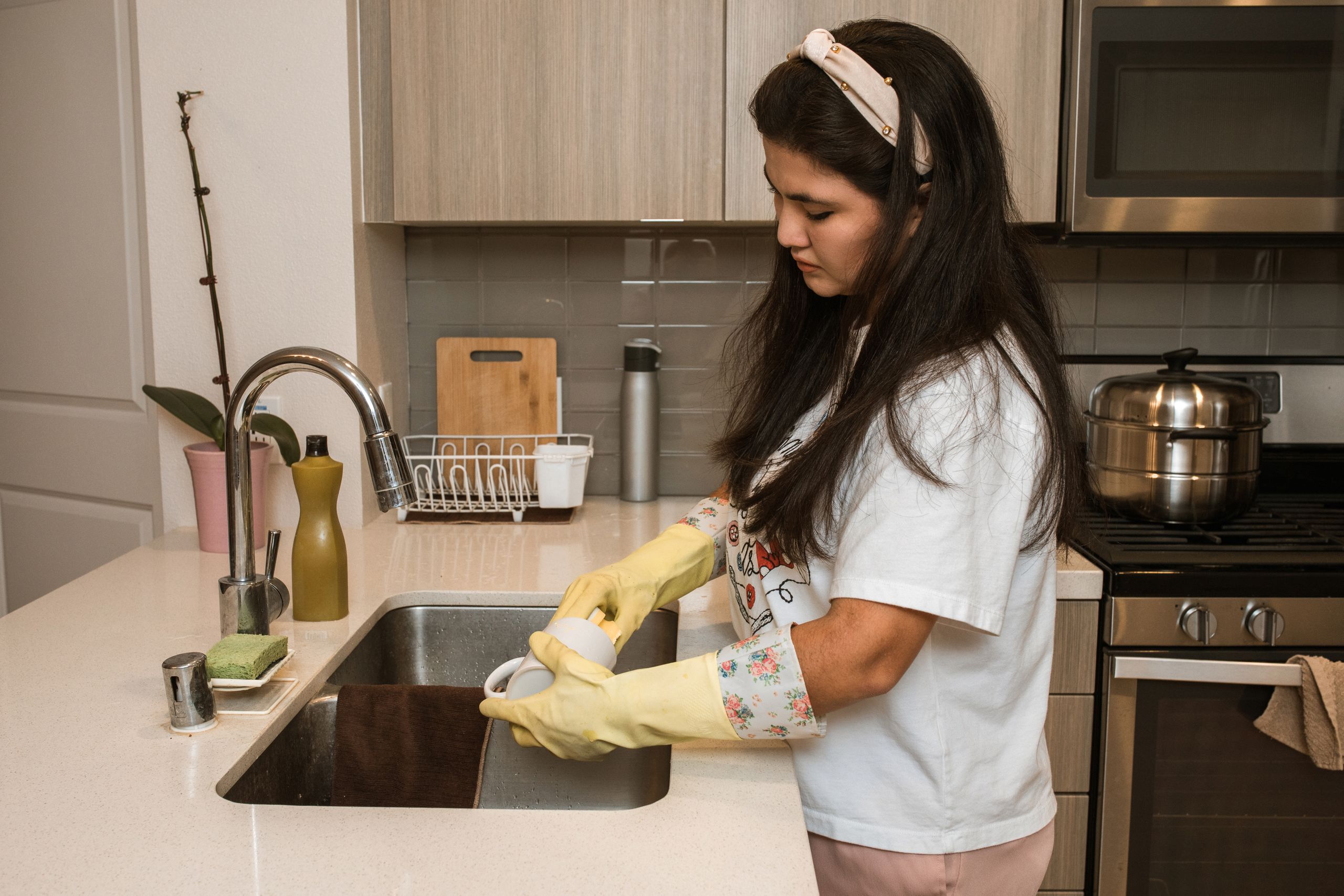
Women are at least 20 percentage points more likely than men to be the one handling laundry, dishes, meal prep, and bathrooms, according to a YouGov survey of 2,230 U.S. adults conducted in October 2025. Forty-five percent of women say they do more than their fair share of household work, compared with 25% of men — and among parents of kids under 18, that gap widens to 58% of mothers versus 23% of fathers. The term for the dynamic behind those numbers went viral years ago as “weaponized incompetence.” New academic research now shows exactly how deep it runs, and it isn’t just about who empties the dishwasher.

The gap isn’t really about chores — it’s about who’s thinking of them
Sociologist Allison Daminger’s landmark 2019 study in the American Sociological Review, based on 70 interviews across 35 couples, identified what she calls the cognitive dimension of household labor — the anticipating, planning, and monitoring that happens before a single chore is ever physically done. Daminger found women disproportionately carry the anticipating and monitoring work, even in couples that split the visible tasks fairly evenly, and that this invisible labor is “taxing but often invisible to both cognitive laborers and their partners.” That invisibility is what makes it so easy for one partner to plausibly claim they “just didn’t think of it” — because in a real sense, structurally, they usually don’t have to.
The newest numbers put a size on the imbalance
A study published in October 2025 in Socius: Sociological Research for a Dynamic World by Dr. Ana Catalano Weeks of the University of Bath and Dr. Helen Kowalewska of the University of Melbourne quantified that gap directly. Surveying 2,133 partnered, heterosexual U.S. parents, the researchers found mothers report handling 67% more household management overall than fathers, and average 13.72 mental to-do-list tasks compared with fathers’ 8.2, with the widest gaps in scheduling, managing family relationships, and food planning — see the full findings via the University of Bath’s release. Crucially, the study found this held even among mothers who out-earned their partners financially — suggesting that money and time alone don’t close the gap the way common wisdom assumes.
Why “I’m just bad at it” keeps working
Daminger’s research offers the clearest mechanism for why weaponized incompetence functions so well as a strategy, even when it’s not fully conscious. Decision-making — the one piece of cognitive labor most tied to household power — was actually split close to evenly between partners in her interviews. It’s the unglamorous groundwork before the decision, and the follow-through after it, that women were doing disproportionately. That structure rewards a partner who simply waits to be asked, or who does a task badly enough that it doesn’t get delegated to them again. Nobody has to admit to a strategy for the pattern to repeat itself for years.

What the fairness numbers reveal about resentment
The YouGov data also shows this imbalance is registering emotionally, not just logistically. Fifty-nine percent of respondents overall said they’re satisfied with how chores are divided in their household, but that number splits sharply by gender: 65% of men report satisfaction versus 53% of women, while 19% of women report active dissatisfaction compared with just 10% of men. That’s not a rounding error. It’s a measurable gap in how fairly each partner believes the arrangement is actually working, and it lines up almost exactly with who is doing the uncounted planning work in the background.
It shows up even when the excuse is “I earn less time for it”
The Bath and Melbourne researchers specifically tested whether money or time explained the gap — whether a partner working more hours or earning more simply had less bandwidth for the mental load of running a household. It didn’t hold up. Mothers who out-earned their partners financially still carried a disproportionate share of the cognitive labor, and the researchers described the imbalance as persisting regardless of the couple’s income split or work schedules. That finding cuts against the most common defense of an uneven division: that it’s simply a rational response to who has more time. The data says time and money aren’t what’s actually driving who tracks the pediatrician appointments and the birthday gifts.
The pattern, once you can see it
None of this requires believing every underperforming partner is scheming. Daminger’s framework and the Bath/Melbourne data together suggest something more mundane and more stubborn: households default to whoever already tracks the mental list, and whoever doesn’t track it has little built-in incentive to start — especially if “not being very good at it” has never once cost them the task. The research doesn’t just confirm what a TikTok trend named. It shows the imbalance holds steady across income, across who earns more, and across couples who’d swear, honestly, that they split things fairly.