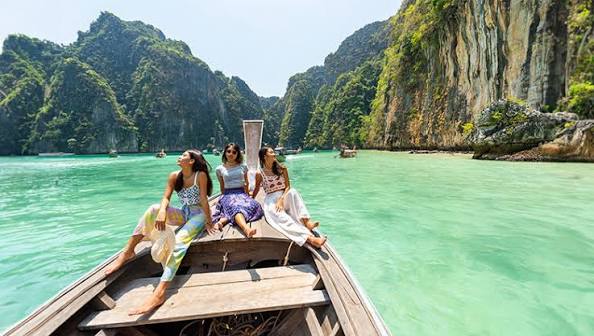
Nearly sixteen million international visitors walked into Vietnam during just the first eight months of 2026 — a 14.4% jump over the same stretch last year, and the strongest January-through-August total the country has ever recorded, according to figures reported by Vietnam’s state news agency citing the National Authority of Tourism. If your mental map of Southeast Asia still starts and ends with Bangkok’s temples or Bali’s rice terraces, it might be time to redraw it. Over that same window, Thailand’s international arrivals actually slipped 3.4%, while Singapore, Indonesia, and the Philippines all trailed Vietnam’s raw numbers too, according to regional comparisons reported by Dan Tri. You don’t need a travel-industry analyst to read that gap. You just need a passport with a few blank pages and a reason to use them.
Where Everyone Is Actually Going
Start with the postcard everyone already recognizes, even if they’ve never been able to place it: Ha Long Bay, where thousands of limestone karsts rise straight out of jade-green water in Vietnam’s northeast. You can spend a single day cruising past them or an overnight on a wooden junk boat, waking up to fishing villages tucked into hidden coves — the kind of scenery that made this bay a UNESCO World Heritage Site decades before it became an Instagram staple.
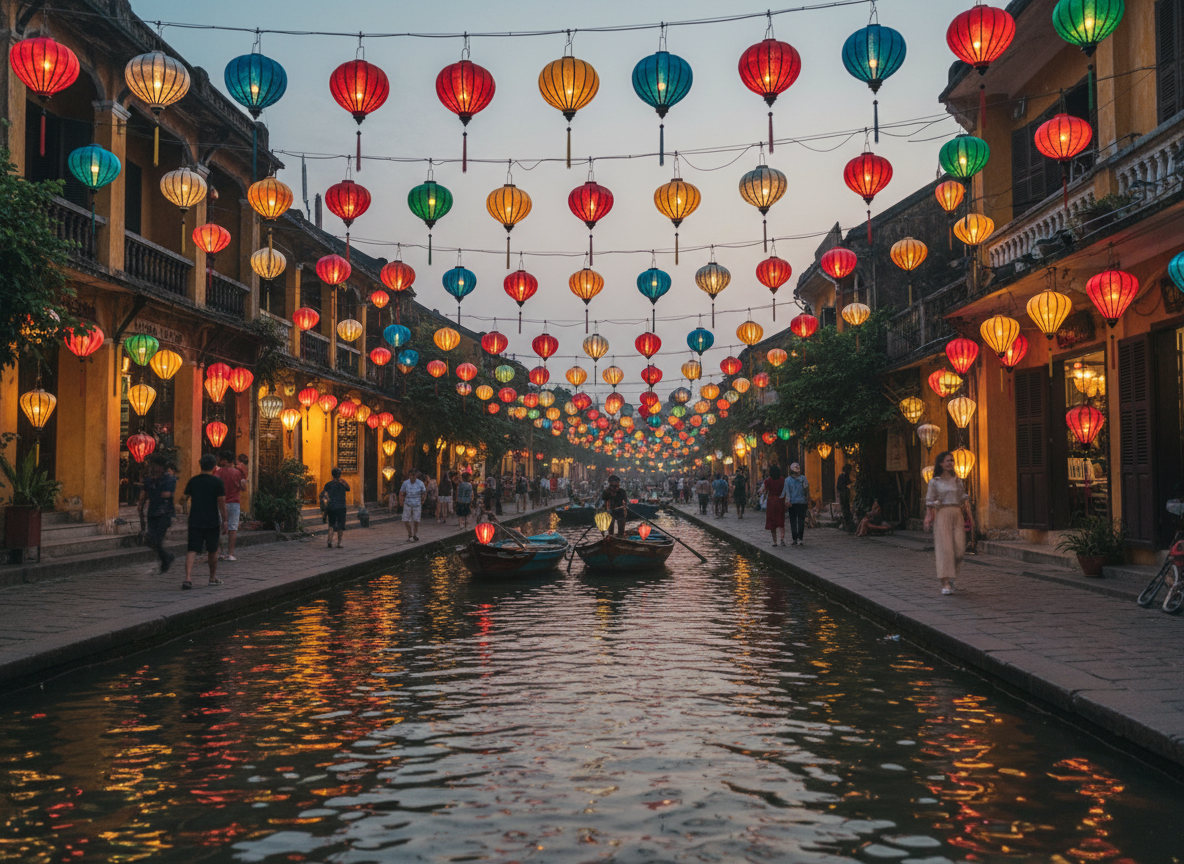
Then there’s Hoi An, a former trading port on the central coast where the old town still looks the way it did two centuries ago — except at night, when thousands of handmade silk lanterns take over instead of streetlights. Walk the riverside streets after sunset and you’ll understand why photographers keep coming back. Further north, the terraced rice paddies around Sapa carve entire mountainsides into green (or golden, depending on the season) staircases, and you can trek between them and stay in homestays run by Hmong and Dao families. Add in Hanoi’s Old Quarter, where motorbikes and egg coffee share the same block as centuries-old shophouses, and Phu Quoc’s newer resort beaches, and you get a country offering nearly every kind of trip in one place — mountains, coast, cities, and jungle, often a short flight apart.
What You’ll Actually Spend
Vietnam’s own tourism authority has been explicit about one of the reasons travelers are choosing it right now: it points to “competitive travel costs” as a direct driver behind this year’s surge, alongside the country’s reputation as a stable destination amid global uncertainty, according to the same Dan Tri report. That framing lines up with what returning travelers already know — a bowl of pho on a Hanoi street corner, a hotel room in Hoi An, or a domestic flight between Da Nang and Phu Quoc all tend to run noticeably lighter than comparable spending in Bangkok or Bali’s more tourist-saturated zones.
Visa policy has done measurable work here too. Vietnam has widened visa-exempt entry for a growing list of countries, and the payoff shows up in the data: visitors from Poland grew 52.7%, from Switzerland 19.4%, and from the Czech Republic 23.1%, per Dan Tri’s reporting on the tourism authority’s own figures. That’s what happens when a country removes friction for travelers most likely to book a longer, farther-flung trip.
Why the Timing Matters Right Now
Look at the shape of 2026 so far and you’ll see momentum building, not a single lucky quarter. Vietnam logged a record 8.8 million arrivals in the first four months of the year, up 14.6% year-over-year, then kept accelerating — April alone brought more than 2.03 million visitors, and August brought nearly 2 million more, up 18.4% from August 2025 and 19.7% from the month before it, per Vietnam’s state news agency. Eight months in, the country had already reached 63.6% of its full-year target of 25 million visitors — a target that, at this pace, looks less like a stretch goal and more like a formality.
What’s notable is who’s showing up. China and South Korea remain the largest source markets, but the fastest growth is coming from further away: arrivals from Russia are up 165.7% year-over-year, Europe overall is up 53.4%, and visitors from India have grown from roughly 102,000 in 2019 to 612,000 in just the first eight months of this year, according to the same tourism-authority figures. That’s a country broadening its appeal well beyond its regional neighbors, not just picking up overflow from a crowded Bangkok or an oversaturated Bali. Earlier in the year, Vietnam also recorded 10.6 million arrivals through the first five months alone, up 14.9% year-over-year, according to VnExpress International, which cited safety, cultural depth, and favorable visa policy — alongside cost — as the drivers behind the run.
None of this means Thailand or Bali have stopped being worth a trip — they haven’t, and they won’t. But the numbers make one thing hard to ignore: while two of the region’s longtime headliners cede ground, Vietnam is quietly compounding gains month after month, spreading them across nearly every kind of traveler and nearly every region of the world. You’re not being sold a secret here; the data is public and the authority publishing it is Vietnam’s own government. What you do with that information — and how soon you book the flight before everyone else reads the same numbers — is entirely up to you.