Every fall, the same handful of Vermont and New Hampshire towns absorb most of America’s leaf-peeping traffic, while a genuinely spectacular alternative sits quietly in southeastern Ohio. Hocking Hills tourism generated $295 million in annual economic impact for Hocking County, with $179 million of that coming directly from visitor spending, according to a biennial study commissioned by Explore Hocking Hills. Those aren’t the numbers of a hidden secret anymore — they’re the numbers of a destination that’s already winning the argument, just without the New England name recognition. Here’s what actually makes the case.
1. Old Man’s Cave Delivers New England-Grade Drama Without the Crowds
This mile-long gorge is the anchor of the entire region, cutting through layered Blackhand sandstone that turns the whole hike into a slot canyon lined with hemlocks and maples. By mid-October, the canopy overhead goes gold and rust while the creek below keeps carving through moss-covered rock. It’s the kind of dramatic elevation change and rock architecture that most Midwestern hikes simply don’t have, and it draws a fraction of the bumper-to-bumper traffic that clogs Vermont’s Route 100 during peak color.
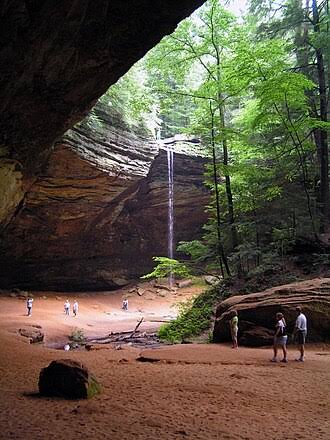
2. Ash Cave’s Massive Rock Shelter Is a Postcard New England Doesn’t Have
Ash Cave is the largest recess cave in Ohio, a horseshoe-shaped sandstone overhang so large it used to host church services and even a presidential campaign stop. Framed by fall foliage, the cave’s scale reads more like a Southwestern canyon than anything associated with the Midwest. The paved, accessible trail to the main overlook means the payoff doesn’t require a difficult hike, which makes it one of the more family-friendly showstoppers anywhere in the region’s fall lineup.
3. Cedar Falls Peaks Right When Vermont Is Already Picked Over
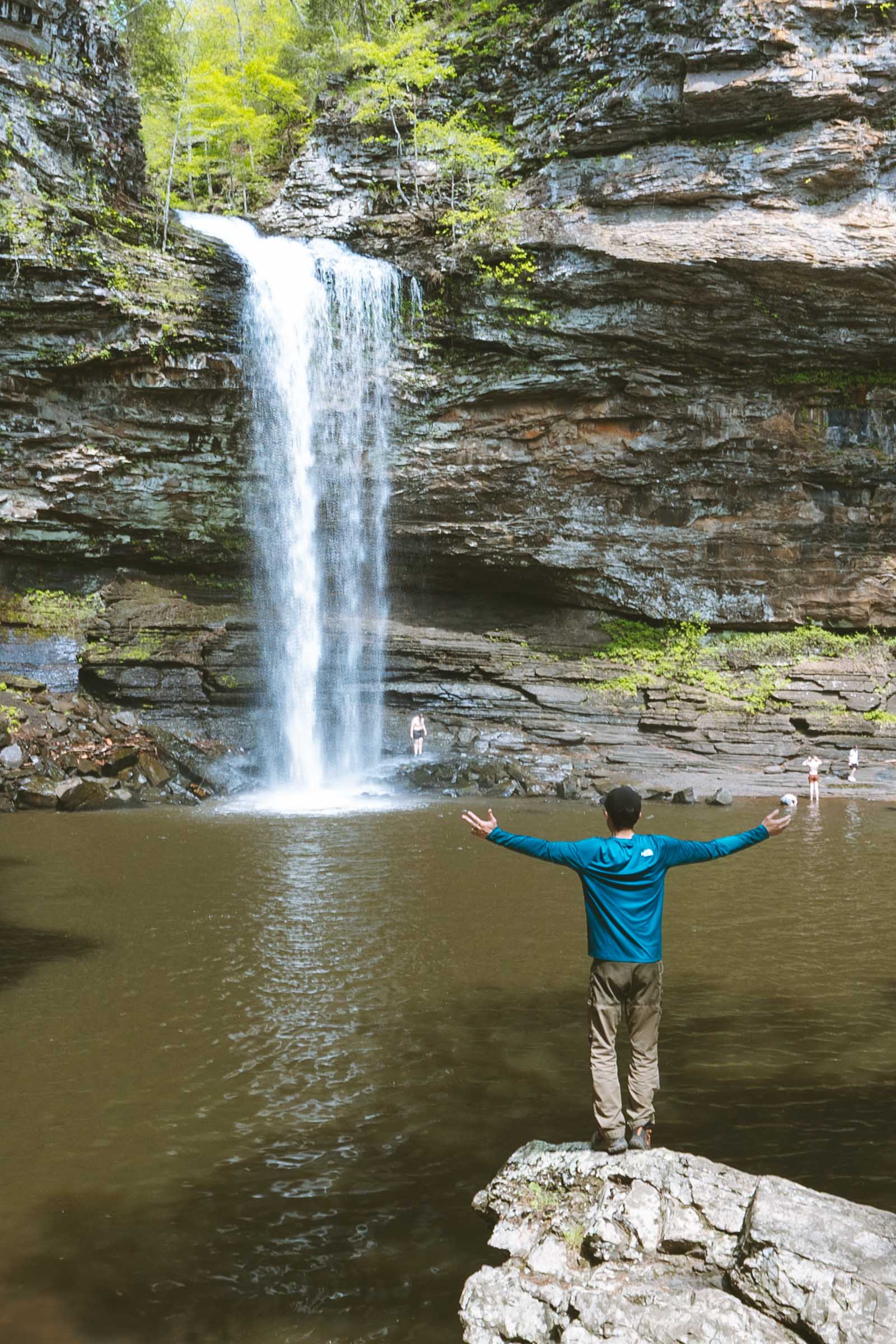
Cedar Falls carries the highest water volume of any waterfall in the Hocking Hills system, and its surrounding hemlock-and-hardwood mix means the color show tends to run into late October — well after New England’s famous corridors have already dropped their leaves. That later window matters for road-trip planning: travelers who miss peak foliage in Stowe or the Berkshires by even a week still have a strong shot at catching Ohio at its best.
4. The Economic Numbers Prove Locals Aren’t Imagining the Boom
This isn’t a marketing narrative dressed up as a trend. Heather Eddy, Explore Hocking Hills’ executive director, said in the same tourism study that “without tourism and visitor spending, every household in the county would need to pay an additional $1,974 per household to maintain the level of public services.” That’s a rural Appalachian county whose economy now visibly depends on the exact travel season this list is describing, with tourism supporting roughly 1,635 jobs across Hocking County.
5. Conkles Hollow’s Narrow Gorge Feels Like a Secret
Where Old Man’s Cave gets the crowds, Conkles Hollow gets the quiet. Its gorge trail runs between sheer cliff walls that rise more than 200 feet, narrow enough in places that the fall canopy nearly closes overhead. The rim trail above offers a completely different vantage — wide views over a rippling carpet of color that rewards hikers willing to add the extra elevation gain.
6. It’s a Fraction of the Drive for Half the Midwest
Part of New England’s foliage-tourism dominance is inertia, not superiority — it’s simply the region most East Coast travel media defaults to covering. But for anyone based in Columbus, Cincinnati, Cleveland, Indianapolis, Louisville, or Pittsburgh, Hocking Hills is a two-to-four-hour drive instead of a full-day haul to Vermont. That difference turns a foliage trip from a multi-day commitment into an easy weekend, which is exactly the kind of practical advantage that turns a hidden gem into a repeat destination.
7. Outside Publications Are Already Ranking It Above Better-Known Spots
Hocking Hills isn’t just gaining word-of-mouth traction — it’s showing up on national rankings. Mixbook placed it at No. 7 on a list of America’s hidden gems for fall foliage, and travel coverage of that ranking specifically called it out as the highest-ranked entry west of New York state. That’s a Midwestern park being placed ahead of destinations most leaf-peepers have never considered skipping.
None of this means New England stops being beautiful in October. It means the assumption that great foliage only happens in Vermont or New Hampshire is increasingly just a habit, not a fact — and the visitor spending, the waterfall variety, and the outside rankings all point to a park in the Appalachian foothills of Ohio that’s earned a spot on the same list.