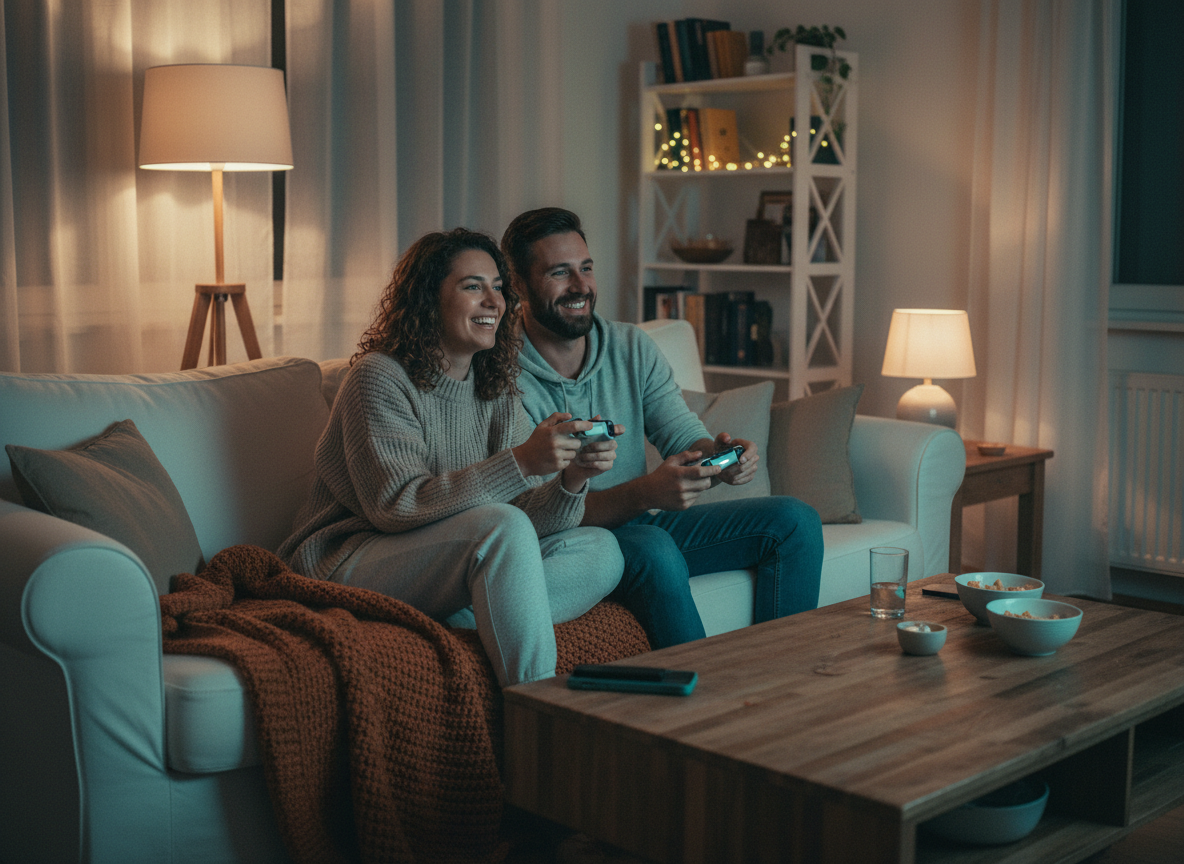
Couples who game together at least once a week post a net relationship satisfaction score of +47.3, more than double the +24.0 score reported by couples who rarely or never play together, according to a 2026 survey of over 1,500 Australians conducted by Logitech G in partnership with the independent research firm Antenna Insights. That’s not a small gap. It’s the difference between a relationship that feels solidly good and one that feels merely fine, tied to something as simple as whether two people pick up controllers on the same couch.
The Numbers on Shared Gaming and Conflict
The survey broke gaming habits into tiers: 44% of couples play together occasionally or regularly, 22% play rarely, and 34% never play together at all. Beyond the satisfaction gap, weekly gaming couples reported spending roughly 17 hours a week together, compared with about 13.2 hours for couples who game only occasionally — nearly four extra hours of shared time each week, generated by nothing more elaborate than a shared hobby that happens to live on a screen. When asked what gaming together actually gave them, 52% of respondents pointed to it being a fun team activity, 47% cited stress relief, 46% said it brought them closer, and 36% said it made the relationship more playful overall.
The Catch: It Only Works When Both Partners Are Playing
Here’s where the story gets more interesting than a simple “gaming is good for couples” headline. An earlier academic study of 1,333 heterosexual couples, published in the journal Family Relations, found that time a man spent playing video games was linked to more conflict over how media time and content were being used, which in turn correlated with higher relational aggression in the relationship. Crucially, that study was measuring solo or unequal gaming, not shared play between partners — and researchers who later revisited the same dataset found no significant relationship between conflict and couples who played video games together as a pair. The conflict was never really about the game itself. It was about one partner disappearing into a screen while the other partner didn’t have a way in.
That distinction matters enormously for how to read this year’s numbers. Gaming isn’t automatically good or bad for a relationship — it functions more like a lever, amplifying whichever dynamic is already there. When only one partner plays and the other is left waiting, gaming becomes a wedge that pulls two people onto different schedules and into different rooms. When both partners play together, the exact same hours spent staring at a screen become shared time, shared inside jokes, and a shared adrenaline spike during a close match. A more recent qualitative study published in Contemporary Family Therapy, examining couples where every partner identified as a gamer, similarly found that gaming functioned as a genuine relationship-building activity rather than a source of tension once both people were actually involved in it.
What This Says About Shared Hobbies in General
None of this is really about video games specifically. It’s about what happens to a relationship when a hobby becomes something two people do at each other instead of something they do together. Couples who share weekly rituals, gaming or otherwise, tend to build up more collective memory and inside language than couples who spend their downtime in separate rooms doing separate things, and that shared history becomes a buffer during the inevitable rough patches. The Logitech G data suggests gaming has simply become one of the more accessible ways for couples to log that time together, requiring no gym membership, reservation, or extra planning beyond sitting down on the same couch. Judging a couple by whether they play games together misses the point slightly. What actually seems to matter is whether they’re doing anything together at all, on purpose, on a regular basis — gaming is just one of the easiest versions of that to measure.
There’s a practical takeaway buried in the contrast between the two eras of research, too. Couples worried that a partner’s gaming habit is quietly eating into their relationship might be reacting to the right problem but the wrong cause. The fix implied by the newer data isn’t necessarily fewer hours on the controller — it’s fewer hours spent gaming solo while a partner sits in another room. Pulling up a second controller, or even just sitting nearby and getting invested in the outcome, appears to convert the exact same activity from a source of resentment into one of the more reliable sources of shared time couples have going for them. Fifteen minutes of co-op play after a long day costs nothing and requires no special planning, which may be exactly why it shows up so clearly in the satisfaction numbers: it’s one of the few shared rituals modern couples can actually sustain on a busy weeknight.