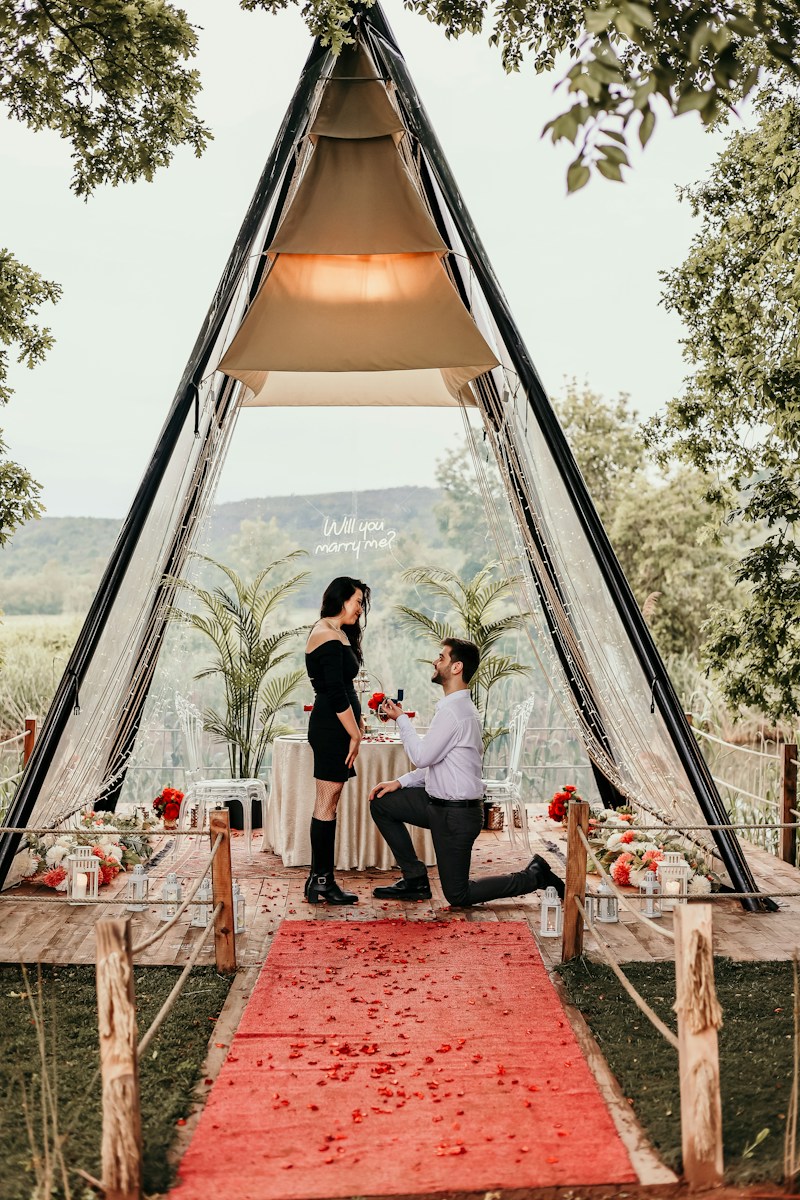
Nearly half of all marriage proposals in the United States happen in the same four-month window every year, according to The Knot’s 2025 Real Weddings Study, which found that about 47% of couples get engaged between November and February. The industry has a name for this stretch: engagement season, running from Thanksgiving through Valentine’s Day, and it isn’t a marketing fiction. It shows up consistently, year after year, in the data The Knot collects from hundreds of thousands of newly engaged couples. The clustering isn’t random, and it isn’t really about romance peaking in winter. It’s about the calendar handing couples, and the people helping them plan, a built-in set of natural deadlines.
Why the Holidays Function as a Proposal Trigger
Family gatherings during the holidays put couples in proximity to the people whose blessing or presence matters most for a proposal, parents, grandparents, siblings, all in one place without anyone having to plan a special trip. That logistics advantage compounds through December and into the new year, when resolution-season symbolism, a fresh start, a new chapter, gives proposals an emotional framing that other months don’t offer for free. The Knot’s own survey data on proposal timing consistently shows December as the single most popular month to get engaged worldwide, with the days around Christmas and New Year’s Eve among the most popular specific dates.
Valentine’s Day Is the Closer, Not the Whole Season
Valentine’s Day gets outsized credit for engagement season because it’s the most visible, most marketed date on the calendar, but the data shows it functions more as a closing bell than the main event. Couples who don’t get engaged over the holidays, often because a partner is still finalizing a ring order or waiting for the right moment, frequently treat Valentine’s Day as the backup date, the last obvious romantic checkpoint before engagement season resets for the year. That’s part of why jewelers and wedding vendors treat the entire November-through-February window as one continuous cycle rather than a scattering of individual romantic holidays.

The Data Holds Up Across Different Years and Surveys
What makes the 47% figure worth taking seriously is that it isn’t a one-off finding from a single survey year. The Knot has tracked engagement timing across its annual real-weddings research for years, and the concentration in the November-through-February window has remained remarkably stable even as overall engagement and wedding numbers have shifted with broader economic conditions. That consistency suggests the clustering reflects something structural about the calendar and family life rather than a passing trend tied to any particular year’s cultural moment or economic backdrop.
The Industry Plans Its Entire Year Around This Window
Jewelers, wedding venues, and photographers don’t treat engagement season as a curiosity, they treat it as the backbone of their annual calendar. Ring sales climb sharply in the weeks before Christmas and again in the run-up to Valentine’s Day, and wedding planning inquiries follow close behind, since a proposal in December or January tends to trigger venue shopping within weeks. That predictable surge shapes staffing, inventory, and marketing spend for an entire industry built around a single, foreseeable seasonal spike rather than steady demand spread evenly across twelve months.
What the Clustering Means for Couples Getting Engaged Now
For anyone getting engaged this fall, the timing isn’t a coincidence or a copycat move. It’s evidence of following the same practical logic thousands of other couples are following at the same time: family already gathered, a natural narrative moment on the calendar, and a jewelry and wedding industry fully staffed and ready for volume. Couples planning a winter proposal are, statistically, in extremely good company. Nearly half of everyone who gets engaged in a given year makes that decision inside the same sixteen-week window, driven by the same seasonal pull toward family, tradition, and a fresh start.
Engagement season isn’t hype built by ring companies to move inventory during a slow retail stretch, even if it works out that way for them too. It’s what happens when the emotional and logistical rhythms of a calendar year line up in the same few months, and hundreds of thousands of couples independently reach the same conclusion about when the moment is right.