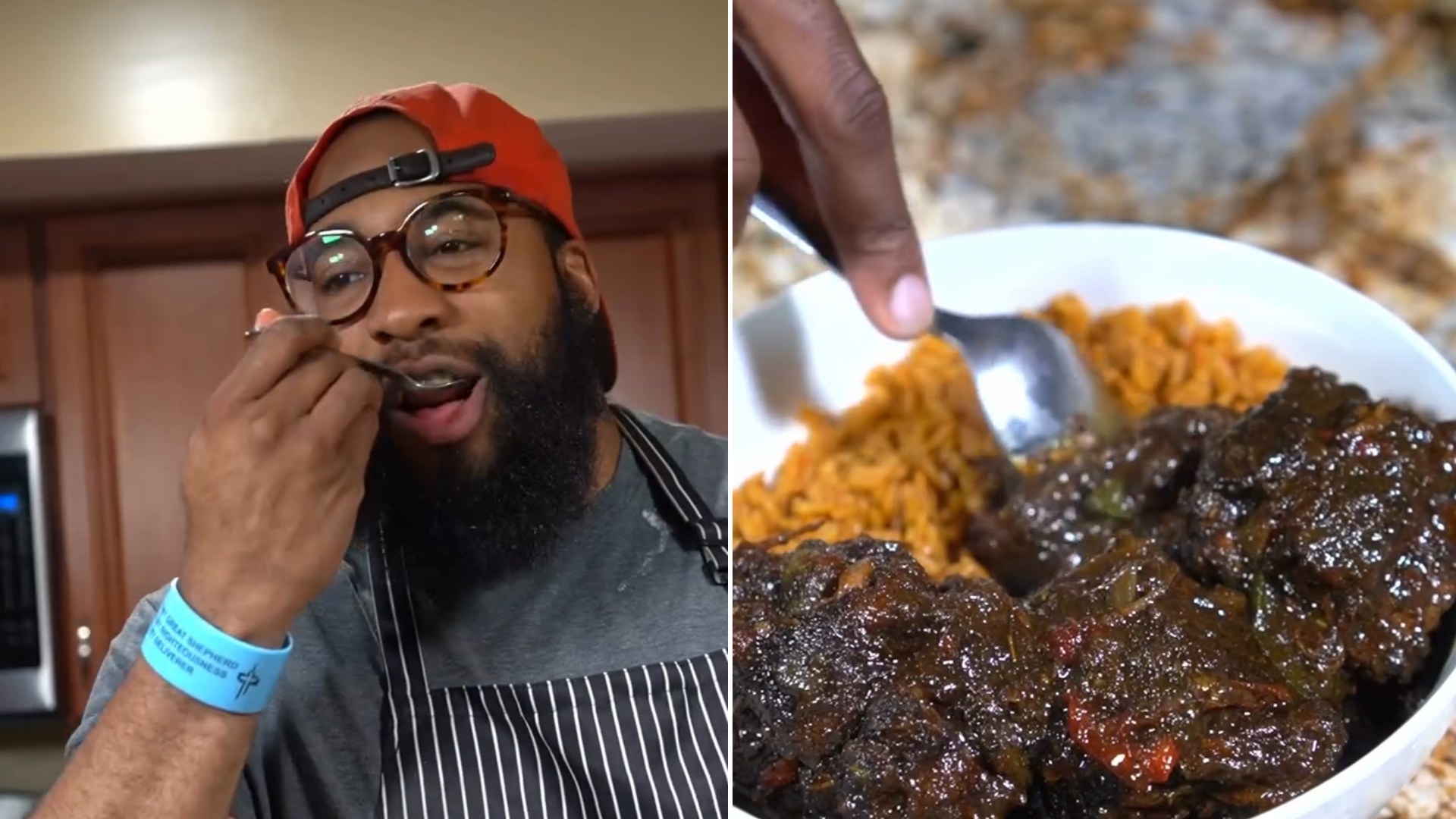
Most recipe videos live or die on the first three seconds of footage: a knife through a tomato, a pan sizzling, a spoon pulled slowly out of a pot. Home cook and content creator blessitsjeff skipped that entirely and led with a number instead. The reel, captioned “‘$10,000 oxtail'” with a promise that the story behind the name is coming, has been racking up views less for the braise itself than for the tease sitting on top of it, according to the creator’s own Instagram post. The account has built an audience of roughly 250,000 followers, and this particular video is a case study in how a single line of text can do more work than the recipe underneath it.
A Name Doing the Job of a Hook
Oxtail doesn’t need help selling itself to anyone who has had it done right. But a recipe title that reads like a headline changes how a viewer approaches the video before a single ingredient shows up on screen. “$10,000 oxtail” isn’t a price tag anyone expects to be literal, and that’s precisely the point. It reads as a promise that there’s a reason behind the name worth sticking around for, which is a different kind of hook than the usual “5-ingredient” or “30-minute” framing that dominates recipe content.
That framing matters more than it might seem. Recipe videos are short by design, usually under a minute, and creators have almost no room to build anticipation the way a food writer might with a few paragraphs of scene-setting. A title that plants a question, why this dish, why this price, why this story, gives a viewer a reason to watch past the first cut even if they’ve made oxtail a hundred times before.
Why Oxtail Rewards the Wait
Part of what makes the hook work is that oxtail earns the attention on its own terms once the video gets there. It’s a cut that comes from the tail of the cow, heavy with connective tissue and marrow, and it has no shortcut version. Low heat and a long simmer, often two to three hours, are what turn tough collagen into the silky, almost sticky texture that makes braised oxtail so prized in Caribbean, Southern, and Asian kitchens alike. Rush it and you get chewy meat and thin broth. Give it time and the fat and marrow enrich the braising liquid into something close to a sauce on its own, clinging to rice or mashed root vegetables in a way a quicker cut never could.
That slow build is also what makes oxtail a natural fit for narrative-driven content. A dish that takes hours to become what it’s supposed to be already has a story baked into the cooking process, even before a creator adds a title with a hook attached. The waiting is part of the appeal, not an obstacle to it, and viewers scrolling for comfort food tend to respond to that patience rather than skip past it.
The Bigger Shift in Recipe Content
Backstory-driven titles aren’t new to food media broadly, but they’re a relatively recent habit among short-form recipe creators, where the format has traditionally rewarded speed and simplicity over intrigue. What’s changed is the competition. With thousands of oxtail recipes already circulating, a creator with a loyal but modest following needs a reason for a scroller to stop rather than assume they’ve seen this exact braise before. A number attached to a dish name, a claim of a story worth telling, does that work in a way an ingredient list alone can’t.
It also reframes what a comfort-food recipe is supposed to deliver. Ingredients and technique used to be the entire pitch. Now the pitch increasingly includes why the dish matters to the person cooking it, even when the full explanation is saved for a caption reveal or a follow-up video rather than spelled out up front. That’s a meaningful shift for a genre that used to treat the recipe card as the whole story.
What It Means for Home Cooks
For anyone watching from the outside, the lesson isn’t really about oxtail specifically. It’s about what makes a comfort dish worth returning to in a feed crowded with near-identical content. A well-built braise still needs the right ratio of seasoning, the patience to let collagen break down properly, and a technique that respects what the cut actually needs. But the videos breaking through right now are pairing that technique with a reason to care, proof that even a genre as utilitarian as the recipe video has room for a little mystery before the pot ever hits the stove.