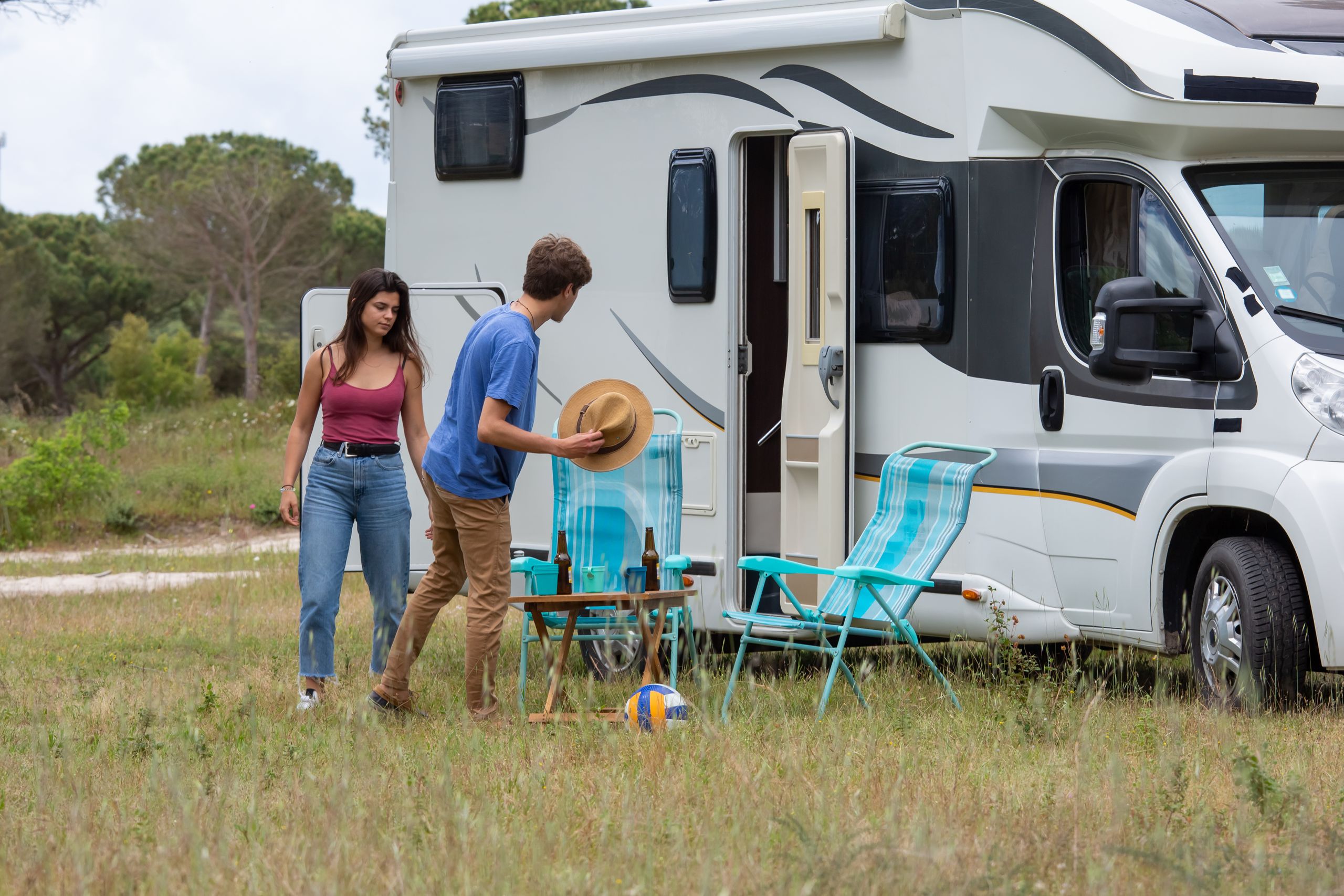
The median age of an RV owner in America dropped from 53 in 2021 to 49 in 2025, according to the RV Industry Association’s Go RVing owner demographic profile, with 46% of all owners now falling between 35 and 54. That’s a four-year swing in the space most people picture as strictly retiree territory: a Winnebago idling at a national park with a couple in their sixties behind the wheel. The rental side of the industry tells the same story even faster, and it’s reshaping who actually shows up at the campground.
RV road-tripping earned its slow-hobby reputation honestly. For decades, buying or renting a motorhome meant a retirement-fund purchase, a summer-long itinerary, and a target demographic that skewed heavily toward empty nesters with the time and savings to spend weeks on the road. Marketing followed the money, which meant more marketing aimed at people already close to retirement, which reinforced the assumption that nobody under 50 was interested. That feedback loop is breaking down in real time, and rental marketplace data is where it shows up first, before it fully registers in who owns a rig outright.
Outdoorsy, one of the largest peer-to-peer RV rental marketplaces, has tracked the shift directly in its own booking data. In a company report on its first million trips, the platform found that 43% of its guests fell within the millennial age range, and that both guests and the hosts renting out their own RVs had “started to skew younger” over the prior three years. Millennials, now well into their late 20s through mid-40s, aren’t a niche segment discovering RVs as a novelty weekend activity. They’re close to plurality among the people actually booking them.
photo credit: unsplash

RVshare, the other major national rental marketplace, is seeing the same generational lean from a different angle. Its own 2026 Travel Trend Report found that more than a third of travelers surveyed already had an RV vacation planned for the year ahead, led “overwhelmingly by Millennials, the generation most eager to hit the road.” That’s not framed as an emerging curiosity in the company’s own language. It’s framed as the group currently driving demand.
Why Renting Beats Buying for This Group
The rental model itself explains part of why younger travelers are showing up here before they show up in ownership statistics. A 30-something with a mortgage, student loans, or a newer career doesn’t need to commit five or six figures to a vehicle that depreciates fast and sits in storage most of the year. Renting for a week solves the actual want, which is usually a specific trip, a national park loop, a festival, a cross-country drive with friends, without the long-term financial commitment that used to be the entry price for RV travel altogether. Peer-to-peer platforms like Outdoorsy and RVshare essentially removed the barrier that kept the hobby locked to people who’d already paid off a house.
Ownership data backs up that renting is acting as a pipeline rather than a separate audience. RVIA’s research on prospective buyers found that a quarter of people considering an RV purchase had already rented one first, meaning the rental boom among younger travelers isn’t a side activity disconnected from the ownership market. It’s feeding it. The association’s broader research also found that nearly three-quarters of near-term RV buyers are under age 55, a marked departure from the demographic RV dealerships built their sales floors around a generation ago. First-time owners now make up 36% of the total ownership base, according to the same RVIA profile, another sign that the entry point into RV life keeps getting younger rather than older.
The financial picture matters here too. Hotel rates climbed sharply in recent years, and a rented RV lets a group of four or five split lodging, transportation, and several meals into a single daily cost instead of paying separately for a car rental, a hotel room, and restaurant tabs along the route. For a generation that came of age watching housing costs outpace wages, an RV rental reads less like a quirky vacation choice and more like a genuinely efficient one. That math works just as well, arguably better, for a 32-year-old splitting costs with friends as it does for someone who’s already retired.
None of this erases the retirees who still make up a meaningful share of RV travelers, and long, slow cross-country trips remain a defining retirement image for plenty of good reasons. But the data from the platforms actually processing the bookings doesn’t support treating that image as the whole picture anymore. Renters in their 30s aren’t an anomaly showing up at the margins of an older hobby. They’re close to running the show, and the industry’s own numbers, not a marketing pitch aimed at a younger crowd, are the ones saying so.